
Showing posts with label Mark Zuckerberg. Show all posts
Showing posts with label Mark Zuckerberg. Show all posts
Thursday, March 11, 2021
Our Gross Wealth Inequality in the US
"Warren Buffet just became the 5th American worth $100 billion. A year ago, there was 1..."
 "...The pandemic has minted 50 new U.S. billionaires. Think about how a system that causes so much pain allows for those at the top to gain so much."
--Dan Price @DanPriceSeattle
"...The pandemic has minted 50 new U.S. billionaires. Think about how a system that causes so much pain allows for those at the top to gain so much."
--Dan Price @DanPriceSeattle


Monday, February 1, 2021
Tim Cook, at Apple, Takes a Very Welcome Broadside Against Mark Zuckerberg and Facebook
Yahoo!! (not the website).
Yes, Tim Cook, over at Apple, took this broadside at Mark Zuckerberg and his Facebook this week (from Inc. Magazine).

Tim Cook May Have Just Ended Facebook
What happens when an unstoppable force hits an immovable object?
In a recent speech at Brussels' International Data Privacy Day, Apple CEO Tim Cook went on the offensive against Mark Zuckerberg and Facebook. Cook's speech seems to be a direct response to Facebook's recent attack on Apple, in which the world's largest social network took out full-page ads in several newspapers attacking Apple's new privacy changes.
But what's most fascinating is that Cook took direct aim at Facebook without ever mentioning the company by name.
Just check out the following excerpt:
"Technology does not need vast troves of personal data stitched together across dozens of websites and apps in order to succeed. Advertising existed and thrived for decades without it, and we're here today because the path of least resistance is rarely the path of wisdom.
If a business is built on misleading users on data exploitation, on choices that are no choices at all, then it does not deserve our praise. It deserves reform.
We should not look away from the bigger picture and a moment of rampant disinformation and conspiracy theory is juiced by algorithms. We can no longer turn a blind eye to a theory of technology that says all engagement is good engagement, the longer the better, and all with the goal of collecting as much data as possible.
Too many are still asking the question, 'How much can we get away with?' When they need to be asking, 'What are the consequences?'
What are the consequences of prioritizing conspiracy theories and violent incitement simply because of the high rates of engagement?
What are the consequences of not just tolerating but rewarding content that undermines public trust in life-saving vaccinations?
What are the consequences of seeing thousands of users joining extremist groups and then perpetuating an algorithm that recommends even more?
It is long past time to stop pretending that this approach doesn't come with a cause. A polarization of lost trust, and yes, of violence.
A social dilemma cannot be allowed to become a social catastrophe."
The fact that Cook doesn't name Facebook somehow increases its impact. Because as you hear Cook's 's speech, you can't help but immediately think of the house that Zuckerberg built.
If you're wondering how Apple and Facebook ended up at odds, you can read more of the details here. But the reality is these two tech giants have been heading towards a major conflict for quite some time.
The problem is that Apple's and Facebook's business philosophies are diametrically opposed to each other:
Apple is a lifestyle brand. And part of the lifestyle Apple sells is users having more control over their privacy.
Facebook, on the other hand, is in the data business. The more data they collect on users, the more effectively they can sell targeted ads.
But collecting and selling all that data comes at great cost, as Cook highlights. "The end result of all of this is that you are no longer the customer," said Cook. "You are the product."
Cook went on to further highlight the differences in Apple's and Facebook's philosophies, in no uncertain terms.
"We believe that ethical technology is technology that works for you," said Cook. "It's technology that helps you sleep, not keeps you up. It tells you when you've had enough. It gives you space to create or draw or write or learn, not refresh just one more time."
At first glimpse, it might appear that Apple and Facebook are on diverging paths. But in reality, they're on a collision course.
So, what does happen when an unstoppable force hits an immovable object?
One of them gets destroyed.
Facebook, on the other hand, is in the data business. The more data they collect on users, the more effectively they can sell targeted ads.
But collecting and selling all that data comes at great cost, as Cook highlights. "The end result of all of this is that you are no longer the customer," said Cook. "You are the product."
Cook went on to further highlight the differences in Apple's and Facebook's philosophies, in no uncertain terms.
"We believe that ethical technology is technology that works for you," said Cook. "It's technology that helps you sleep, not keeps you up. It tells you when you've had enough. It gives you space to create or draw or write or learn, not refresh just one more time."
At first glimpse, it might appear that Apple and Facebook are on diverging paths. But in reality, they're on a collision course.
So, what does happen when an unstoppable force hits an immovable object?
One of them gets destroyed.
I personally think the author is overstating the effects Tim Cook and Apple will do here to Zuckerberg and Facebook but hey, it's an attack on Facebonkers and people are paying attention so it's a good thing, for sure.
Additional link:
Sunday, February 10, 2019
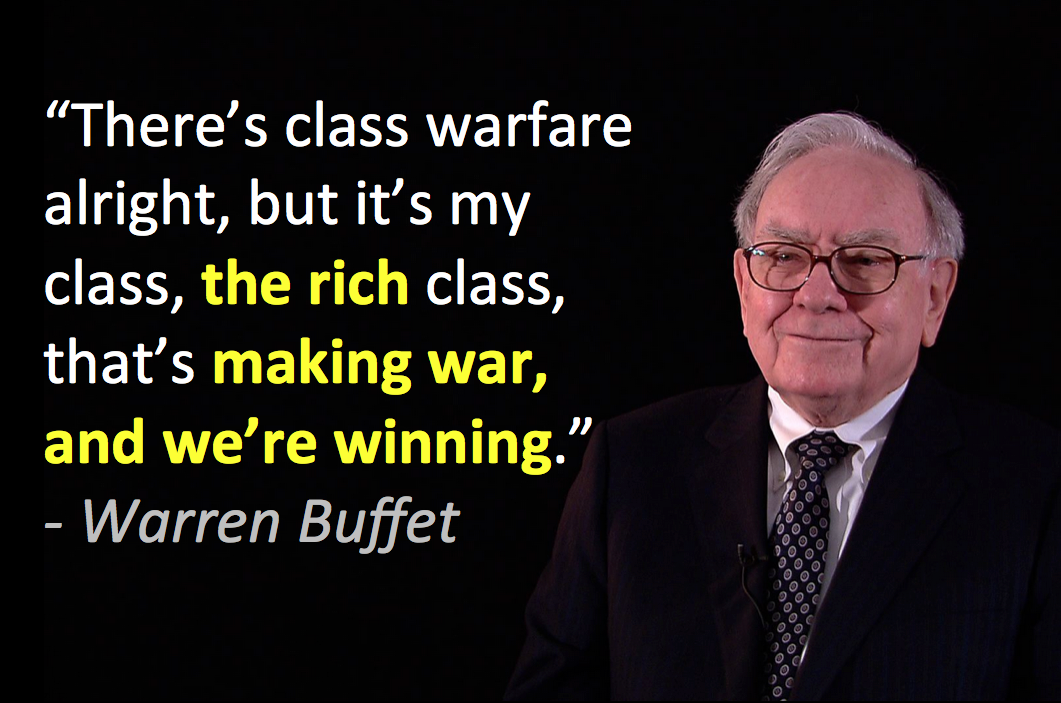
Oh, Yeah. Tax the Already-Wealthy

I am, in fact, in favor of what some people claim to be a new thought of eliminating the possibility of being a billionaire, I have to say. Strongly in favor.
For anyone who knows me, this will come as no surprise.
If you're worth 999 million dollars---isn't that enough?
What could you possibly want that isn't attainable for you at that level of wealth?
Jeff Bezos of Amazon, et. al, is worth an estimated $130.7 billion dollars.
Not only that, but he had to be recently publicly shamed into giving his employees a raise up to a whopping $15 per hour. And even then, he took some away from their benefits plan. That is some chutzpah.
Seriously.
That is insane.
And immoral. Just obscene.
There are people, not just in your own nation but across the planet that are hungry, indeed, starving, literally, homeless and a lot more--but you need, somehow, a billion dollars? And/or more?
Really?
Besides the poor of the nation and world, we should all keep in mind, as has been said elsewhere, many times, that when the US was collecting 90% and 70% taxes of the uber-wealthy, we were a far stronger nation, we built a national highway system and went to the moon, among all else.
So yeah, let's do this.
Links:
Yes, Tax the Rich. But Do It Right
Wednesday, June 19, 2013
Quote of the day--on opening one's mind
“All too often, those big ideas run up against the challenge of the everyday: in particular, how to find work that pays the bills. A lot of the time, meaningful work becomes necessary work, and passions are forced to fade. The easy part is knowing that you should follow your heart and do something important; the hard part is coping with the world as it is today at the same time as you invent how it should be in the future.
But inventing the future — in spite of the greatest recession since the Great Depression — is exactly what our generation does. If there’s any core attribute that connects you to me to everyone else of our age, it’s this conviction that we do not have to take the world as it is; in fact, it’s up to us to make it what it should be. ...
The "money quote"--one thing more and more Americans would benefit from greatly:
If there’s one thing you do after graduating today, create some habit that makes it easier for you to get out of your bubble. Follow someone you disagree with on Twitter. Buy a subscription to a newspaper or a magazine that will tell you the most important news of the day. Install an app on your phone that doesn’t just filter the news by your social network, but by what you need to read. Not only will these habits make you a better citizen, they’ll make you a more interesting husband or wife, and certainly a more informed job applicant.”
Link: In Looser Tone, Speakers Urge Graduates to Take Risks and Be Engaged
Tuesday, February 19, 2013
You and I will pay more--far more--taxes than Facebook
This is insane.

You want to rant about people getting welfare?
Here's your corporate welfare--from the Daily Kos today:
Despite Facebook reporting profits of over $1.1 billion in 2012, the company is expected to pay no federal or state income taxes. In fact, Facebook will receive net tax refunds totaling $429 million, because tax deductions on executive stock options can be written off as salary deductions.
This is a perfect example of how the deficit and spending cuts are driven by loopholes that allow corporations and wealthy Americans to get all the breaks.
They have and want access to our markets--the best markets in the world. They have access to our infrastructure--electrical, schools, sewage treatment plants, sewers, highways, everything--yet we let them get and be off the hook for paying anything, anything for all that access.
And then, due mostly to "campaign contributions", our government is seriously considering cutting Social Security and Medicaid and Medicare, instead of requiring corporations to pay even a small amount just so we can keep the whole nation functioning.
Does that make any sense to you? Does that make any sense to anyone except the wealthy and the corporations and the government representatives they can buy?
Companies and corporations aren't supposed to contribute anything to the societies in which they operate?
I don't think so.
Go here, please, if you would, to sign a petition to close tax loopholes for the wealthy and for corporations:
http://campaigns.dailykos.com/p/dia/action/public/?action_KEY=325
Thursday, October 20, 2011

Saturday, September 24, 2011
Where Facebook is headed
"Initially, Facebook was just a place to post photographs and see which of your high-school classmates had gone to pot. Then it became a place for organizing political protests, and wasting time playing games. It’s grown and grown in all these ways. It gets credit from many for helping facilitate the Arab Spring, and it now hosts four per cent of all the photographs ever taken. Now, if Facebook gets its way, it’ll be where you read your news, find new songs, and watch video. It will have eaten a big chunk of the rest of the Internet." --Nicholas Thompson, "What Facebook Really Wants", The New Yorker Link to original story; http://www.newyorker.com/online/blogs/newsdesk/2011/09/what-facebook-really-wants.html
Remember when GM's Onstar seemed like a good and innocent idea?
Yeah, me too. That's how old I am. Now? Did you see this? "OnStar to sell customer location and other data" “'Big Brother' is not only watching, but may soon be selling what he sees. Wired magazine’s “Threat Level” blog says OnStar, a vehicle tracking service owned by General Motors, emailed subscribers this week alerting them to a change in policy that allows the company to sell customer data to anyone they choose, even after the service is canceled."It seems everyone, everyone, from the government to Facebook to Onstar and who knows who all, is bound and determined to get information on us and sell it to the highest bidder. Links: http://blogs.ajc.com/news-to-me/2011/09/21/onstar-to-sell-customer-location-and-other-data/; http://www.bing.com/search?q=onstar+selling+data&src=IE-SearchBox&FORM=IE8SRC
Friday, June 3, 2011
Notice anything here?
This was the list today, this afternoon, for the "top stories" of the day. Notice anything different or unusual?
- Blake Lively Vs. Leighton Meester
- Reliance disappoints at shareholder meet, shares fall
- Hitting 80, Cuba's Raul Castro boasts of good health
- Cámara baja EEUU aprueba financiación para seguridad nacional
- Konica Minolta Receives Multiple Editor’s Choice Awards from Better Buys for Business
- Zuckerberg: Contract for Facebook ownership 'fake'
- S.Africa's first free AIDS clinic celebrates 10 years
- Service sector growth picks up in May: ISM
- Comienza campeonato mundial del café en Colombia
- Five dead in Arizona shootings: reports
I keep noticing these little, gradual changes in our country and culture.
And believe me, I'm not panicking. I'm not freaking out. I'm not scared about or afraid of it. I'm just noticing the gradual shift in how we are and what we do, as a country. It's interesting.
Have a great weekend, y'all.
Tuesday, May 17, 2011
Facebook's continued weird evolution
Facebook is getting spookier and spookier.
I typed in an note to a friend about John Turturro, the actor/director, earlier today and immediately a note came up for a John Turturro "like" page.
And then "The Big Lebowski".
Immediately.
Then, upon doing a Google search for Facebook, up comes this today:
Facebook Red-Faced as Clumsy Google Smear Campaign Is Discovered
Facebook execs must be red-faced with embarrassment.
USA Today described the scandal as an undercover “whisper campaign” against the search giant, one leaving Silicon Valley insiders wondering who was playing dirty. Initial fingers pointed at perennial competitors and long-time industry behemoths Microsoft and Apple. Turns out it was the new kid on block instead -- Facebook.
When questioned early Thursday morning about these stunning allegations, Burson-Marsteller quickly backpedaled emphasizing that these kinds of campaigns go against its corporate code.
It seems the more we see of Mark Zuckerberg and his and his company's tactics, the more it looks as though his detractors may be correct in their disparaging descriptions of what he's capable of.
If it isn't true, he needs to start making it clear otherwise.
I typed in an note to a friend about John Turturro, the actor/director, earlier today and immediately a note came up for a John Turturro "like" page.
And then "The Big Lebowski".
Immediately.
Then, upon doing a Google search for Facebook, up comes this today:
Facebook Red-Faced as Clumsy Google Smear Campaign Is Discovered
Facebook execs must be red-faced with embarrassment.
The social-networking giant Facebook has been caught red-handed in a secret smear campaign against industry rival Google, FoxNews.com has confirmed.
According to a report from The Daily Beast Wednesday night, Facebook hired leading public-relations firm Burson-Marsteller to “pitch anti-Google stories to newspapers, urging them to investigate claims that Google was invading people’s privacy.” USA Today described the scandal as an undercover “whisper campaign” against the search giant, one leaving Silicon Valley insiders wondering who was playing dirty. Initial fingers pointed at perennial competitors and long-time industry behemoths Microsoft and Apple. Turns out it was the new kid on block instead -- Facebook.
When questioned early Thursday morning about these stunning allegations, Burson-Marsteller quickly backpedaled emphasizing that these kinds of campaigns go against its corporate code.
It seems the more we see of Mark Zuckerberg and his and his company's tactics, the more it looks as though his detractors may be correct in their disparaging descriptions of what he's capable of.
If it isn't true, he needs to start making it clear otherwise.
Friday, February 11, 2011
There will be at least a little less laughing about "social media" now, likely
Twitter?
Facebook?
First they were new, then people laughed about them, thinking everyone was taking them--either or both--too seriously.
Now?
Now that a regime has been changed in Egypt by using them?
If we laughed about them up to now, people--and governments, more specifically--won't be laughing about them much any more.
To wit, an article today:
Social media plays role in Egypt some expected in Iran
By Michael Calderone
As Egyptians celebrated in the streets of Cairo Friday, CNN's Wolf Blitzer posed a question to activist Wael Ghonim: "First Tunisia, now Egypt, what's next? "
Ghonim, a 30-year-old Google executive who became a symbol of the country's democratic uprising against Hosni Mubarak's authoritarian regime, replied with two words: "Ask Facebook."
"I want to meet [Facebook founder] Mark Zuckerberg one day and thank him, actually," Ghonim said.
Dictators are toppled by people, not by media platforms. But Egyptian activists, especially the young, clearly harnessed the power and potential of social media, leading to the mass mobilizations in Tahrir Square and throughout Egypt. The Mubarak regime recognized early on that social media could loosen its grip on power. The government began disrupting Facebook and Twitter as protesters hit the streets on Jan. 25 before shutting down the Internet two days later.
In addition to organizing, Egyptian activists used Facebook, YouTube, and Twitter to share information and videos. Many of these digital offerings made the rounds online but were later amplified by Al Jazeera and news outlets around the world. "This revolution started online," Ghonim told Blitzer. "This revolution started on Facebook."
Egypt's uprising followed on the heels of Tunisia's. In each case, protestors employed social media to help oust an authoritarian government--a role some Western commentators expected Twitter to play in Iran during the election protests of 2009.
But there was no revolution in Iran, as President Ahmadinejad cracked down brutally on protesters. While "Twitter Revolution" might have made for snappy headlines, social media alone wasn't enought to topple a strongman. For a social media to work, it still needed a deliberate mobilization of activists on the ground.
So the "Twitter Revolution" talk proved premature and led to some backlash.
Evgeny Morozov writes in his new book, "The Net Delusion: The Dark Side of Internet Freedom," that only a small minority of Iranians were actually Twitter users. Presumably, many tweeting about revolution were doing so far from the streets of Tehran.
"Iran's Twitter Revolution revealed the intense Western longing for a world where information technology is the liberator rather than the oppressor," Morozov wrote, according to a recent Slate review. In his book, Morozov writes how authoritarian regimes can use the Internet and social media to oppress people rather than such platforms only working the other way around
The New Yorker's Malcolm Gladwell, in a much-talked-about piece in October, wrote how the "revolution will not be tweeted."
It's true that tweeting alone--especially from safe environs in the West--will not cause a revolution in the Middle East. But as Egypt and Tunisia have proven, social media tools can play a significant role as as activists battle authoritarian regimes, particularly given the tight control dictators typically wield over the official media. Tomorrow's revolution, as Ghonim would likely attest, may be taking shape on Facebook today.
It's a whole new world, people, and this social media can be a big part of it, for better and worse.
Link to original article: http://news.yahoo.com/s/yblog_thecutline/20110211/ts_yblog_thecutline/social-media-plays-role-in-egypt-some-expected-in-iran
Facebook?
First they were new, then people laughed about them, thinking everyone was taking them--either or both--too seriously.
Now?
Now that a regime has been changed in Egypt by using them?
If we laughed about them up to now, people--and governments, more specifically--won't be laughing about them much any more.
To wit, an article today:
Social media plays role in Egypt some expected in Iran
By Michael Calderone
As Egyptians celebrated in the streets of Cairo Friday, CNN's Wolf Blitzer posed a question to activist Wael Ghonim: "First Tunisia, now Egypt, what's next? "
Ghonim, a 30-year-old Google executive who became a symbol of the country's democratic uprising against Hosni Mubarak's authoritarian regime, replied with two words: "Ask Facebook."
"I want to meet [Facebook founder] Mark Zuckerberg one day and thank him, actually," Ghonim said.
Dictators are toppled by people, not by media platforms. But Egyptian activists, especially the young, clearly harnessed the power and potential of social media, leading to the mass mobilizations in Tahrir Square and throughout Egypt. The Mubarak regime recognized early on that social media could loosen its grip on power. The government began disrupting Facebook and Twitter as protesters hit the streets on Jan. 25 before shutting down the Internet two days later.
In addition to organizing, Egyptian activists used Facebook, YouTube, and Twitter to share information and videos. Many of these digital offerings made the rounds online but were later amplified by Al Jazeera and news outlets around the world. "This revolution started online," Ghonim told Blitzer. "This revolution started on Facebook."
Egypt's uprising followed on the heels of Tunisia's. In each case, protestors employed social media to help oust an authoritarian government--a role some Western commentators expected Twitter to play in Iran during the election protests of 2009.
But there was no revolution in Iran, as President Ahmadinejad cracked down brutally on protesters. While "Twitter Revolution" might have made for snappy headlines, social media alone wasn't enought to topple a strongman. For a social media to work, it still needed a deliberate mobilization of activists on the ground.
So the "Twitter Revolution" talk proved premature and led to some backlash.
Evgeny Morozov writes in his new book, "The Net Delusion: The Dark Side of Internet Freedom," that only a small minority of Iranians were actually Twitter users. Presumably, many tweeting about revolution were doing so far from the streets of Tehran.
"Iran's Twitter Revolution revealed the intense Western longing for a world where information technology is the liberator rather than the oppressor," Morozov wrote, according to a recent Slate review. In his book, Morozov writes how authoritarian regimes can use the Internet and social media to oppress people rather than such platforms only working the other way around
The New Yorker's Malcolm Gladwell, in a much-talked-about piece in October, wrote how the "revolution will not be tweeted."
It's true that tweeting alone--especially from safe environs in the West--will not cause a revolution in the Middle East. But as Egypt and Tunisia have proven, social media tools can play a significant role as as activists battle authoritarian regimes, particularly given the tight control dictators typically wield over the official media. Tomorrow's revolution, as Ghonim would likely attest, may be taking shape on Facebook today.
It's a whole new world, people, and this social media can be a big part of it, for better and worse.
Link to original article: http://news.yahoo.com/s/yblog_thecutline/20110211/ts_yblog_thecutline/social-media-plays-role-in-egypt-some-expected-in-iran
Tuesday, November 16, 2010
Mark Zuckerberg and his really big day
In what is surely a major blow to fashion in general but men's fashion, specifically,
I don't suppose you saw a picture of Mark Zuckerberg during his big Facebook presentation on their proposed email offer, did you?
Did you see him? Did you see what he was wearing?
I mean, sure, he's what? 26 years old, right? But he is, after all, a billionaire and the head of a large and ever-growing, seemingly important corporation but what did he dress up in, for his presentation?
A t-shirt.
True. A t-shirt. No message on it, thank goodness but a solid colored "t".
Holy cow.
How much of a beating is men's fashion going to take? How far down on the "business casual" spiral are we going to go?
And don't get me wrong here, either. I'm not saying he had to wear a suit or tie or get all dresssed up but really, would a polo shirt have killed him? I've always said a polo is just a t-shirt with a collar.
Mr. Zuckerberg, I have to ask, is a polo shirt too much to ask?
Apparently, the answer is yes.
Take it from me, you don't want to be selling men's retail clothing.
Subscribe to:
Posts (Atom)

 Posts
Posts




