
Showing posts with label billionaires. Show all posts
Showing posts with label billionaires. Show all posts
Saturday, April 24, 2021
Quote of the Day -- On Wealth Inequality and Inequity
"Advocates of capitalism are very apt to appeal to the sacred principles of liberty, which are embodied in one maxim: The fortunate must not be restrained in the exercise of tyranny over the unfortunate." --Bertrand Russell
 Said so many years ago but still so applicable today. Hear this, Mr. Bezos? Waltons?


Sunday, March 21, 2021
Quote of the Day -- On Our Wealth Inequality
Please keep in mind, folks, gross wealth inequality actually weakens nations, weakens our nation.
 "...When Gates, Bezos, and Musk together have more wealth than the bottom half of Americans put together? When 1 out of 8 American children are hungry? When 20 million can't afford to see a doctor? When our schools are literally falling apart? We need a wealth tax."
--Robert Reich @RBReich
"...When Gates, Bezos, and Musk together have more wealth than the bottom half of Americans put together? When 1 out of 8 American children are hungry? When 20 million can't afford to see a doctor? When our schools are literally falling apart? We need a wealth tax."
--Robert Reich @RBReich

Friday, February 26, 2021
It's Great to be Wealthy
Let's get this straight. Let's make this clear.
 Keeping also in mind Congress just voted down a $15 per hour minimum wage, too.
Second Gilded Age anyone? Everyone?
Thanks, Republicans! Y'all are terrific.
For the already-wealthy.
And corporations.
Keeping also in mind Congress just voted down a $15 per hour minimum wage, too.
Second Gilded Age anyone? Everyone?
Thanks, Republicans! Y'all are terrific.
For the already-wealthy.
And corporations.

Thursday, February 4, 2021
Quote of the Day -- On the Rich and Poor

I will never accept a system that enables billionaires to add $1,100,000,000,000 to their wealth during a pandemic but doesn’t raise the $7.25 minimum wage for over a decade.
Tax the rich. Raise the wage. Now.
Friday, December 4, 2020
Quotes of the Day -- On Rich and Poor
I just discovered this writer.

“All charities would disappear from earth once the governments start taxing the rich 90% of their income and investing that revenue in public essentials – such as, groceries, housing, healthcare and education.”
“Till luxury becomes a thing of the past, equality will remain a thing of the future.”
“In a truly civilized society there wouldn't be any billionaire, nor will there be any homeless, for all the revenue generated through taxing the rich would be distributed among the people through welfare initiatives.”
― Abhijit Naskar, Good Scientist: When Science and Service Combine
And the rich would still be rich, rest assured.
They would do without nothing.
Tuesday, June 23, 2020
International, Killing Pandemic? The Rich Are Getting Richer
Important article more Americans need to see and read, from Forbes.
"Since the start of the pandemic, collective U.S. billionaire wealth has surged by more than $584 billion, while $6.5 trillion in household wealth has disappeared. That's according to an Institute for Policy Studies and Americans for Tax Fairness analysis published on Friday which stated that the U.S. billionaire class saw its wealth climb 20% between March 18 and June 17 with 29 new billionaires added to the total. Using Forbes data, the analysis found that the total net worth of the 643 U.S. billionaires climbed from $2.9 trillion to $3.5 trillion. During the same period, 45.5 million Americans filed for unemployment."
But tax the wealthy at a higher rate?
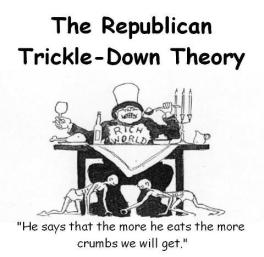
Fuggedaboudit!
Thanks, Mr. President!
Thanks Republicans!
Sunday, February 10, 2019
Oh, Yeah. Tax the Already-Wealthy

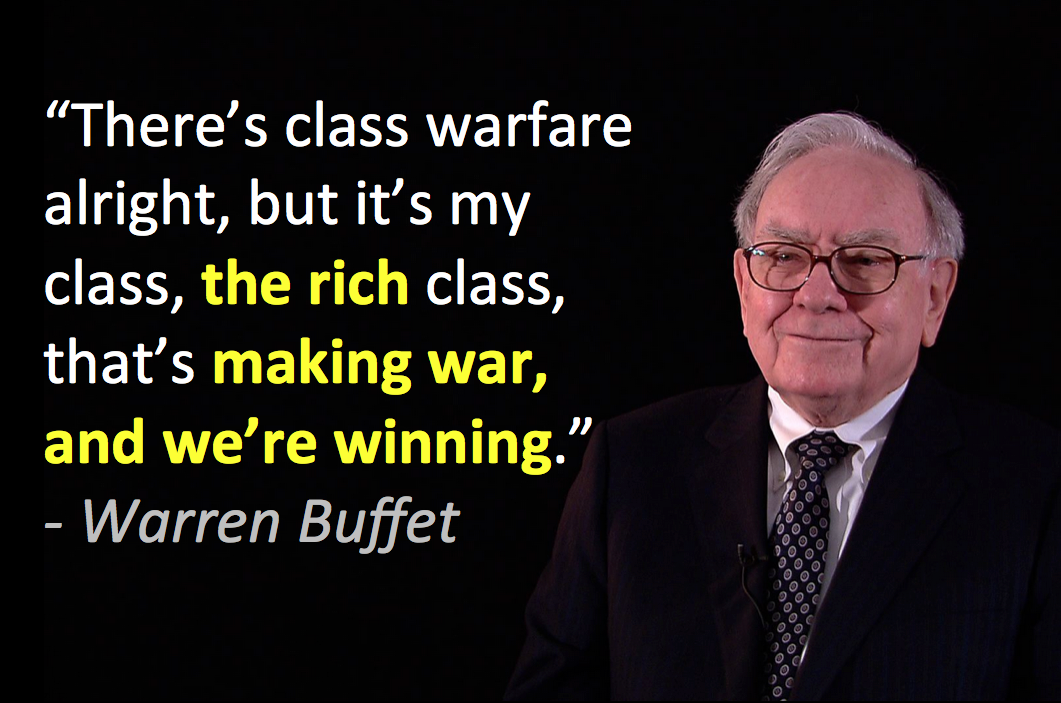
I am, in fact, in favor of what some people claim to be a new thought of eliminating the possibility of being a billionaire, I have to say. Strongly in favor.
For anyone who knows me, this will come as no surprise.
If you're worth 999 million dollars---isn't that enough?
What could you possibly want that isn't attainable for you at that level of wealth?
Jeff Bezos of Amazon, et. al, is worth an estimated $130.7 billion dollars.
Not only that, but he had to be recently publicly shamed into giving his employees a raise up to a whopping $15 per hour. And even then, he took some away from their benefits plan. That is some chutzpah.
Seriously.
That is insane.
And immoral. Just obscene.
There are people, not just in your own nation but across the planet that are hungry, indeed, starving, literally, homeless and a lot more--but you need, somehow, a billion dollars? And/or more?
Really?
Besides the poor of the nation and world, we should all keep in mind, as has been said elsewhere, many times, that when the US was collecting 90% and 70% taxes of the uber-wealthy, we were a far stronger nation, we built a national highway system and went to the moon, among all else.
So yeah, let's do this.
Links:
Yes, Tax the Rich. But Do It Right
Wednesday, May 27, 2015
Quote of the Day -- On the Coming Election
Senator Bernie Sanders from his announcement yesterday, declaring for the presidency in next year's election.

Link: End Citizens United
Thursday, December 4, 2014

Saturday, November 22, 2014
Pressure Building for the Nation's Infrastructure--and Maybe for the People
It does seem as if finally,finally pressure may be building in our media for some kind of infrastructure bill from this Congress.
And let's face it, the only way this is going to happen is if the people are for it and if it's reflected in our media.
Here's the first indicator. I saw it yesterday:
More proof we're in rapid decline: Not a single U.S. city currently ranks among the world's most livable
America has the most billionaires in the world, but not a single U.S. city ranks among the world’s most livable cities. Not a single U.S. airport is among the top 100 airports in the world. Our bridges, road and rail are falling apart, and our middle class is being guttered out thanks to three decades of stagnant wages, while the top 1 percent enjoys 95 percent of all economic gains.
A rigged tax code and a bloated military budget are starving the federal and state governments of the revenue it needs to invest in infrastructure, which means today America looks increasingly like a second rate nation, and now new data shows America’s intellectual resources are also in decline.
For the past three decades, the Republican Party has waged a dangerous assault on the very idea of public education. Tax cuts for the rich have been balanced with spending cuts to education. During the New Deal era of the 1940s to 1970s, public schools were the great leveler of America. They were our great achievement. It was universal education for all, but today it’s education for those fortunate enough to be born into wealthy families or live in wealthy school districts. The right’s strategy of defunding public education leaves parents with the option of sending their kids to a for-profit school or a theological school that teaches kids our ancestors kept dinosaurs as pets.
“What kind of future society the defectors from the public school rolls envision I cannot say. However, having spent some time in the Democratic Republic of Congo—a war-torn hellhole with one of those much coveted limited central governments, and, not coincidentally, a country in which fewer than half the school-age population goes to public school—I can say with certainty that I don’t want to live there,” writes Chuck Thompson in Better off Without Em.
Then, this Sunday evening, CBS News' "60 Minutes" is doing a segment, thank goodness, on America's crumbling infrastructure. However long overdue, at least they're finally doing it now:
Then, this Sunday evening, CBS News' "60 Minutes" is doing a segment, thank goodness, on America's crumbling infrastructure. However long overdue, at least they're finally doing it now:
Is the United States falling apart? Roads and bridges are crumbling, airports are out of date, and the vast majority of seaports are in danger of becoming obsolete. All the result of decades of neglect. Tune in Sunday for Steve Kroft's #60Minutes report on America's infrastructure:
60 Minutes Video - The roads and bridges Americns drive
So here's to hope. Here's to the idea that we're coming to a time and place where we, the people "get it" and so, demand more, far more, from our government and representative in government.
Hopefully we can get these jobs, the improvements and updates to our infrastructure and the boost the economy needs, all three. And naturally, the sooner the better (from this do-nothing, "sue the President" Congress).
It shouldn't all just be for the wealthy and corporations.
Sunday, February 2, 2014
The biggest thing on Super Bowl Sunday
The scumbag, billionaire owners of the monopoly NFL teams pay no taxes.
Let that sink in.
Not for profit my ass.

Tuesday, November 27, 2012
The Oracle from Omaha on a minimum tax for the wealthy--an idea whose time has come
From Sunday's New York Times:
A Minimum Tax for the Wealthy

By Warren E. Buffett
Omaha
SUPPOSE that an investor you admire and trust comes to you with an investment idea. “This is a good one,” he says enthusiastically. “I’m in it, and I think you should be, too.”
Would your reply possibly be this? “Well, it all depends on what my tax rate will be on the gain you’re saying we’re going to make. If the taxes are too high, I would rather leave the money in my savings account, earning a quarter of 1 percent.” Only in Grover Norquist’s imagination does such a response exist.
Between 1951 and 1954, when the capital gains rate was 25 percent and marginal rates on dividends reached 91 percent in extreme cases, I sold securities and did pretty well. In the years from 1956 to 1969, the top marginal rate fell modestly, but was still a lofty 70 percent — and the tax rate on capital gains inched up to 27.5 percent. I was managing funds for investors then. Never did anyone mention taxes as a reason to forgo an investment opportunity that I offered.
Under those burdensome rates, moreover, both employment and the gross domestic product (a measure of the nation’s economic output) increased at a rapid clip. The middle class and the rich alike gained ground.
So let’s forget about the rich and ultrarich going on strike and stuffing their ample funds under their mattresses if — gasp — capital gains rates and ordinary income rates are increased. The ultrarich, including me, will forever pursue investment opportunities.
And, wow, do we have plenty to invest. The Forbes 400, the wealthiest individuals in America, hit a new group record for wealth this year: $1.7 trillion. That’s more than five times the $300 billion total in 1992. In recent years, my gang has been leaving the middle class in the dust.
A huge tail wind from tax cuts has pushed us along. In 1992, the tax paid by the 400 highest incomes in the United States (a different universe from the Forbes list) averaged 26.4 percent of adjusted gross income. In 2009, the most recent year reported, the rate was 19.9 percent. It’s nice to have friends in high places.
The group’s average income in 2009 was $202 million — which works out to a “wage” of $97,000 per hour, based on a 40-hour workweek. (I’m assuming they’re paid during lunch hours.) Yet more than a quarter of these ultrawealthy paid less than 15 percent of their take in combined federal income and payroll taxes. Half of this crew paid less than 20 percent. And — brace yourself — a few actually paid nothing.
This outrage points to the necessity for more than a simple revision in upper-end tax rates, though that’s the place to start. I support President Obama’s proposal to eliminate the Bush tax cuts for high-income taxpayers. However, I prefer a cutoff point somewhat above $250,000 — maybe $500,000 or so.
Additionally, we need Congress, right now, to enact a minimum tax on high incomes. I would suggest 30 percent of taxable income between $1 million and $10 million, and 35 percent on amounts above that. A plain and simple rule like that will block the efforts of lobbyists, lawyers and contribution-hungry legislators to keep the ultrarich paying rates well below those incurred by people with income just a tiny fraction of ours. Only a minimum tax on very high incomes will prevent the stated tax rate from being eviscerated by these warriors for the wealthy.
Above all, we should not postpone these changes in the name of “reforming” the tax code. True, changes are badly needed. We need to get rid of arrangements like “carried interest” that enable income from labor to be magically converted into capital gains. And it’s sickening that a Cayman Islands mail drop can be central to tax maneuvering by wealthy individuals and corporations.
But the reform of such complexities should not promote delay in our correcting simple and expensive inequities. We can’t let those who want to protect the privileged get away with insisting that we do nothing until we can do everything.
Our government’s goal should be to bring in revenues of 18.5 percent of G.D.P. and spend about 21 percent of G.D.P. — levels that have been attained over extended periods in the past and can clearly be reached again. As the math makes clear, this won’t stem our budget deficits; in fact, it will continue them. But assuming even conservative projections about inflation and economic growth, this ratio of revenue to spending will keep America’s debt stable in relation to the country’s economic output.
In the last fiscal year, we were far away from this fiscal balance — bringing in 15.5 percent of G.D.P. in revenue and spending 22.4 percent. Correcting our course will require major concessions by both Republicans and Democrats.
All of America is waiting for Congress to offer a realistic and concrete plan for getting back to this fiscally sound path. Nothing less is acceptable.
In the meantime, maybe you’ll run into someone with a terrific investment idea, who won’t go forward with it because of the tax he would owe when it succeeds. Send him my way. Let me unburden him.
--Warren E. Buffett, Chairman and Chief Executive of Berkshire Hathaway.
And then, while we're at it, let's institute a minimum tax of, say, 10%, at least, for corporations so no matter what they write off legally, they can help pay for the roads and schools and all the infrastructure that help them make profits and keep growing here in America. It's the least they can do for access to the best markets in the world.
Link: http://www.nytimes.com/2012/11/26/opinion/buffett-a-minimum-tax-for-the-wealthy.html?_r=0&pagewanted=print
Thursday, June 28, 2012
Quote of the day
“The American people are angry. They are angry that the middle class is collapsing because of the Wall Street-caused recession... Meanwhile, the wealthy & the largest corporations are doing phenomenally well & now billionaires & their congressional friends want to balance the budget on the backs of the elderly, the children, the sick & the poor.” --Senator Bernie Sanders (Independent, Vermont)
And they'll get away with it unless we stand up and demand different and better.
And they'll get away with it unless we stand up and demand different and better.
Wednesday, August 10, 2011
Quote of the day
"Vandals burn down U.K. because a gangster is shot. Republicans burn down U.S. because a billionaire may be taxed." --Yonah W Grossman, Comedian, Social Commentator, Link: http://www.ywgrossman.com/ (also on Facebook).
Monday, February 21, 2011
Quote of the day--on Wisconsin and our oligarchy
What Mr. Walker (Governor of Wisconsin) and his backers are trying to do is to make Wisconsin — and eventually, America — less of a functioning democracy and more of a third-world-style oligarchy. And that’s why anyone who believes that we need some counterweight to the political power of big money should be on the demonstrators’ side.
In principle, every American citizen has an equal say in our political process. In practice, of course, some of us are more equal than others. Billionaires can field armies of lobbyists; they can finance think tanks that put the desired spin on policy issues; they can funnel cash to politicians with sympathetic views (as the Koch brothers did in the case of Mr. Walker). On paper, we’re a one-person-one-vote nation; in reality, we’re more than a bit of an oligarchy, in which a handful of wealthy people dominate.
Given this reality, it’s important to have institutions that can act as counterweights to the power of big money. And unions are among the most important of these institutions.
You don’t have to love unions, you don’t have to believe that their policy positions are always right, to recognize that they’re among the few influential players in our political system representing the interests of middle- and working-class Americans, as opposed to the wealthy. Indeed, if America has become more oligarchic and less democratic over the last 30 years — which it has — that’s to an important extent due to the decline of private-sector unions.
And now Mr. Walker and his backers are trying to get rid of public-sector unions, too.
There’s a bitter irony here. The fiscal crisis in Wisconsin, as in other states, was largely caused by the increasing power of America’s oligarchy. After all, it was superwealthy players, not the general public, who pushed for financial deregulation and thereby set the stage for the economic crisis of 2008-9, a crisis whose aftermath is the main reason for the current budget crunch. And now the political right is trying to exploit that very crisis, using it to remove one of the few remaining checks on oligarchic influence.
So will the attack on unions succeed? I don’t know. But anyone who cares about retaining government of the people by the people should hope that it doesn’t.
--Paul Krugman, Nobel Prize-winning economist, author and columnist for The New York Times
Link to original post: http://www.nytimes.com/2011/02/21/opinion/21krugman.html?_r=2&partner=rssnyt&emc=rss
In principle, every American citizen has an equal say in our political process. In practice, of course, some of us are more equal than others. Billionaires can field armies of lobbyists; they can finance think tanks that put the desired spin on policy issues; they can funnel cash to politicians with sympathetic views (as the Koch brothers did in the case of Mr. Walker). On paper, we’re a one-person-one-vote nation; in reality, we’re more than a bit of an oligarchy, in which a handful of wealthy people dominate.
Given this reality, it’s important to have institutions that can act as counterweights to the power of big money. And unions are among the most important of these institutions.
You don’t have to love unions, you don’t have to believe that their policy positions are always right, to recognize that they’re among the few influential players in our political system representing the interests of middle- and working-class Americans, as opposed to the wealthy. Indeed, if America has become more oligarchic and less democratic over the last 30 years — which it has — that’s to an important extent due to the decline of private-sector unions.
And now Mr. Walker and his backers are trying to get rid of public-sector unions, too.
There’s a bitter irony here. The fiscal crisis in Wisconsin, as in other states, was largely caused by the increasing power of America’s oligarchy. After all, it was superwealthy players, not the general public, who pushed for financial deregulation and thereby set the stage for the economic crisis of 2008-9, a crisis whose aftermath is the main reason for the current budget crunch. And now the political right is trying to exploit that very crisis, using it to remove one of the few remaining checks on oligarchic influence.
So will the attack on unions succeed? I don’t know. But anyone who cares about retaining government of the people by the people should hope that it doesn’t.
--Paul Krugman, Nobel Prize-winning economist, author and columnist for The New York Times
Link to original post: http://www.nytimes.com/2011/02/21/opinion/21krugman.html?_r=2&partner=rssnyt&emc=rss
Sunday, May 23, 2010
You can bet the Republican shills will fight this for their wealthy buddies
The Challenge of Closing Tax Loopholes For Billionaires
by Robert Reich, from his blog
Sunday, May 23, 2010
Who could be opposed to closing a tax loophole that allows hedge-fund and private equity managers to treat their earnings as capital gains – and pay a rate of only 15 percent rather than the 35 percent applied to ordinary income?
Answer: Some of the nation’s most prominent and wealthiest private asset managers, such as Paul Allen and Henry Kravis, who, along with hordes of lobbyists, are determined to keep the loophole wide open.
The House has already tried three times to close it only to have the Senate cave in because of campaign donations from these and other financiers who benefit from it.
But the measure will be brought up again in the next few weeks, and this time the result could be different. Few senators want to be overtly seen as favoring Wall Street. And tax revenues are needed to help pay for extensions of popular tax cuts, such as the college tax credit that reduces college costs for tens of thousands of poor and middle class families. Closing this particular loophole would net some $20 billion.
It’s not as if these investment fund managers are worth a $20 billion subsidy. Nonetheless they argue that if they have to pay at the normal rate they’ll be discouraged from investing in innovative companies and startups. But if such investments are worthwhile they shouldn’t need to be subsidized. Besides, in the years leading up to the crash of 2008, hedge-fund and private equity fund managers weren’t exactly models of public service. Many speculated in ways that destabilized the whole financial system.
Nor are these fund managers especially deserving, as compared to poor and middle-class families that need a tax break to send their kids to college. Nor are they particularly needy. Last year, the 25 most successful hedge-fund managers earned a billion dollars each. One of them earned 4 billion dollars. (Paul Allen’s personal yacht holds two luxury submarines and a helicopter. Henry Kravis is one of the wealthiest people in the world.)
Several of these private investment fund managers, by the way, have taken a lead in the national drive to cut the federal budget deficit. The senior chairman and co-founder of the Blackstone Group, one of the largest private equity funds, is Peter G. Peterson, who never tires of telling the nation it faces economic ruin if deficits aren’t brought under control. Curiously, I have not heard Peterson advocate closing this tax loophole as one way to further the cause of fiscal responsibility.
Closing tax loopholes for billionaires may seem like a no-brainer, especially at a time when the nation is cutting back spending on the middle class — slashing budgets that fund child care, public schools, and public universities. Tens of thousands of teachers are getting pink slips.
But you can expect a huge fight.
There is also a moral issue here. Call me old fashioned but I just think it’s wrong that a single hedge fund manager earns a billion dollars, when a billion dollars would pay the salaries of about 20,000 teachers.
Link to original post: http://robertreich.org/
by Robert Reich, from his blog
Sunday, May 23, 2010
Who could be opposed to closing a tax loophole that allows hedge-fund and private equity managers to treat their earnings as capital gains – and pay a rate of only 15 percent rather than the 35 percent applied to ordinary income?
Answer: Some of the nation’s most prominent and wealthiest private asset managers, such as Paul Allen and Henry Kravis, who, along with hordes of lobbyists, are determined to keep the loophole wide open.
The House has already tried three times to close it only to have the Senate cave in because of campaign donations from these and other financiers who benefit from it.
But the measure will be brought up again in the next few weeks, and this time the result could be different. Few senators want to be overtly seen as favoring Wall Street. And tax revenues are needed to help pay for extensions of popular tax cuts, such as the college tax credit that reduces college costs for tens of thousands of poor and middle class families. Closing this particular loophole would net some $20 billion.
It’s not as if these investment fund managers are worth a $20 billion subsidy. Nonetheless they argue that if they have to pay at the normal rate they’ll be discouraged from investing in innovative companies and startups. But if such investments are worthwhile they shouldn’t need to be subsidized. Besides, in the years leading up to the crash of 2008, hedge-fund and private equity fund managers weren’t exactly models of public service. Many speculated in ways that destabilized the whole financial system.
Nor are these fund managers especially deserving, as compared to poor and middle-class families that need a tax break to send their kids to college. Nor are they particularly needy. Last year, the 25 most successful hedge-fund managers earned a billion dollars each. One of them earned 4 billion dollars. (Paul Allen’s personal yacht holds two luxury submarines and a helicopter. Henry Kravis is one of the wealthiest people in the world.)
Several of these private investment fund managers, by the way, have taken a lead in the national drive to cut the federal budget deficit. The senior chairman and co-founder of the Blackstone Group, one of the largest private equity funds, is Peter G. Peterson, who never tires of telling the nation it faces economic ruin if deficits aren’t brought under control. Curiously, I have not heard Peterson advocate closing this tax loophole as one way to further the cause of fiscal responsibility.
Closing tax loopholes for billionaires may seem like a no-brainer, especially at a time when the nation is cutting back spending on the middle class — slashing budgets that fund child care, public schools, and public universities. Tens of thousands of teachers are getting pink slips.
But you can expect a huge fight.
There is also a moral issue here. Call me old fashioned but I just think it’s wrong that a single hedge fund manager earns a billion dollars, when a billion dollars would pay the salaries of about 20,000 teachers.
Link to original post: http://robertreich.org/
Subscribe to:
Posts (Atom)

 Posts
Posts




