
Showing posts with label GM. Show all posts
Showing posts with label GM. Show all posts
Friday, November 28, 2014
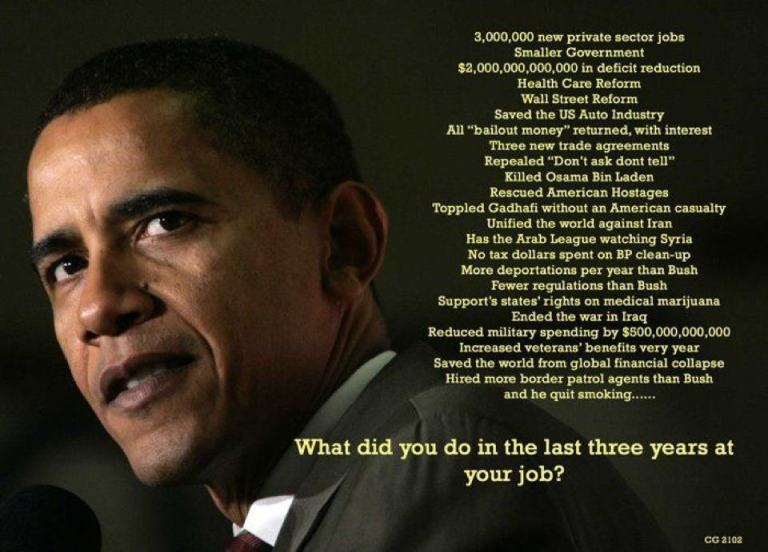
For all the Obama haters out there
And keep in mind, this isn't including more recent improvements since 2008. This is a partial list of benefits for and to America (click on picture for easier viewing).


Wednesday, April 9, 2014

Friday, May 18, 2012
KCUR's new GM
NPR radio station KCUR 89.3 FM announced that it has found and hired their new General Manager. He is Nico Leone, formerly of KDHX of St. Louis.
Just one question: They couldn't find anyone from here in Kansas City for the job?
It always surprises me when a company selects a person or a company--especially architects and the like--from outside the city.
Maybe a radio station GM for an NPR station is tough to get from here in town. It just seems there ought to maybe be enough people from some organization which they could choose.
He'll know radio.
He just doesn't know Kansas City or the people here.
Link: http://kcur.org/post/kcur-names-new-general-manager
Just one question: They couldn't find anyone from here in Kansas City for the job?
It always surprises me when a company selects a person or a company--especially architects and the like--from outside the city.
Maybe a radio station GM for an NPR station is tough to get from here in town. It just seems there ought to maybe be enough people from some organization which they could choose.
He'll know radio.
He just doesn't know Kansas City or the people here.
Link: http://kcur.org/post/kcur-names-new-general-manager
Thursday, February 16, 2012
I think we can officially say the "auto bailout" officially worked now
Breaking news today: GM posts its highest profit ever: $7.6 billion
GM earns its highest profit ever in 2011 with $7.6 billion; overseas losses cut 4Q profit So can we now, officially end the conversations and questions about the need, sense and logic of having "bailed out"--or invested in--GM, Detroit, Chrysler and the American auto workers? Please. Sure, we didn't want to do it and we didn't want to need to do it but the fact is, if we hadn't bailed them out, we would have lost that industry, for the most part, almost completely. Link to original story: http://www.google.com/hostednews/ap/article/ALeqM5gQQyKL1zj8FAOWVfwO1Et4tc1VOA?docId=7878364211444f549d5c2356de1fdce9
Saturday, September 24, 2011
Remember when GM's Onstar seemed like a good and innocent idea?
Yeah, me too. That's how old I am. Now? Did you see this? "OnStar to sell customer location and other data" “'Big Brother' is not only watching, but may soon be selling what he sees. Wired magazine’s “Threat Level” blog says OnStar, a vehicle tracking service owned by General Motors, emailed subscribers this week alerting them to a change in policy that allows the company to sell customer data to anyone they choose, even after the service is canceled."It seems everyone, everyone, from the government to Facebook to Onstar and who knows who all, is bound and determined to get information on us and sell it to the highest bidder. Links: http://blogs.ajc.com/news-to-me/2011/09/21/onstar-to-sell-customer-location-and-other-data/; http://www.bing.com/search?q=onstar+selling+data&src=IE-SearchBox&FORM=IE8SRC
Tuesday, February 8, 2011
Best Super Bowl commercial?
I think this may have been the one.
It sneaks up on you. It seems like it might go nowhere but you gotta' say, right off the bat, the kid in the costume looks so cute, right?
And then there's that payoff at the end.
I was in a theater room in a condominium and the whole small audience just broke out laughing. The commercial and the audience both surprised me.
I think it was the surprise that made it so much fun.
That and the simplicity of the ad.
And the innocence.
(Btw, a local ad agency guy tends to agree with me on this one, too: http://www.nbcactionnews.com/dpp/news/local_news/president-of-local-advertising-company-breaks-down-the-hits-misses-of-this-year%27s-super-bowl-ads)
Have a great day, y'all.
Friday, January 28, 2011
Fortunately Transportation Secretary LaHood agrees
Driving Under the Influence of Facebook
Secretary of Transportation Ray LaHood may not be friending General Motors — and certainly not at 60 miles an hour. Just as LaHood’s annual conference on combating distracted driving was about to start, GM’s OnStar announced it was developing ways to let you update your Facebook page from your car with voice commands. Secretary LaHood’s response: “Let’s put safety before entertainment.” In television interviews he said he thought Facebook in the car was a bad idea.
I mean, come on. I don't care if you are big on Facebook, no one really needs to update their status that bad, even and maybe especially if they've had a wreck. Please.
Common sense, anyone?
Link to original story: http://moneywatch.bnet.com/saving-money/blog/cars-money/driving-under-the-influence-of-facebook/1624/
Wednesday, October 20, 2010
Because Damnitkage shouldn't be the only one putting this up (guest post)
Things Obama has done
From a facebook post. Interesting.
I’m sick and tired of people asking “What has Obama done?” So here’s a list of things he’s done since he’s been in office. Remember: He was elected President. He wasn’t elected Jesus.
The list is still growing. Let me know if I (Damnitkage) missed anything.
1. Saved the collapse of the American automotive industry by making GM restructure before bailing them out and putting incentive money up to help the industry
2. Shifted the focus of the war from Iraq to Afghanistan, and putting the emphasis on reducing terrorism where it should have been all along
3. Relaxed anti-American tensions throughout the world
4. Signed order to close the prisoner “torture camp” at Guantanamo Bay
5. Has made the environment a national priority and a primary source for job creation
6. Has made education a national priority by putting emphasis and money behind new ideas like charter schools but speaking directly to school children in telling them they have to do their part.
7. Won the Nobel Peace Prize
8. $789 billion economic stimulus plan
9. Appointment of first Latina to the Supreme Court
10. Attractive tax write-offs for those who buy hybrid automobiles
11. Authorized construction/opening of additional health centers to care for veterans
12. Renewed dialogue with NATO and other allies and partners on strategic issues.
13. Beginning the process of reforming and restructuring the military 20 years after the Cold War to a more modern fighting force… this includes new procurement policies, increasing size of military, new technology and cyber units and operations, etc.
14. Better body armor is now being provided to our troops
15. “Cash for clunkers” program offers vouchers to trade in fuel inefficient, polluting old cars for new cars; stimulates auto sales
16. Changed the failing/status quo military command in Afghanistan
17. Closed offshore tax safe havens
18. Deployed additional troops to Afghanistan
19. Ended media “blackout” on war casualties, reporting full information
20. Ended previous policy of awarding no-bid defense contracts
21. Ended media blackout on war casualties and the return of fallen soldiers to Dover AFB.
22. Ended previous policy of cutting the FDA and circumventing FDA rules
23. Ended previous practice of forbidding Medicare from negotiating with drug manufacturers for cheaper drugs; the federal government is now realizing hundreds of millions of dollars in savings
24. Ended previous practice of having White House aides rewrite scientific and environmental rules, regulations and reports
25. American Recovery and Reinvestment Act has created 2.1 million jobs (as of 12/31/09).
26. Ended previous policy of not regulating and labeling carbon dioxide emissions
27. Ended previous policy of offering tax benefits to corporations who outsource American jobs; the new policy is to promote in-sourcing to bring jobs back
28. Ended previous policy on torture; the US now has a no torture policy and is in compliance with the Geneva Convention standards
29. . Launched Recovery.gov to track spending from the Recovery Act, an unprecedented step to provide transparency and accountability through technology.
30. Ended previous practice of protecting credit card companies; in place of it are new consumer protections from credit card industry’s predatory practices
31. Ended previous “stop-loss” policy that kept soldiers in Iraq/Afghanistan longer than their enlistment date
32. Energy producing plants must begin preparing to produce 15% of their energy from renewable sources
33. Established a National Performance Officer charged with saving the federal government money and making federal operations more efficient
34. Established a new cyber security office
35. Expanded the SCHIP program to cover health care for 4 million more children
36. Expanding vaccination programs
37. Families of fallen soldiers have expenses
38. . Provided the Department of Veterans Affairs (VA) with more than $1.4 billion to improve services to America’s Veterans.
39. Federal support for stem-cell and new biomedical research
40. Funds for high-speed, broadband Internet access to K-12 schools
41. Responded with compassion and leadership to the earthquake in Haiti
42. Immediate and efficient response to the floods in North Dakota and other natural disasters
43. Launched Business.gov – enabling conversation and online collaboration between small business owners, government representatives and industry experts in discussion forums relevant to starting and managing a business. Great for the economy.
44. Improved housing for military personnel
45. Improved conditions at Walter Reed Military Hospital and other military hospitals
46. Changed failing war strategy in Afghanistan.
47. Improving benefits for veterans
48. Increased infrastructure spending (roads, bridges, power plants…) after years of neglect
49. Donated his $1.4 million Nobel Prize to nonprofits.
50. Increasing opportunities in AmeriCorps program
51. Provided tax credits to first-time home buyers through the Worker, Homeownership, and Business Assistance Act of 2009 to revitalize the U.S. housing market.
52. Increased pay and benefits for military personnel
53. Increased student loans
54. Instituted a new policy on Cuba, allowing Cuban families to return “home” to visit loved ones
55. Cracked down on companies that deny sick pay, vacation and health insurance to workers by abusing the employee classification of independent contractor. Such companies also avoid paying Social Security, Medicare and unemployment insurance taxes for those workers.
56. Limited salaries of senior White House aides; cut to $100,000
57. Limits on lobbyists’ access to the White House
58. Protected 300,000 education jobs, such as teachers, principals, librarians, and counselors through the Recovery Act that would have otherwise been lost.
59. Limits on White House aides working for lobbyists after their tenure in the administration
60. Children’s Health Insurance Reauthorization Act on February 4, 2009, provides quality health care to 11 million kids – 4 million who were previously uninsured.
61. Lower drug costs for seniors
62. Making more loans available to small businesses
63. Many more press conferences and town halls and much more media access than previous administration
64. . Signed the Christopher and Dana Reeve Paralysis Act, the first piece of comprehensive legislation aimed at improving the lives of Americans living with paralysis
65. Negotiated deal with Swiss banks to permit US government to gain access to records of tax evaders and criminals
66. New Afghan War policy that limits aerial bombing and prioritizes aid, development of infrastructure, diplomacy, and good government practices by Afghans
67. Announced creation of a Joint Virtual Lifetime Electronic Record for members of the U.S. Armed Forces to improve quality of medical care.
68. New federal funding for science and research labs
69. New funds for school construction
70. Ordered all federal agencies to undertake a study and make recommendations for ways to cut spending
71. Ordered a review of all federal operations to identify and cut wasteful spending and practices
72. . Negotiated deal with Swiss banks to permit US government to gain access to records of tax evaders and criminals.
73. Phasing out the expensive F-22 war plane and other outdated weapons systems, which weren’t even used or needed in Iraq/Afghanistan
74. Reengaged in the agreements/talks on global warming and greenhouse gas emissions
75. Provided tax credit to workers thus cutting taxes for 95% of America’s working families.
76. Reengaged in the treaties/agreements to protect the Antarctic
77. Removed restrictions on embryonic stem-cell research
78. . Helped reverse a downward spiral of the stock market. On January 19, 2009, the last day of President Bush’s presidency, the Dow closed at 8,218.22. In February 2010, the Dow closed at 10,309.24
79. Renewed loan guarantees for Israel
80. Restarted the nuclear non-proliferation talks and building back up the nuclear inspection infrastructure/protocols
81. Provided attractive tax write-offs for those who buy hybrid automobiles.
82. Returned money authorized for refurbishment of White House offices and private living quarters
83. Sent envoys to Middle East and other parts of the world that had been neglected for years; reengaging in multilateral and bilateral talks and diplomacy
84. Unveiled a program on Earth Day 2009 to develop the renewable energy projects on the waters of our Outer Continental Shelf that produce electricity from wind, wave, and ocean currents. These regulations will enable, for the first time ever, the nation to tap into our ocean’s vast sustainable resources to generate clean energy in an environmentally sound and safe manner.
85. Signed national service legislation; expanded national youth service program
86. States are permitted to enact federal fuel efficiency standards above federal standards
87. Students struggling to make college loan payments can have their loans refinanced
88. Successful release of US captain held by Somali pirates; authorized the SEALS to do their job
89. The FDA is now regulating tobacco
90. Ended the previous stop-loss policy that kept soldiers in Iraq/Afghanistan longer than their enlistment date.
91. The missile defense program is being cut by $1.4 billion in 2010
92. The public can meet with federal housing insurers to refinance (the new plan can be completed in one day) a mortgage if they are having trouble paying
93. The “secret detention” facilities in Eastern Europe and elsewhere are being closed
94. US financial and banking rescue plan
95. US Navy increasing patrols off Somali coast
96. . Signed the Weapons Systems Acquisition Reform Act to stop fraud and wasteful spending in the defense procurement and contracting system.
97. Visited more countries and met with more world leaders than any president in his first six months in office
98. Improved relations with Iran
99. Improved U.S. policy on climate change
100. Set timetable for exiting Iraq (already started removing troops)
101. Improved relations with Russia
102. Improved relations with the Islamic World
103. Made progress towards grater cooperation on limiting nuclear proliferation
104. Economic stimulus plan has created jobs, decreasing the unemployment rate
105. Drastically slowed the recession
105. Drastically slowed the recession
106. Saved Wall Street
107. Passed the Lilly Ledbetter Act (equal work for equal pay) http://en.wikipedia.org/wiki/Lilly_Ledbetter_Fair_Pay_Act_of_2009
108. HEALTHCARE REFORM
Once again, this is a lot to accomplish in such a short amount of time. He was elected President, he wasn’t elected Jesus.
Link to original post: http://damnitkage.com/2010/10/things-obama-has-done/comment-page-1/#comment-3818
Wednesday, October 6, 2010
More proof: President Obama is not a Socialist
For anyone and everyone who has complained or who are still
complaining about the TARP fund and how big it was and how it was going to cost
us so much and how it was not going to do any good and how it was going to cost
us so much and how it was not going to do any good and, after all, how rotten
President Barack Obama and his administration are, check this out:
Exclusive: Treasury’s
TARP, AID Bailout Costs Fall to $30 Billion
The price to taxpayers of the bailouts and financial rescue
of 2008 and 2009 continues to fall sharply.
In figures to be released later today, the Treasury Department will
report that the final net cost of the TARP is expected to be about $50 billion,
Yahoo! Finance has learned. Add in
expected returns from Treasury’s interest in insurance company AIG, and the
final net cost will be closer to $30 billion.
So, let’s see, that would be—“it worked!”?
And keep in mind that it was the previous President, George
W. Bush who started the TARP fund, too.
President Obama merely continued it because we were in severe and
serious trouble, financially and economicaly.
He was trying to save our collective asses, so to speak, collectively,
from a second “Great Depression.
Another bonus: Apart
from the funds spent on housing, Treasury now doesn’t expect to lose money.
Oh, and that money to save GM? It worked to, don’t forget. The company and all that manufacturing and
the associated jobs are still right here in the US
Conclusion? The TARP
program has been an enormous success from a policy perspective—it saved the
financial system and averted a second Great Depression at a very low price to
taxpayers.
But do you think the Republicans, Conservatives, Tea Party
members or anyone on the Right will acknowledge this good news?
Certainly not.
I think this is where we jump in and say a) we told you so
(he didn’t do it to be a “Socialist”) and b) we now need you to go back, shut
up, stop complaining and start to work together, all of us, so we can solve
more (eventually all?) our problems.
Especially you, Mr. Beck.
Sunday, September 12, 2010
The corporation vs. you and me, yet again--or still
There's a terrific article on the front page of the Star today (sorry, Tony), telling of Enterprise Rent-a-Car (one corporation) teaming up General Motors (another corporation) to take safety airbags out of 60,000 of their cars, in order to save money. It's figured they saved $175.00 per car (at 60,000 cars that ends up being $10,500,000.00, by the way--a tidy little sum of money). But at what cost did they save this money? And of course the answer is, they saved it at the expense of the safety of their clients, the renters of these cars while they owned them, but, eventually, at the expense of the people who bought these cars. What's additionally unconscionable about this--because that's what this is, unconscionable--is that Enterprise, when selling these cars didn't notify possible purchasers of the cars that what is otherwise standard on these new cars for safety would not be included. Eventually, Enterprise was successfully sued to release this information--they had to be forced--and the solution offered was that "everyone who owns one a $100 voucher that can be used for reting or buying something else from Enterprise." So on top of being made less safe so they could save millions of dollars, they add an insult of this voucher so you can do more business with them. Incredible. What chutzpah. This, then, points out, once again, why we need government. If there weren't government--first, the justice system, so the corporation could be sued and then the legislative branch so laws could be passed against this kind of thing--we wouldn't be able to have any redress to this ouotrageous unfairness and inequity. "Free market Capitalism"? No, no thank you. Corporations have proven themselves, time and again, that they are for themselves, first, last and foremost. Too often, they've shown they'll put even their own clients at risk if it means they can make more money. What we need right now, unfortunately, is a law from Congress making this kind of deletion of what would otherwise be standard safety equipment, illegal. And they've brought it on themselves.
Link to original story: http://www.kansascity.com/2010/09/11/2216137/settlement-nears-over-missing.html
Friday, November 13, 2009
Maybe we need to come down a few notches?
Because the average guy and gal on the street isn't really thinking about the "big picture" of the American economy, maybe we should.
Let me propose an idea, folks, that some economists are batting around that has to do with you and I, directly, in our country and the world.
There is a theory out there that proposes that maybe you and I make too much money, spend too much and live too high on the hog, so to speak, and that maybe we need to bring it down to the rest of the world's level.
Yeah.
It's called our "standard of living." You've heard of that.
The ideas are that maybe you and I and the whole country live beyond our means and both cost too much (we're paid too highly per hour, etc.) and spend too much.
Think about it.
It's virtually impossible to deny that we--both as a group (read: a country) and as individuals (people individually and per households)--are in way too much debt so I think we can safely take that for granted.
The one, last part of this to consider is that maybe we do, as a nation and individuals, maybe make too much money, especially compared to the rest of the world.
And this is the tricky--and unpleasant--part.
Maybe what we do isn't all that special, and that much above what all the rest of the world does and makes. Sure, we used to make GM cars and all that but we know we've put most of our manufacturing offshore.
And when you put this all in the context of our debt and this huge downturn in the economy, with the Federal government trying to spend our way back to where we used to be and propping up not only huge manufacturing sectors of our economy but also banks and financial and insurance institutions, it gets to looking as though this may be true.
Those economists who are discussing these thoughts and issues are suggesting that maybe our government shouldn't, in fact, be throwing $700 billion in TARP money at us, in an effort to prop up our economy and economic way of life.
Sure, they should keep us out of a true economic depression in the shape of the 1930's but we're already in huge debt. Does it make sense to get and put us in much, much deeper debt, instead of letting this business cycle play out a bit more?
Are we, perhaps, setting ourselves up for a much worse situation by doing this?
But no one wants to think on these things--with the exception of economists.
Granted, if we did or do "ratchet ourselves down," it would be painful. Incredibly painful. We'd have to look at ourselves and our country in a completely new way.
For decades, we've thought of ourselves as rather wealthy, even by our own standards. There was nothing we couldn't have, if we only worked hard enough. Hell, our billboards, radios and televisions told us all this, ad infinitum. Why would we think or believe anything else?
And we really did believe, as Michael Douglas' character--Gordon Gekko--in the movie "Wall Street" said, that "greed is good", whether we want to believe that or not.
So, if this is true, that we have to lower our standards, that is, lower our wages, lower our purchases (and we're already doing that, as a nation, check it out), lower, really everything, it's going to likely be painful.
And the more we fight it and push this possible, even likely, possibility away, the more painful it will be.
Denial makes things worse, especially in these matters.
If this isn't all true, the data sure makes it look this way. Stay tuned.
Links: http://www.imdb.com/title/tt0094291/
http://globaleconomicanalysis.blogspot.com/
Side note: Tip of the hat to Michael on this. We've been discussing this for a couple years. I've been meaning to write on it for some time. Thanks.
Let me propose an idea, folks, that some economists are batting around that has to do with you and I, directly, in our country and the world.
There is a theory out there that proposes that maybe you and I make too much money, spend too much and live too high on the hog, so to speak, and that maybe we need to bring it down to the rest of the world's level.
Yeah.
It's called our "standard of living." You've heard of that.
The ideas are that maybe you and I and the whole country live beyond our means and both cost too much (we're paid too highly per hour, etc.) and spend too much.
Think about it.
It's virtually impossible to deny that we--both as a group (read: a country) and as individuals (people individually and per households)--are in way too much debt so I think we can safely take that for granted.
The one, last part of this to consider is that maybe we do, as a nation and individuals, maybe make too much money, especially compared to the rest of the world.
And this is the tricky--and unpleasant--part.
Maybe what we do isn't all that special, and that much above what all the rest of the world does and makes. Sure, we used to make GM cars and all that but we know we've put most of our manufacturing offshore.
And when you put this all in the context of our debt and this huge downturn in the economy, with the Federal government trying to spend our way back to where we used to be and propping up not only huge manufacturing sectors of our economy but also banks and financial and insurance institutions, it gets to looking as though this may be true.
Those economists who are discussing these thoughts and issues are suggesting that maybe our government shouldn't, in fact, be throwing $700 billion in TARP money at us, in an effort to prop up our economy and economic way of life.
Sure, they should keep us out of a true economic depression in the shape of the 1930's but we're already in huge debt. Does it make sense to get and put us in much, much deeper debt, instead of letting this business cycle play out a bit more?
Are we, perhaps, setting ourselves up for a much worse situation by doing this?
But no one wants to think on these things--with the exception of economists.
Granted, if we did or do "ratchet ourselves down," it would be painful. Incredibly painful. We'd have to look at ourselves and our country in a completely new way.
For decades, we've thought of ourselves as rather wealthy, even by our own standards. There was nothing we couldn't have, if we only worked hard enough. Hell, our billboards, radios and televisions told us all this, ad infinitum. Why would we think or believe anything else?
And we really did believe, as Michael Douglas' character--Gordon Gekko--in the movie "Wall Street" said, that "greed is good", whether we want to believe that or not.
So, if this is true, that we have to lower our standards, that is, lower our wages, lower our purchases (and we're already doing that, as a nation, check it out), lower, really everything, it's going to likely be painful.
And the more we fight it and push this possible, even likely, possibility away, the more painful it will be.
Denial makes things worse, especially in these matters.
If this isn't all true, the data sure makes it look this way. Stay tuned.
Links: http://www.imdb.com/title/tt0094291/
http://globaleconomicanalysis.blogspot.com/
Side note: Tip of the hat to Michael on this. We've been discussing this for a couple years. I've been meaning to write on it for some time. Thanks.
Saturday, June 6, 2009
We really don't want to consider what's going on with our economy
Another bank went down last night in Illinois.
That's 37 banks this year.
And it's not even July yet.
Let's see.
There were 25 banks that went down all last year.
25.
Do you know how many banks went down in 2007?
3
Yeah, 3.
And there's still more than 6 months to go before we're through with 2009.
And there's still the whole state of Michigan and GM and all those employees in so much trouble, of course, what with the bankruptcy up there this week. That will cause more financial problems, naturally.
And the whole state of California is about, what? 7 days from insolvency (another word for bankruptcy).
And then there are all the states with severely reduced revenues due to all the cutbacks and reduced values of properties and more company/employee layoffs.
Finally, for this column only, it's a widely-held assumption we haven't even begun to feel the full effects of the credit card defaults that are strongly believed to be on their way. That will be many more millions of dollars lost, presumably.
And that just starts the economic conversation.
So there are a great deal of things to consider, when it comes to our near-future economy.
I don't think the average guy on the streets is taking this all in.
That's probably a good thing.
Links to stoies:
http://www.nytimes.com/2009/06/06/business/06bizbrief-SMALLBANKINI_BRF.html?_r=1&adxnnl=1&adxnnlx=1244318975-veyJLaVthRyc4Y3as1DDZw
http://globaleconomicanalysis.blogspot.com/2009/06/bankruptcy-filings-reach-6000-day.html
That's 37 banks this year.
And it's not even July yet.
Let's see.
There were 25 banks that went down all last year.
25.
Do you know how many banks went down in 2007?
3
Yeah, 3.
And there's still more than 6 months to go before we're through with 2009.
And there's still the whole state of Michigan and GM and all those employees in so much trouble, of course, what with the bankruptcy up there this week. That will cause more financial problems, naturally.
And the whole state of California is about, what? 7 days from insolvency (another word for bankruptcy).
And then there are all the states with severely reduced revenues due to all the cutbacks and reduced values of properties and more company/employee layoffs.
Finally, for this column only, it's a widely-held assumption we haven't even begun to feel the full effects of the credit card defaults that are strongly believed to be on their way. That will be many more millions of dollars lost, presumably.
And that just starts the economic conversation.
So there are a great deal of things to consider, when it comes to our near-future economy.
I don't think the average guy on the streets is taking this all in.
That's probably a good thing.
Links to stoies:
http://www.nytimes.com/2009/06/06/business/06bizbrief-SMALLBANKINI_BRF.html?_r=1&adxnnl=1&adxnnlx=1244318975-veyJLaVthRyc4Y3as1DDZw
http://globaleconomicanalysis.blogspot.com/2009/06/bankruptcy-filings-reach-6000-day.html
Wednesday, June 3, 2009
Things to come
It seems as though, here in the Midwest, most "people on the street" types are all carrying on in our business and personal lives as usual and that's to be expected.
Kind of.
And it's a good thing. Panicking, for whatever reason, doesn't help anything.
But all of the big, bad financial news in the last year, compounded by the most recent troubles of what is now referred to as "Government Motors", GM, and their nearly-unimaginable bankruptcy and the financial wreck that is California portends quite bad news.
And not just for Californians and GM employees.
I'm not going to start making any predictions here about what's going to further happen to whom because of all this but the ripple effects of these two crises alone is so huge it's almost impossible to predict the continued falling out.
The question almost becomes, "Who WON'T be effected by these messes?"
And then there's the credit card defaults and bankruptcies, still to come, we've been warned about.
It ain't over, folks.
The fat lady ain't singin' yet.
Links to related stories:
http://money.cnn.com/2009/06/03/autos/gm_desperate_final_days.fortune/?postversion=2009060310
http://www.americanchronicle.com/articles/view/104622
http://www.nytimes.com/2009/05/18/opinion/18kim.html?em
Kind of.
And it's a good thing. Panicking, for whatever reason, doesn't help anything.
But all of the big, bad financial news in the last year, compounded by the most recent troubles of what is now referred to as "Government Motors", GM, and their nearly-unimaginable bankruptcy and the financial wreck that is California portends quite bad news.
And not just for Californians and GM employees.
I'm not going to start making any predictions here about what's going to further happen to whom because of all this but the ripple effects of these two crises alone is so huge it's almost impossible to predict the continued falling out.
The question almost becomes, "Who WON'T be effected by these messes?"
And then there's the credit card defaults and bankruptcies, still to come, we've been warned about.
It ain't over, folks.
The fat lady ain't singin' yet.
Links to related stories:
http://money.cnn.com/2009/06/03/autos/gm_desperate_final_days.fortune/?postversion=2009060310
http://www.americanchronicle.com/articles/view/104622
http://www.nytimes.com/2009/05/18/opinion/18kim.html?em
Thursday, April 30, 2009
Saturn?
Last evening, I was watching "The Colbert Report", as usual, before I went to sleep and what should I see but a Saturn car commercial.
Saturn?
Are you kidding me?
Isn't it already a foregone conclusion that GM is closing down Saturn, along with Pontiac and saying "adieu" to the whole bunch?
Then, get this--the commercial went on about "Saturn Total Confidence" (love the capitol letters, don't you?).
Saturn Total Confidence.
That killed me.
I guess they have to sell cars, sure, but they'd have to be virtually giving these things away for me to want to purchase one, since the company is disappearing. Sure GM will support them, I guess, but who knows how.
Saturn?
Are you kidding me?
Isn't it already a foregone conclusion that GM is closing down Saturn, along with Pontiac and saying "adieu" to the whole bunch?
Then, get this--the commercial went on about "Saturn Total Confidence" (love the capitol letters, don't you?).
Saturn Total Confidence.
That killed me.
I guess they have to sell cars, sure, but they'd have to be virtually giving these things away for me to want to purchase one, since the company is disappearing. Sure GM will support them, I guess, but who knows how.
Monday, March 30, 2009
The auto industry?
So we're tough on the auto industry and we get the head of GM--Rick Wagoner--to quit but how about the much larger banking and investment industry?
How about them?
The guys who "screwed the pooch" on banking, home mortgages, investments, stocks, almost everything, to the tune of trillions of dollars--where are they?
Why, they're still running those very same industries, of course.
Sure, we'll beat up on the much smaller and weaker car companies but when it comes to investment banking, why isn't the government tough on them?
AIG alone has cost us about 200 billion dollars, to support them.
Any talk on revamping how they work? How about shrinking that company a bit so it's not "too big to fail" for the country?
What? No word?
I thought not.
It's like in elementary school when two or three bullies would beat up on one weak one.
Link to story here:
http://www.nytimes.com/2009/03/30/business/30auto.html?_r=1&th&emc=th
How about them?
The guys who "screwed the pooch" on banking, home mortgages, investments, stocks, almost everything, to the tune of trillions of dollars--where are they?
Why, they're still running those very same industries, of course.
Sure, we'll beat up on the much smaller and weaker car companies but when it comes to investment banking, why isn't the government tough on them?
AIG alone has cost us about 200 billion dollars, to support them.
Any talk on revamping how they work? How about shrinking that company a bit so it's not "too big to fail" for the country?
What? No word?
I thought not.
It's like in elementary school when two or three bullies would beat up on one weak one.
Link to story here:
http://www.nytimes.com/2009/03/30/business/30auto.html?_r=1&th&emc=th
Saturday, March 7, 2009
Bad--and getting worse
As I write this, auditors for GM just released a financial assessment of the former behemoth carmaker and it isn't good.
Not by a long shot.
The auditors, in what formerly would have been shocking honesty, came to the conclusion that they don't think the big auto maker from Detroit can make it.
Yow.
GM.
The previously largest automaker in the world.
Going down.
This on top of the United States government giving $175 billion dollars to AIG, the formerly largest insurer in the world, just to prop it up.
These are staggering facts and realities.
And no one knows what to make of it all, least of all me.
But we have to pay attention and know what's going on.
It isn't good but we can't get lazy, lazier or lethargic. We have to pay attention and do what we can do, in hopes that 1) we can do something positive and contribute to some good outcome to the situation and 2) so we can maybe still steer our own futures.
If GM fails, that will mean millions out of work. The ripple effects will be immense.
If GM fails, it means the Labor Unions will take a HUGE hit in membership and could quite likely no longer exist. They're already small and weak enough in this country.
And that won't kill us but it certainly isn't good for the common worker and it's not good for the country.
It's ugly and getting uglier.
But we have to pay attention and do what we can, at least.
Link to original story on GM:
http://www.npr.org/templates/story/story.php?storyId=101468051&ft=1&f=1001
Not by a long shot.
The auditors, in what formerly would have been shocking honesty, came to the conclusion that they don't think the big auto maker from Detroit can make it.
Yow.
GM.
The previously largest automaker in the world.
Going down.
This on top of the United States government giving $175 billion dollars to AIG, the formerly largest insurer in the world, just to prop it up.
These are staggering facts and realities.
And no one knows what to make of it all, least of all me.
But we have to pay attention and know what's going on.
It isn't good but we can't get lazy, lazier or lethargic. We have to pay attention and do what we can do, in hopes that 1) we can do something positive and contribute to some good outcome to the situation and 2) so we can maybe still steer our own futures.
If GM fails, that will mean millions out of work. The ripple effects will be immense.
If GM fails, it means the Labor Unions will take a HUGE hit in membership and could quite likely no longer exist. They're already small and weak enough in this country.
And that won't kill us but it certainly isn't good for the common worker and it's not good for the country.
It's ugly and getting uglier.
But we have to pay attention and do what we can, at least.
Link to original story on GM:
http://www.npr.org/templates/story/story.php?storyId=101468051&ft=1&f=1001
Monday, December 29, 2008
Thursday, December 11, 2008
Who's zoomin' who?
Okay, word today of a couple of things.
One, we keep hearing how the Republicans in the Senate are going to keep pushing for "concessions" on the bill to bail out the car companies.
The first thing that comes to mind is that this is what those pussy Democrats in both houses of Congress should have done when Hank Paulson and the White House came screaming out for 700 billion dollars, of all things, to help save the banks.
What hooey.
If ever we could have had concessions, it was then.
How about lose the company jets, Citigroup?
How about put in a maximum still-obscene multi-million dollar salary range for the executives?
How about losing the "credit swap" tool?
How about jettisoning "hedge funds", eventually but absolutely, since they just weaken our financial system and are, as I've said, a virtual "bet on a bet", since they're conjecturing on the position of where stocks are headed in the future?
There were all kinds of things that Congress could--and should--have demanded, since they supposedly wanted and badly needed tax money--and lots of it--to save their hides?
Pussies.
As I quoted my friend Bryce, "Republicans are evil; Democrats are retarded."
(No offense to the retarded).
Anyway, who's kidding whom here or, as Aretha Franklin so aptly put it: "Who's zoomin' who?"
Does ANYONE really think the Repugs are going to let the auto industry go bankrupt?
They'd better not.
There would be between 2 to 3+ million additional people AUTOMATICALLY out of work and on the street.
You don't think there wouldn't be some "revolution goin' on"?
Besides, they don't want that on their tombstone.
They're already so far down on the US public's popularity list, it'd be curtains, for sure.
It kills me that they're pushing so far and so hard on this.
It also gets me that people like Richard Shelby, a Southerner who has some foreign auto manufacturers in his backyard, ladies and gentlemen, would be allowed to weigh in on this.
He should absolutely recuse himself from this.
As hard as it is to believe, even though he's an American, and a representative of at least some Americans here in the States, that he'd tempt the fate of ruining both this industry and, possibly, the country, by letting this whole industry fail.
I'm no big fan of the American auto industry but hey, jobs are jobs, and we need 'em all right now.
Just now, even the White House has come out, pushing the Repug Party to accept this 14 billion dollar "loan"--or whatever you want to call it--for the Big 3 car makers.
Hey, what's a few more billion dollars to this President, right? He hasn't met money he hasn't wanted to spend yet.
Anyway, let's get over this whole "you gotta' give more concessions", crap, Senators.
The country's in a heck of a mess and, regrettably, this is something that needs to happen.
One, we keep hearing how the Republicans in the Senate are going to keep pushing for "concessions" on the bill to bail out the car companies.
The first thing that comes to mind is that this is what those pussy Democrats in both houses of Congress should have done when Hank Paulson and the White House came screaming out for 700 billion dollars, of all things, to help save the banks.
What hooey.
If ever we could have had concessions, it was then.
How about lose the company jets, Citigroup?
How about put in a maximum still-obscene multi-million dollar salary range for the executives?
How about losing the "credit swap" tool?
How about jettisoning "hedge funds", eventually but absolutely, since they just weaken our financial system and are, as I've said, a virtual "bet on a bet", since they're conjecturing on the position of where stocks are headed in the future?
There were all kinds of things that Congress could--and should--have demanded, since they supposedly wanted and badly needed tax money--and lots of it--to save their hides?
Pussies.
As I quoted my friend Bryce, "Republicans are evil; Democrats are retarded."
(No offense to the retarded).
Anyway, who's kidding whom here or, as Aretha Franklin so aptly put it: "Who's zoomin' who?"
Does ANYONE really think the Repugs are going to let the auto industry go bankrupt?
They'd better not.
There would be between 2 to 3+ million additional people AUTOMATICALLY out of work and on the street.
You don't think there wouldn't be some "revolution goin' on"?
Besides, they don't want that on their tombstone.
They're already so far down on the US public's popularity list, it'd be curtains, for sure.
It kills me that they're pushing so far and so hard on this.
It also gets me that people like Richard Shelby, a Southerner who has some foreign auto manufacturers in his backyard, ladies and gentlemen, would be allowed to weigh in on this.
He should absolutely recuse himself from this.
As hard as it is to believe, even though he's an American, and a representative of at least some Americans here in the States, that he'd tempt the fate of ruining both this industry and, possibly, the country, by letting this whole industry fail.
I'm no big fan of the American auto industry but hey, jobs are jobs, and we need 'em all right now.
Just now, even the White House has come out, pushing the Repug Party to accept this 14 billion dollar "loan"--or whatever you want to call it--for the Big 3 car makers.
Hey, what's a few more billion dollars to this President, right? He hasn't met money he hasn't wanted to spend yet.
Anyway, let's get over this whole "you gotta' give more concessions", crap, Senators.
The country's in a heck of a mess and, regrettably, this is something that needs to happen.
Wednesday, September 10, 2008
How far is this going?
And where do we say "stop!"?
Lehman Brothers' situation keeps getting worse and worse. They're going to start selling off portions of the company.
All well and good, right?
But I heard on the radio this morning (NPR, of course), that the government may have to go in and bail them out.
Sound familiar?
It seems we keep going through this again and again lately.
This on top of taking over 11 failed banks this year, so far, Fannie Mae and Freddie Mac and Bear Stearns.
So next is Lehman Brothers?
Sure glad we're a capitalistic system, aren't you?
In the same radio story, it told of both former car giants Ford and GM going to the Feds to ask for "low interest loans", to get them through their rough spots--which they created, of course.
Holy cow.
Where does it stop?
At what point are we either going to say "enough!" or just give up and admit we're a socialistic country?
If we're going to do socialism and the government is going to own business, let's have them buy the health care and energy systems (oil, in particular) and call it a day.
THAT we'd benefit from.
But not cars--not the auto industry.
What kind of system are we running here, exactly?
News flash: we can't afford all of this.
Lehman Brothers' situation keeps getting worse and worse. They're going to start selling off portions of the company.
All well and good, right?
But I heard on the radio this morning (NPR, of course), that the government may have to go in and bail them out.
Sound familiar?
It seems we keep going through this again and again lately.
This on top of taking over 11 failed banks this year, so far, Fannie Mae and Freddie Mac and Bear Stearns.
So next is Lehman Brothers?
Sure glad we're a capitalistic system, aren't you?
In the same radio story, it told of both former car giants Ford and GM going to the Feds to ask for "low interest loans", to get them through their rough spots--which they created, of course.
Holy cow.
Where does it stop?
At what point are we either going to say "enough!" or just give up and admit we're a socialistic country?
If we're going to do socialism and the government is going to own business, let's have them buy the health care and energy systems (oil, in particular) and call it a day.
THAT we'd benefit from.
But not cars--not the auto industry.
What kind of system are we running here, exactly?
News flash: we can't afford all of this.
Subscribe to:
Posts (Atom)

 Posts
Posts




