Blog Catalog

Showing posts with label pollution. Show all posts

Monday, February 15, 2021

Humanity Needs to All Start Working Together

Nothing shows any better how humanity needs to start and then keep working together for all our benefit than this killing, international pandemic, worst of the last more than 100 years.  Coincidentally, I wrote this on social media, again, a week ago. Also coincidentally, an article in The Atlantic rather makes this same point now.
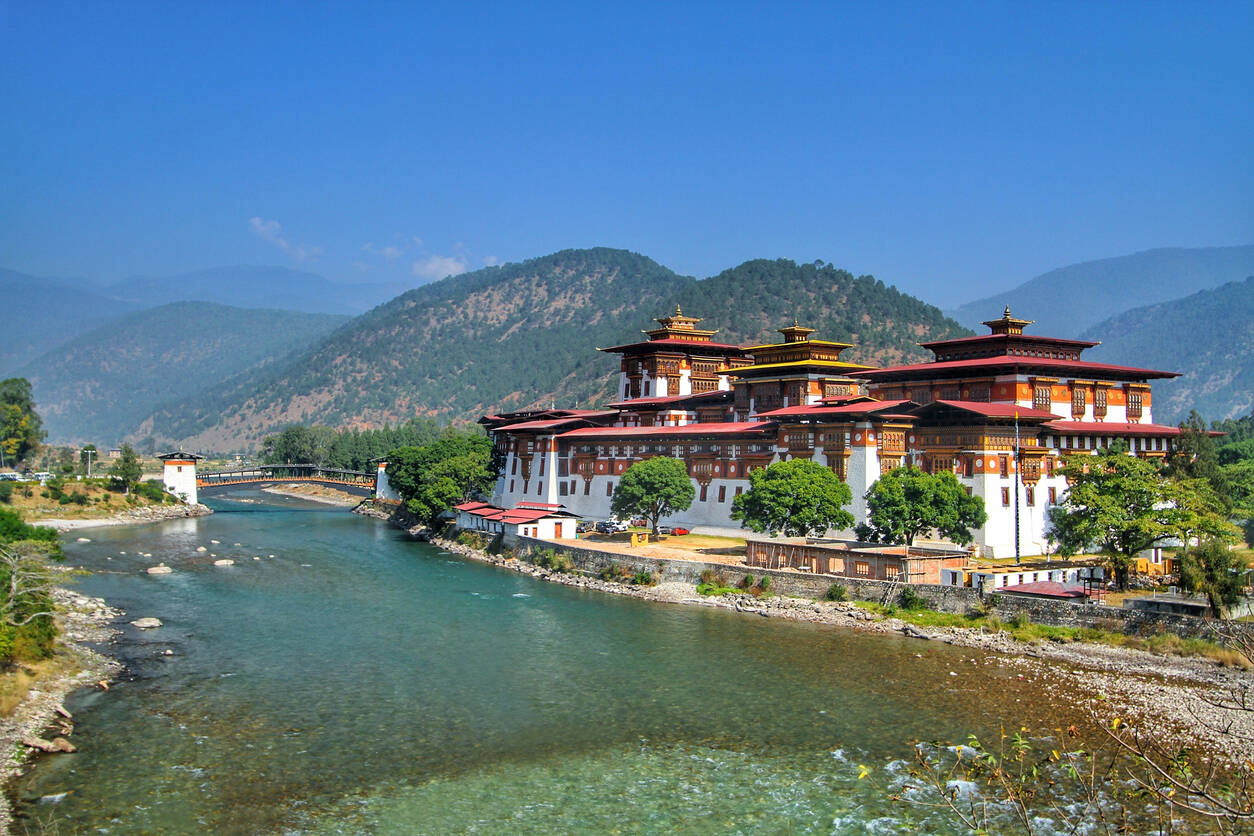
Travelling to Bhutan to become costlier for IndiansCredit: Getty Images

Bhutan Is the World's Unlikeliest Pandemic Success Story


On january 7, a 34-year-old man who had been admitted to a hospital in Bhutan’s capital, Thimphu, with preexisting liver and kidney problems died of COVID-19. His was the country’s first death from the coronavirus. Not the first death that day, that week, or that month: the very first coronavirus death since the pandemic began.

How is this possible? Since the novel coronavirus was first identified more than a year ago, health systems in rich and poor countries have approached collapse, economies worldwide have been devastated, millions of lives have been lost. How has Bhutan—a tiny, poor nation best known for its guiding policy of Gross National Happiness, which balances economic development with environmental conservation and cultural values—managed such a feat? And what can we in the United States, which has so tragically mismanaged the crisis, learn from its success?

In fact, what can the U.S. and other wealthy countries learn from the array of resource-starved counterparts that have better weathered the coronavirus pandemic, even if those nations haven’t achieved Bhutan’s impressive statistics? Countries such as Vietnam, which has so far logged only 35 deaths, Rwanda, with 226, Senegal, with 700, and plenty of others have negotiated the crisis far more smoothly than have Europe and North America.

These nations offer plenty of lessons, from the importance of attentive leadership, the need to ensure that people have enough provisions and financial means to follow public-health guidance, and the shared understanding that individuals and communities must sacrifice to protect the well-being of all: elements that have been sorely lacking in the U.S.

America has “the world’s best medical-rescue system—we have unbelievable ICUs,” Asaf Bitton, executive director of Ariadne Labs, a Boston-based center for health-systems innovation, told me. But, he said, we have neglected a public-health focus on prevention, which socially cohesive low- and middle-income countries have no choice but to adopt, because a runaway epidemic would quickly overwhelm them.

“People say the COVID disaster in America has been about a denial of science. But what we couldn’t agree on is the social compact we would need to make painful choices together in unity, for the collective good,” Bitton added. “I don’t know whether, right now in the U.S., we can have easy or effective conversations about a common good. But we need to start.”

But then, beyond this killing pandemic? Other things we need to all come together to work on and against.

Climate change. Global warming.  Pollution.


More.

Poverty.   Yes, poverty. Everyone, the world over, needs to recognize that poverty is a human construct.


And we need to start soon.

Now.


Wednesday, February 10, 2021

All of the Many, Wide Ranging and Honestly Huge Benefits of Going to Green, Sustainable Energy

Yes, it needs to be known that going to green, sustainable energy is not just that we all pollute less though that's huge.  It's not just that we'll address climate change and global warming, though it certainly will.  It's more than that, more than even just those two huge benefits. 

"A world based on 100% renewable energy is possible, and we are able to transform the energy system fast enough to avoid the climate catastrophe."

From this article:

With 10-Point Declaration, Global Coalition of Top Energy Experts Says: '100% Renewables Is Possible'

Check out all these benefits.

"The solutions will not only save consumers money, but also
  • create jobs and
  • provide energy and
  • more international security, while
  • substantially reducing air pollution and
  • climate damage from energy."
Incredible. And true.

Let's do this.


Monday, July 20, 2020

We Mustn't Normalize This President or his Administration


Journalist and political analyst Juan Williams makes what I think is an extremely good, even important point in his piece today at The Hill.

Post image


A bit from the article:

Normal?

How about a summer in which Americans are not allowed to travel to Canada or Europe? Seriously. That’s due to President Trump’s failure to halt the high rate of coronavirus infections in the United States.

That’s not normal.

Is it normal for an American president to stand in the White House Rose Garden and begin ranting? Trump said if presumptive Democratic nominee Joe Biden wins this year’s election, Biden will do away with the suburbs and windows.

Yes, he really said that.

There is so much that is not normal at the Trump White House that Rachel Maddow, the MSNBC host, recently spent an entire segment reading off a stunning list of scandalous acts now accepted as normal in the Trump era.

Is it normal, she asked, that Trump “put his son’s wedding planner in charge of federal housing in the northeastern United States ... fired one inspector general who was investigating the secretary of State ... advertised his wife’s jewelry line on the White House website?"

Any of the Trump scandals, Maddow said, would have amounted to “the biggest scandal to ever afflict any other presidency — but by virtue of the sheer number of scandals that surround [Trump] like flies around a pigpen ... [they] have just become part of what we expect, right?”


"...Trump’s Cabinet features 'a former coal lobbyist as administrator of the Environmental Protection Agency, a former lobbyist for the defense contractor Raytheon Technologies as defense secretary, a lobbyist for the auto industry at the helm of the Energy Department and a former oil and gas lobbyist as interior secretary.'”

Donald Trump isn't draining the swamp. Far from it. This man his administration ARE the swamp. And they're going to get richer doing it. Meanwhile, they're stripping pollution and EPA laws, dirtying the air water and soil.

What's allowing for all this is that the Republican Party Senate is "running screen" for him, for Trump so he can, to date, do virtually anything and everything he might wish.

So no, we cannot, we must not become numb to any of Donald Trump's actions or words, any of it any more than we should get used to a killing national and international pandemic.

Final note: another thing that's particularly exceptional and welcome about this piece from Mr. Williams is that he is employed by Fox.

That's gotta' hurt the Dotard in Chief.  

All the more.

Coincidentally, The New York Times ran a somewhat similarly themed article yesterday in the paper.

Where Is the Outrage?


Additionally, it was announced earlier this morning that none other than lifelong Republican and former Presidential candidate in that party, John Kasich is going to speak next month at the Democratic National Convention in favor of Joe Biden for President.

Huge.

Finally, check out these two reports. First this on Republicans and their recent haul.


Then this on the Democrats.


On to November!


Wednesday, April 29, 2020

Jack Cashill Comes Out Against Mass Transit?? Say It Isn't So!


BREAKING NEWS TODAY!! (last week?)


None other than very Right Wing, conservative JACK CASHILL has come out SQUARELY AGAINST MASS TRANSIT here in the Kansas City area!

Shocking!

Imagine that!!

A middle-aged (senior?), very white, middle- to upper-class, again, Right Wing, conservative--Republican? Libertarian?---coming out against MASS TRANSIT!!

Naturally, I first read of this shocking, shocking development over at some local blog.

KANSAS CITY URBAN PLANNER FACT CHECK: CONSERVATIVE JACK CASHILL EXAMINES DENSITY & PUBLIC TRANSIT ROLE IN DEADLY CORONAVIRUS!!!


Thank goodness I checked that out! (Thanks for the heads up, Ton...)

You just can't get any more controversial or daring than that!

Be able to take light rail from, say, the airport to downtown? Or out in the city??

Have the city bisected by light rail with East/West and North/South routes??

This daring Right Winger is having nothing of it!

And Mr. Cashill so rightly makes a DIRECT CONNECTION between this MASS TRANSIT NONSENSE and the current CORONAVIRUS PANDEMIC!!

We knew there was one, right??

So what if light rail is successful in St. Louis and Denver and, oh, I don't know, Chicago and New York and EVERY OTHER CITY it's in ACROSS THE ENTIRE WORLD!!

Next thing you know, people will want to---oh, I don't know--SAVE MONEY and SAVE TIME and have it be CONVENIENT and POLLUTE LESS??

I say again---GET AROUND THE ENTIRE METROPOLITAN AREA EASIER AND FASTER AND MORE CONVENIENT AND LESS EXPENSIVE AND POLLUTE LESS??

We'll have none of that!

We'll be gripping our steering wheels UNTIL WE DIE, right Jack??!!

Thank God someone, someone is taking on these tough, tough, controversial issues in this day and age and area!

God bless you, Jack Cashill!

Keep up that great, ground-breaking, courageous work, sir!!  We're right with you!!

Back here in the 1890s.

(I'm dyin' ovah heyah).


Monday, April 20, 2020

Wednesday, July 31, 2019

More People Need to Know What's Happening Presently, Weather-wise, Across the Planet


I don't think most people are aware just now of what, exactly, is going on, worldwide, with weather and the catastrophes that are taking place just now.

Here's one, the first here today--
“Greenland is home to the world's second-largest ice sheet. And when it melts significantly -- as it is expected to do this year -- there are knock-on effects for sea levels and weather across the globe.

Greenland's ice sheet usually melts during the summer. This year, it started melting earlier, in May, and this week's heatwave is expected to accelerate the melt.

… 2019 could come close to the record-setting year of 2012, said Jason Box, professor and ice climatologist at the Geological Survey of Denmark and Greenland. During that ‘…year’…, Greenland's ice sheet lost 450 million metric tons -- the equivalent of more than 14,000 tons of ice lost per second.”

“…it's already poised to rival the proportions of 2012 -- and we haven't even reached the end of summer. In July alone, Greenland's ice sheet lost 160 billion tons of ice, according to Clare Nullis, spokeswoman for the UN World Meteorological Organization.

‘Normally when you get a temperature record broken, it's by a fraction of a degree,’ said Nullis. ‘What we saw yesterday was records being broken by two, three, four degrees -- it was absolutely incredible.’"

Melt water on the Greenland ice sheet. The Greenland ice sheet (Sermersuaq in Greenlandic) is a vast body of ice covering 1,710,000 square kilometers (660,000 sq mi), roughly 80% of the surface of Greenland. The thickness is generally more than 2 km (1.2 mi) and over 3 km (1.9 mi) at its thickest point. This section of the ice sheet was photographed on the Western part, close to Ilulissat and the glacier Semeq Kujalleq. Positioned in the Arctic, the Greenland ice sheet is especially vulnerable to climate change. (Photo by: Education Images/Universal Images Group via Getty Images)


That alone is huge but then, this is taking place in Siberia, Russia.

siberia-wildfire-russia.jpg


This, too, is happening now in Japan.


There is also this from Japan:

Finally, there is this:

Premium: Ongoing Low Water Levels On Rhine River


“A heatwave in Europe is causing low water levels on the…Rhine…”

At what point do climate deniers give it up? At what point do the get on board, so to speak, and accept our current reality, let alone what is projected to happen across the world, if we don't cut carbon dioxide emissions and pollution?


Wednesday, July 17, 2019

Has Anyone Noticed This Republican Party President Is Dismantling Our Government?


Image result for evil trump

The title here is not hyperbole.

First, Mr. Trump sets out to move--break up, weaken--the Department of Agriculture by moving it out of Washington, to here in the heartland, to Kansas City and then, last week, he gets started breaking up, moving the Bureau of Land Management to a legitimately small town in Colorado, Grand Junction.

And sure, I recognize this could be good for the Kansas City metropolitan area, adding to our rented space and population, some growth, but consider the ramifications.

The people with experience at these jobs in the USDA don't want to sell their homes and go to some new area they've likely never been. Who would? Who can blame them?


And according to the Washington Post, it doesn't just effect the USDA, either.

Relocation could seriously disrupt the work of two agencies

The Agriculture Department is offering employees a rare choice: accept a forced transfer to a post 1,000 miles away or be fired.

The Trump administration’s plan to move two agencies from the District to the Kansas City area includes a document with two blank boxes on it, sent to employees on June 13. Check one, it instructs: Accept the transfer by July 15 or “be separated by adverse action procedures.”

That means getting fired, with an opportunity to appeal the dismissal through what could be an expensive process. Getting fired could also make it more difficult to find another federal job in an area where the government dominates...
Of the 547 employees the department wants to move for the two agencies combined, 253 are with the Economic Research Service, 77 percent of its 329-person workforce. An additional 294 are with the National Institute of Food and Agriculture, 93 percent of its 315-person staff. News of the move prompted a surge of support for the union. Employees at the National Institute voted 137-2 to join AFGE two weeks ago. Last month’s vote at the economic service was 138-4.
And it's not going to save us, the US, money, either, folks.

But the USDA estimate of nearly $300 million in savings over 15 years is way off, according to an analysis by the Milwaukee-based Agricultural and Applied Economics Association. Instead, it would cost taxpayers between $83 and $182 million, the analysis found. The USDA underestimated the true cost in part because it did not account for “the lost value of research from staffers who resign or retire rather than move,” the association reported.

Divide and conquer, folks. It's what he's doing.

And breaking up the USDA, weakening it, is just the first blow against regulating industry.


This has at least two effects on the agency and its work.

..as excited as Grand Junction is, many people outside this high desert city are deeply skeptical of the move. The Public Lands Foundation, made up of mostly former BLM employees, opposes it, saying it will likely gut the agency as many of its workers won't want to move. And Democratic Congressman Raul Grijalva of Arizona sees another worry. Moving to Colorado means the BLM will be that much closer to the oil and gas industry.

It makes it easier for the special interests to have access without a lot of accountability and light somewhere else than here in D.C. And I think that works to their advantage.


This fits in perfectly Mr. Trump's work and attempts to both weaken government and assist business.


83 Environmental Rules Being Rolled Back Under Trump


Then, as if all this, above, weren't enough bad news, there's yet more this week from The Orange Man in the White House. Check this out for mind blowing:

Nuclear commission considers fewer plant inspections


The Nuclear Regulatory Commission thinks it's a good idea to have FEWER inspections of nuclear power plants.

You read that right, folks--fewer inspections and less oversigh of nuclear power plants.

This is not good for clean air, folks. This is not good for the people, you and me.

It's fantastic for big business.

Links:

Sunday, May 19, 2019

Quote of the Day: Overpopulation and Climate Change


Image result for climate change and overpopulation

“Unlike plagues of the dark ages or contemporary diseases we do not yet understand, the modern plague of overpopulation is soluble by means we have discovered and with resources we possess, What is lacking is not sufficient knowledge of the solution but universal consciousness of the gravity of the problem and education of the billions who are its victims.”

--Rev. Dr. Martin Luther King, Jr.

Sunday, February 10, 2019

For Those Who Don't Believe in Global Warming and/or Climate Change


For any out there who may still not believe in or accept that the planet is warming and that human activity is having a large role in all of it, please read on. For starters, this winter, this was the middle of last month, January, while much of our nation was in a deep freeze.

Image result for global warming

Australia heatwave reaches it peak with record temperatures


Naturally, it wasn't simply Australia that was blistering hot, either.

Still Australia, this article posted 6 days ago, as if the heat and their losses from it weren't enough.


Remember last Summer and the record California wildfires?

California Wildfire Insurance Claims Total $11.4 Billion


We're very familiar with the Polar Vortex that effected so much of our nation in the last few weeks.


This is taking place presently.


Seattle normally gets 0.7 inches of snow per year. A few weeks ago, they got nearly 2 inches. Now, today, they got another 10 inches and as the headline shows, they are apparently going to get still more. Seattle wasn't alone, of course.

Yakima gets 10 inches of snow in winter blast


Then there's the overall picture.

2018 was 4th hottest year on record for the globe


This year is no better and we're not even 1/4 of the way into it..


Then that's having predictable effects, of course.


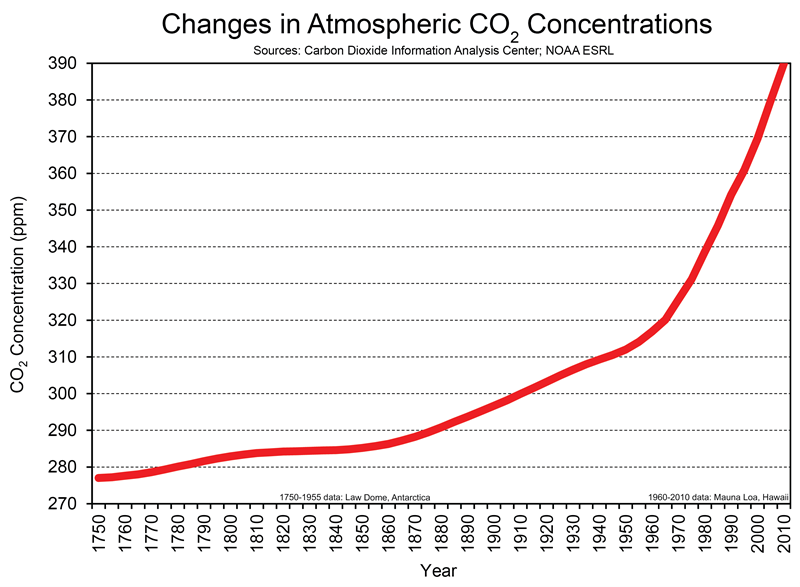
Finally, if that all isn't enough on our planet, there is this. When all else is deniable or ignored, there is the CO2, the carbon dioxide levels in our planet's atmosphere that comes from what we humans are pumping into it.

See the source image

Let's do something before it's too late. 

Some things.

How about it?


Monday, December 3, 2018

A Few Reasons I'm a Democrat


No automatic alt text available.

This leaves out, of course, all the things Republicans do and have been doing, in Congress, across the states, across the nation, to their respective states, to their constituents and so, to the nation so yes, it's a long but partial list.


Sunday, November 4, 2018

Science in Our Upcoming Elections, State by State


Another fascinating article out this week, this one on the national elections, state by state.

Slide 6 of 53: To some degree, California and its nearly 40 million residents face almost every issue in the country. Where the Golden State sets itself apart, though, is in how its solutions to those issues can often set a national standard. Climate change is at the root of its most pressing issues—a five-year drought, more-frequent wildfires, and water scarcity—but the state’s long-running push to expand renewable energy is facing challenges. Gov. Jerry Brown and some state lawmakers worry that President Trump’s embrace of fossil fuels will interfere with state’s 12-year-old effort to cut greenhouse-gas emissions and its new plan to go carbon-free by 2045. Thanks to a range of measures—capping industrial emissions, setting high vehicle fuel-efficiency standards, and providing incentives to switch to solar—the initial plan has met its goal of slashing greenhouse gases to 1990 levels four years ahead of schedule. (That’s more ambitious than targets in other states, which aim to cut emissions to higher 2000 levels.) In August, however, the Trump administration proposed revoking California’s authority to impose its own automotive standards. These and other federal climate-change rollbacks might be enough to sway voters, according to some analysts. The state is also a bellwether in the national debate about internet freedom. Home to the nation’s leading tech companies, California is working to fill the regulatory vacuum left by the June federal repeal of Federal Communications Commission net neutrality regulations. This past August, state lawmakers passed a bill that will bar internet-service providers from slowing or blocking websites, and restrict “zero-metering,” the practice of not counting preferred services and apps against a customer’s monthly data limits. But days after Gov. Brown signed the bill into law in September, the Justice Department filed a legal challenge against it, arguing that internet runs between states, and is therefore subject to federal oversight.


Lots of these issues have to do with flooding, wildfires, chemical runoff and corporate farming.

Missouri’s contribution to this is fascinating and at the forefront of an issue and change.

Image result for beyond meat
Missouri: The fake-meat debate

Missouri has become the epicenter of a fracas between meat producers and the burgeoning “fake meat” industry, a market that has jumped 24 percent since 2015. This past May, the legislature passed a bill that bars makers of flesh substitutes from using the word “meat” on their labels. Backed by the Missouri Cattlemen’s Association and pork producers, the bill could stifle growth of a new industry, according to meat substitute producers. Columbia-based Beyond Meat, for instance, could likely have to change its name, and warns that the measure could result in job loss. The company, together with University of Missouri researchers, has developed plant-based burgers, chicken strips, and sausages that closely resemble real meat. Beyond Meat CEO Ethan Brown says the bill would do little to convince consumers to opt for the real thing.

This part is especially interesting.

In late August, vegan food maker Tofurky, along with the Animal Legal Defense Fund and the American Civil Liberties Union of Missouri, filed suit against the state, arguing that the new law stifles free speech and hampers competition.

From Kansas, it’s one more example, and a great one, of why we need newspapers and their reporters. In this, the Wichita Eagle-Beacon came to the rescue.

Slide 17 of 53: This past summer, an investigation in the Wichita Eagle newspaper found that hundreds of residents drank and bathed in water fouled with the dry-cleaning chemical perchloroethylene (PCE) for more than six yearsâ€Â”and that state officials failed to inform the communities. At one site, PCE levels in the groundwater were 8.1 parts per billion; EPA limit is 5 ppb. As many as 22 other contaminated sites may have gone unaddressed, according to the investigation. A 1995 state law lobbied for by the dry-cleaning industry appears to be largely to blame. The Kansas Drycleaner Environmental Response Act included a provision that directed state regulators to refrain from looking for contamination from dry cleaners and â€Âœmake every reasonable effortâ€Â to keep sites off the EPAâ€Â™s Superfund list. Residents are calling for the state to scrub up the areas and for lawmakers to strike the part of the legislation that bars checking for PCE leaks in groundwater.

Kansas: Dry-cleaning chemicals in residents’ water

This past summer, an investigation in the Wichita Eagle newspaper found that hundreds of residents drank and bathed in water fouled with the dry-cleaning chemical perchloroethylene (PCE) for more than six years—and that state officials failed to inform the communities. At one site, PCE levels in the groundwater were 8.1 parts per billion; EPA limit is 5 ppb. As many as 22 other contaminated sites may have gone unaddressed, according to the investigation. A 1995 state law lobbied for by the dry-cleaning industry appears to be largely to blame. The Kansas Drycleaner Environmental Response Act included a provision that directed state regulators to refrain from looking for contamination from dry cleaners and “make every reasonable effort” to keep sites off the EPA’s Superfund list. Residents are calling for the state to scrub up the areas and for lawmakers to strike the part of the legislation that bars checking for PCE leaks in groundwater.

All these, from state to state, point out why we so desperately and completely need government—state and federal both. If we don’t have these governments, there are no ways to keep our air, water and soil clean and clear. Corporations would be able to do whatever they wish, people and animal life be damned.

You might also check out Arkansas, New Mexico, Oklahoma and Virginia and their issues, especially.


Saturday, August 4, 2018

With All This Plastic In Our Oceans...


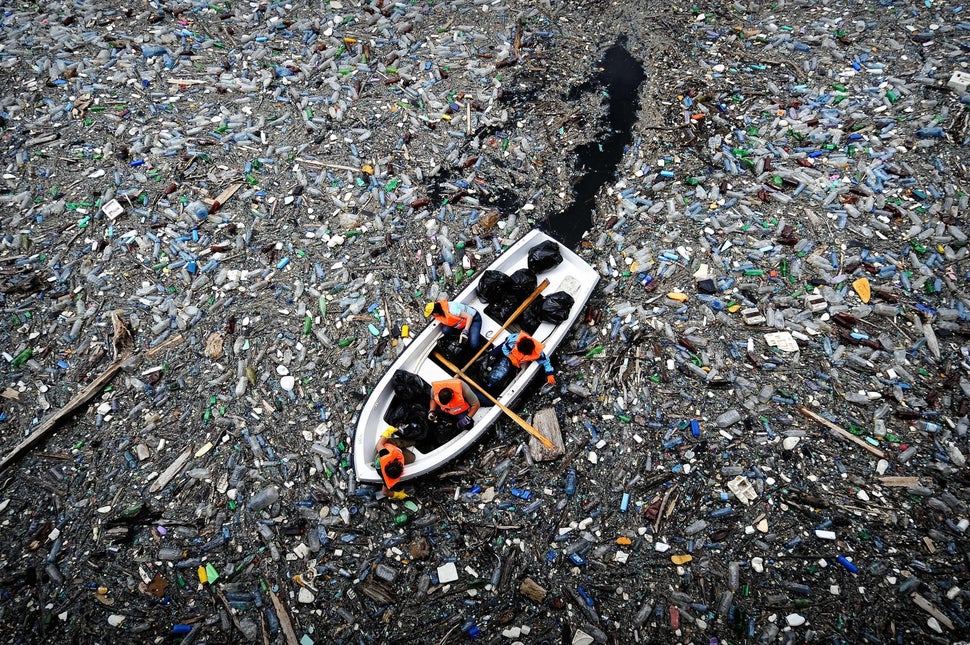
I keep seeing, day after day, video on all the plastic in our oceans and on sea life, choking, killing them. Maybe you've seen some of them.


So with all this, is anyone asking what the cruise ships are doing with their waste from onboard?

Are they still dumping? Indiscriminately?

Shouldn't there be laws, international laws, all making this illegal?

Can we not all agree on that?


Wednesday, February 14, 2018

The Hard Reality of Transportation


The fact is, ladies and gentlemen, there are far, far too many people on this planet for us all, humankind, to keep driving our own, individual cars to and from our destinations.

We need public transportation.

And we need it all over our cities and states and nations. We need it across the world.

We have to stop pretending it's--what?--the 1940's? and there aren't that many of us and we can continue this expensive, very polluting insanity.

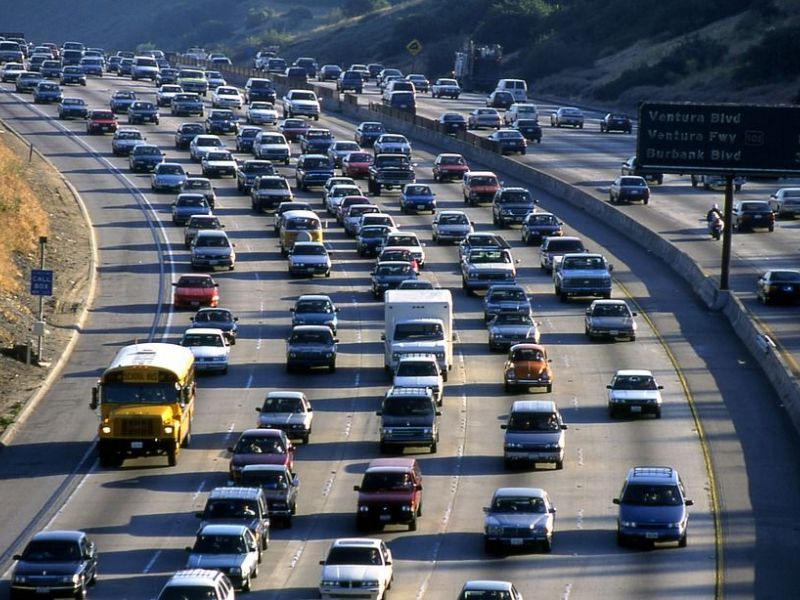
As just one example, look at traffic in Los Angeles.

Image result for crowded la freeways


Image result for crowded la freeways

Keep in mind, too, this is daily. Sure, it's Los Angeles but it's not just them, not just that one city and again, it's not just a one day occurrence. It's repeated all through the year and in far too many cities across the globe.

It's getting worse, too.

It's Not Your Imagination, 

Los Angeles County is Getting More Crowded


Not only is it Los Angeles, but it's only growing worldwide. With more and more people in our cities, states and nations, across the globe, this only becomes more apparent and real and necessary.


This is crazy. This is no way to live.

Think about it. Los Angeles. San Diego. San Francisco. Houston, Dallas, Austin. Heck, traffic is so bad on the other side of the country, we just give up and call it the "Northeast corridor."

As usual, Germany and Europe are far ahead of us here in the US on this, too.

German cities to trial free public transport 

to cut pollution 


Not only is this a good idea, we need to take it steps further.

We will need to actually further tax cars so we can accomplish three big goals:

--Cut down on all that traffic
--Reduce the pollution and carbon dioxide in the atmosphere
--And, yes, increase those of us on public transportation

Public transportation can no longer be only for the less affluent or even thought to be only for them.

We have to realize all the benefits we'd reap from this, too. We can't only think of it as what we would lose. Herewith, just some of those benefits.

--Again, less pollution
--Repeating, less traffic
--Cleaner air
--Less irritated asthma and respiratory ailments for hundreds of millions across the planet
--Less carbon dioxide in the atmosphere so...
--Less increased global warming and
--Slower human-caused climate change
--Less time wasted sitting in traffic
--Maintaining public transportation is far less expensive than having to maintain all the more singular roads required to keep all this traffic going

We have to learn to live together, we have to learn to work together and yes, we all, all of us, need to learn to travel together. Lots of people across the world have done this.

Now, we all need to.

Links:


Saturday, February 10, 2018

The Only Way We'll Stop Polluting the Planet


I've worked at a couple huge, national corporations and noticed a continuing, repeated thread running through them.

Corporations and all the employees that work for them throw away and waste a great deal of plastics and papers and cardboard and aluminum cans and glass.

Corporations, with all those people, create and then throw away all these materials.

And they do it daily. Weekly. Month after month. Year after year.

And they have no desire nor motivation to reduce the amount of waste and wastes and what ends up as pollution, landfill.  It's what gets us these results:


Plastic Garbage Patch Bigger 

Than Mexico Found in Pacific


'Plastic in All Sizes' Found Everywhere 

in Once Pristine European Arctic


Nasa animation shows how ‘garbage islands’ have taken over the seas in the last 35 years


Corporations are all about profit and profits, of course. Because of that, they're also about cutting costs. They're about cutting costs at all costs. Recycling requires commitment. It requires spending. Those are costs they don't want to assume or commit to.

So let's face it. The only way we, as a nation and planet, can get them to start recycling and at least reduce, if not end polluting will be for government and governments, state by state and nation by nation, to require them to do so, to start and keep recycling.

Think about the waste.

Think about how much paper and plastic alone each McDonald's restaurant throws out. Daily. Then think of the entire company.

AT&T
GE
Alcoa
Dupont
Bayer

The list goes on. Company after company. All over the nation, continent and world.

We must do this. We must require this. We have to call them out on this. They won't do it on their own.

An upside to all this, besides that we'll clean up our planet is that it will also create jobs. Those are two huge wins for humanity and the planet.

The thing is, it must come from us, from the people.

Links:


And it's not just the oceans, of course.