Blog Catalog

Showing posts with label wildfires. Show all posts

Monday, October 19, 2020

At What Point Do We Do Something About Global Warming?

Let's have a very brief recap of just a few of the events of the last nearly 2 years, shall we?

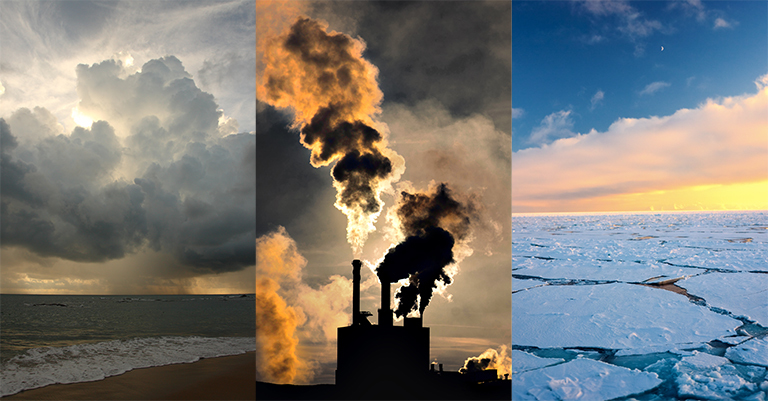
Weather, global warming, and climate change
--Nearly all of the entire continent of Australia was in drought, record high temperatures and then it burned


--The Arctic and Siberia and elsewhere hit high temperatures of OVER 100 DEGREES for the first time in recorded history

Temperature hits 100 degrees in Arctic Russian town


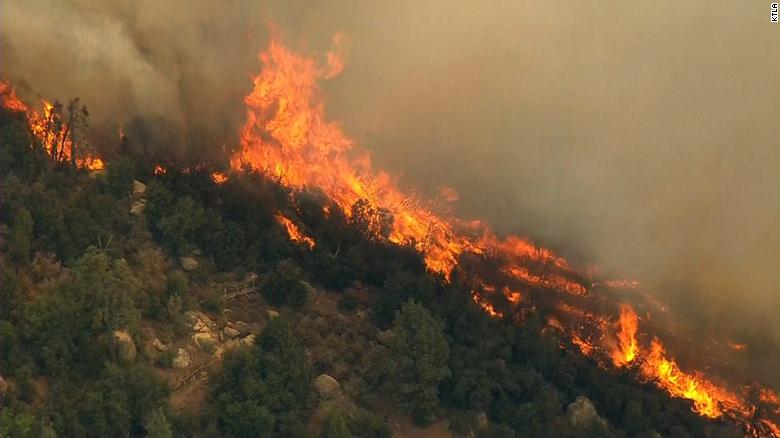
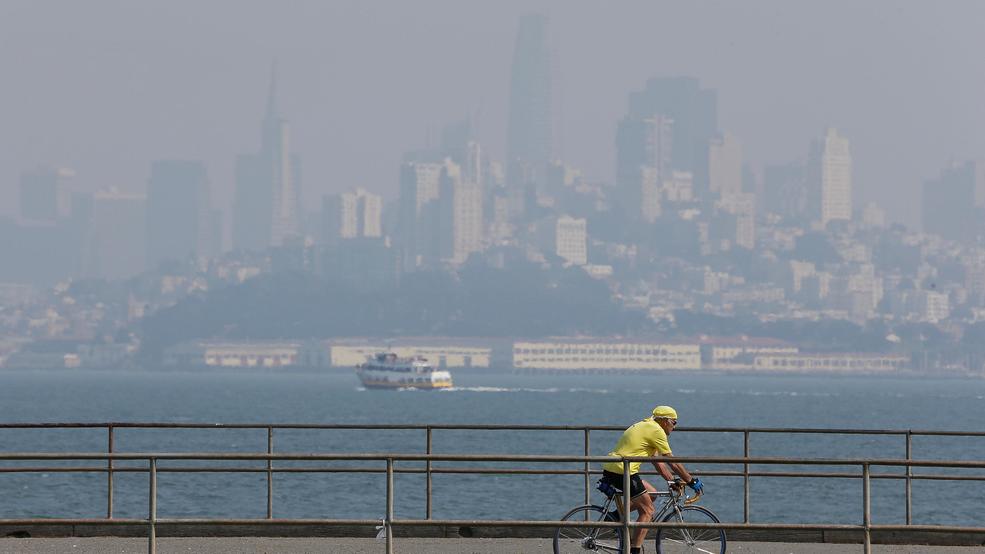
--California has had a record 4 million acres of it burn this year with, again, drought and record high temperatures and now 

California exceeds 4 million acres burned by wildfires in 2020


--Colorado is in the midst of its largest ever area burning in wildfires


So with all this alone, shall we do something, some things on and about climate change and global warming?

Finally?  At long last?

At what point do we do something? At what point do we learn?

Soon?

What's it going to take? What more proof do we need beyond even just this short list of already-occurred, occurring events?



Friday, August 28, 2020

America, a Reality Check

So understand where we are.

  • California is burning.
  • They also experienced their highest, worst summer temperatures in recorded history this year, a few weeks ago.
  • Colorado is now burning.
  • A derecho went through Iowa a week ago, destroying many buildings and millions of dollars of crops, making it far worse for farmers yet.
  • A hurricane just smashed into the Gulf yesterday morning.
  • More than 180,000 Americans have now died from this pandemic, more than any other nation.
But Donald Trump wants you to fear someone else's Presidency.

Oh, and also hate that other political party.

Right.
Got it.

86 45

Post image


BYEDON

Still more:


Wednesday, July 31, 2019

More People Need to Know What's Happening Presently, Weather-wise, Across the Planet


I don't think most people are aware just now of what, exactly, is going on, worldwide, with weather and the catastrophes that are taking place just now.

Here's one, the first here today--
“Greenland is home to the world's second-largest ice sheet. And when it melts significantly -- as it is expected to do this year -- there are knock-on effects for sea levels and weather across the globe.

Greenland's ice sheet usually melts during the summer. This year, it started melting earlier, in May, and this week's heatwave is expected to accelerate the melt.

… 2019 could come close to the record-setting year of 2012, said Jason Box, professor and ice climatologist at the Geological Survey of Denmark and Greenland. During that ‘…year’…, Greenland's ice sheet lost 450 million metric tons -- the equivalent of more than 14,000 tons of ice lost per second.”

“…it's already poised to rival the proportions of 2012 -- and we haven't even reached the end of summer. In July alone, Greenland's ice sheet lost 160 billion tons of ice, according to Clare Nullis, spokeswoman for the UN World Meteorological Organization.

‘Normally when you get a temperature record broken, it's by a fraction of a degree,’ said Nullis. ‘What we saw yesterday was records being broken by two, three, four degrees -- it was absolutely incredible.’"

Melt water on the Greenland ice sheet. The Greenland ice sheet (Sermersuaq in Greenlandic) is a vast body of ice covering 1,710,000 square kilometers (660,000 sq mi), roughly 80% of the surface of Greenland. The thickness is generally more than 2 km (1.2 mi) and over 3 km (1.9 mi) at its thickest point. This section of the ice sheet was photographed on the Western part, close to Ilulissat and the glacier Semeq Kujalleq. Positioned in the Arctic, the Greenland ice sheet is especially vulnerable to climate change. (Photo by: Education Images/Universal Images Group via Getty Images)


That alone is huge but then, this is taking place in Siberia, Russia.

siberia-wildfire-russia.jpg


This, too, is happening now in Japan.


There is also this from Japan:

Finally, there is this:

Premium: Ongoing Low Water Levels On Rhine River


“A heatwave in Europe is causing low water levels on the…Rhine…”

At what point do climate deniers give it up? At what point do the get on board, so to speak, and accept our current reality, let alone what is projected to happen across the world, if we don't cut carbon dioxide emissions and pollution?


Wednesday, February 13, 2019

How Much Do We Have to Lose Across the Planet Until We Accept Climate Change?


Did you see this?

Did you see how many head of cattle, alone, were lost recently in Australia, with their flooding?

Stranded cows are seen surrounded by floodwater in Queensland, Australia, on Feb. 5, 2019.


500,000 head of cattle--or more, if you read the article--died last week in the flooding in Australia.

And this doesn't include all the other animal life that died in their scorching heat waves in the last month. I posted on this earlier.


Australia's Heat Wave Has Been Devastating For Animals


And that's just Australia, of late. Check out what it's done in California last year.


Then there is around the world.


At what point do the climate change deniers actually look, recognize the losses and damage and agree with us we need to do things to change?

What more does it have to take?


Sunday, November 4, 2018

Science in Our Upcoming Elections, State by State


Another fascinating article out this week, this one on the national elections, state by state.

Slide 6 of 53: To some degree, California and its nearly 40 million residents face almost every issue in the country. Where the Golden State sets itself apart, though, is in how its solutions to those issues can often set a national standard. Climate change is at the root of its most pressing issues—a five-year drought, more-frequent wildfires, and water scarcity—but the state’s long-running push to expand renewable energy is facing challenges. Gov. Jerry Brown and some state lawmakers worry that President Trump’s embrace of fossil fuels will interfere with state’s 12-year-old effort to cut greenhouse-gas emissions and its new plan to go carbon-free by 2045. Thanks to a range of measures—capping industrial emissions, setting high vehicle fuel-efficiency standards, and providing incentives to switch to solar—the initial plan has met its goal of slashing greenhouse gases to 1990 levels four years ahead of schedule. (That’s more ambitious than targets in other states, which aim to cut emissions to higher 2000 levels.) In August, however, the Trump administration proposed revoking California’s authority to impose its own automotive standards. These and other federal climate-change rollbacks might be enough to sway voters, according to some analysts. The state is also a bellwether in the national debate about internet freedom. Home to the nation’s leading tech companies, California is working to fill the regulatory vacuum left by the June federal repeal of Federal Communications Commission net neutrality regulations. This past August, state lawmakers passed a bill that will bar internet-service providers from slowing or blocking websites, and restrict “zero-metering,” the practice of not counting preferred services and apps against a customer’s monthly data limits. But days after Gov. Brown signed the bill into law in September, the Justice Department filed a legal challenge against it, arguing that internet runs between states, and is therefore subject to federal oversight.


Lots of these issues have to do with flooding, wildfires, chemical runoff and corporate farming.

Missouri’s contribution to this is fascinating and at the forefront of an issue and change.

Image result for beyond meat
Missouri: The fake-meat debate

Missouri has become the epicenter of a fracas between meat producers and the burgeoning “fake meat” industry, a market that has jumped 24 percent since 2015. This past May, the legislature passed a bill that bars makers of flesh substitutes from using the word “meat” on their labels. Backed by the Missouri Cattlemen’s Association and pork producers, the bill could stifle growth of a new industry, according to meat substitute producers. Columbia-based Beyond Meat, for instance, could likely have to change its name, and warns that the measure could result in job loss. The company, together with University of Missouri researchers, has developed plant-based burgers, chicken strips, and sausages that closely resemble real meat. Beyond Meat CEO Ethan Brown says the bill would do little to convince consumers to opt for the real thing.

This part is especially interesting.

In late August, vegan food maker Tofurky, along with the Animal Legal Defense Fund and the American Civil Liberties Union of Missouri, filed suit against the state, arguing that the new law stifles free speech and hampers competition.

From Kansas, it’s one more example, and a great one, of why we need newspapers and their reporters. In this, the Wichita Eagle-Beacon came to the rescue.

Slide 17 of 53: This past summer, an investigation in the Wichita Eagle newspaper found that hundreds of residents drank and bathed in water fouled with the dry-cleaning chemical perchloroethylene (PCE) for more than six years—and that state officials failed to inform the communities. At one site, PCE levels in the groundwater were 8.1 parts per billion; EPA limit is 5 ppb. As many as 22 other contaminated sites may have gone unaddressed, according to the investigation. A 1995 state law lobbied for by the dry-cleaning industry appears to be largely to blame. The Kansas Drycleaner Environmental Response Act included a provision that directed state regulators to refrain from looking for contamination from dry cleaners and “make every reasonable effort” to keep sites off the EPA’s Superfund list. Residents are calling for the state to scrub up the areas and for lawmakers to strike the part of the legislation that bars checking for PCE leaks in groundwater.

Kansas: Dry-cleaning chemicals in residents’ water

This past summer, an investigation in the Wichita Eagle newspaper found that hundreds of residents drank and bathed in water fouled with the dry-cleaning chemical perchloroethylene (PCE) for more than six years—and that state officials failed to inform the communities. At one site, PCE levels in the groundwater were 8.1 parts per billion; EPA limit is 5 ppb. As many as 22 other contaminated sites may have gone unaddressed, according to the investigation. A 1995 state law lobbied for by the dry-cleaning industry appears to be largely to blame. The Kansas Drycleaner Environmental Response Act included a provision that directed state regulators to refrain from looking for contamination from dry cleaners and “make every reasonable effort” to keep sites off the EPA’s Superfund list. Residents are calling for the state to scrub up the areas and for lawmakers to strike the part of the legislation that bars checking for PCE leaks in groundwater.

All these, from state to state, point out why we so desperately and completely need government—state and federal both. If we don’t have these governments, there are no ways to keep our air, water and soil clean and clear. Corporations would be able to do whatever they wish, people and animal life be damned.

You might also check out Arkansas, New Mexico, Oklahoma and Virginia and their issues, especially.


Monday, October 9, 2017

What Burning So Much Carbon Is Getting Us


This is, one more time, what burning all the carbon we do and putting all the carbon dioxide we also do, into the atmosphere, gets us.


And let's be clear, these are not "one off" events. It's part of a far larger trend and not just nationally or even on this continent but world wide.


Science suggests that over the past few decades, the number of wildfires has indeed increased, especially in the western United States. According to the Union of Concerned Scientists (UCS),every state in the western US has experienced an increase in the average annual number of large wildfires over past decades.

Extensive studies have found that large forest fires in the western US have been occurring nearly five times more often since the 1970s and 80s. Such fires are burning more than six times the land area as before, and lasting almost five times longer.


Meanwhile, foolishly, our nation's leader is taking us backward and in the completely wrong direction.


Link:


Tuesday, September 5, 2017

What the Last Week Wrought on the World


Naimey, by the way, is in Niger.

And this doesn't include Nepal or Sierra Leone or Bangladesh or California's blistering heat wave and the wildfires there and across the Western US.

Image may contain: one or more people and outdoor

Saturday, September 2, 2017

Could This Be the Year We All Finally Admit Global Warming?


After the flooding and mudslides, killing approximately 1,000 people in Sierra Leone last week and the widespread, devastating flooding in Bangladesh, along with Hurricane Harvey decimating so much of Houston and Southeast Texas and West Louisiana, then the record-breaking high temperatures in the Western US, there is this.

Image result for san francisco heat wave 2017


San Francisco smashes all-time record high temperature, hits 106 degrees


Anyone who knows anything of San Francisco knows that's insane.

And it doesn't stop there. With all of California's record-breaking high temperatures, wildfires have, again this year, been breaking out.


This is not alarmist, either. These are facts. These are real, actual events, not concerns about what may happen in the future.

Then there's Irma, building this moment.

Hurricane Irma remains potential threat 
to the East Coast
possibly matching Harvey’s wind strength

And finally, this.

Two new tropical threats are taking shape in the Gulf of Mexico and Atlantic Ocean

Could we all get on this same bus now?

Please?

Links:


Thursday, September 10, 2015

At What Point Do We Agree On Man-Made Global Warming and Climate Change?


With all that's going on this year meteorologically, at what point do people give in and admit that there is global warming, first and that, second, it is, in fact at least heavily human-influenced if not out-and-out humankind created and that we have to do things about it? And soon as possible.

There have been many, many weather events this year, certainly, like all the hundreds of fires across Canada, Alaska, Washington state, Oregon, Idaho and California, at minimum.

Jul 27, 2015 Scorched earth: U.S. wildfires 

near record level 


Then, more recently, like yesterday, there was the unprecedented, unseasonable and deadly sandstorm in the Middle East.

An unprecedented Middle East sandstorm reached Israel on Tuesday and may not dissipate until Rosh Hashanah. Photo: YouTube screenshot.


For the second week in a row, an expansive dust storm slashed visibility and put hundreds in the hospital with respiratory ailments across the Middle East. The countries most affected include Syria, Lebanon, Israel and Jordan.

This storm comes soon after another dust storm, which was shaped like a pinwheeling cyclone that absorbed light, drastically lowered visibility across Iraq on Sept. 1.


'Unprecedented' sandstorm blasts across 

Middle East


Not only was there this 2 day sandstorm across several nations in the Middle East but there have actually been many duststorms, internationally, across the globe of late:

Mystery of the dust storms 

sweeping the world


Today we get word of another unprecedented rain and flooding in Japan and not just heavy but, again, unprecedented.


Terrified residents wait for evacuation by helicopter as the overflowing Kinugawa River rages through Joso, Ibaraki prefecture; 90,000 people were forced to flee their homes

Japan floods: City of Joso hit by 

'unprecedented' rain


Record rainfall in Japan has burst riverbanks, ripped houses from their foundations and forced over 100,000 people to flee their homes. The aftermath of Typhoon Etau has also washed tons of radioactive water from the ruined Daiichi nuclear power plant into the Pacific.

In dramatic scenes reminiscent of the tsunami disaster that struck the country’s coast in 2011, residents of Joso City, 34 miles north-east of Tokyo, were rescued from rooftops by Self-Defence Force helicopters. Houses were swamped by a muddy deluge from the Kinugawa River as people were winched to safety, some clutching family pets.


Check out this facts of this rain and flood (emphasis added here):

Weeks of near-daily rain had already left much of Ibaraki and Tochigi prefectures, north/north-east of Tokyo, deluged before the typhoon struck, dumping over 500mm (about 20 inches) of precipitation in just 24 hours in some places – twice the average for the entire month of September.  At one point early today over 900,000 people were advised to evacuate. So far, more than 90,000 had been forced to flee the “wall of water”.

It seems the recurring adjective in all this is that each of these events, vastly different as they are and from far flung corners of the planet, is "unprecedented." It's either unprecedented or historic or record-breaking, all true and applicable here.

Other "unprecedented" factors this year? Here's one:


Here's another:


And this last one:


Mind you, these aren't projections, either. This isn't warnings now of what could or might happen in the future. These things are already occurring and they are occurring now, not 20 or 50 or 100 years in the future. And all these events are killing thousands upon thousands of people and displacing and making homeless millions.

Put those few things together---warmer temperatures, more glacier and ice cap melt and rising oceans and to what simple but obvious conclusion do you surely have to come?


Thursday, May 15, 2014

Familiar with San Diego?


Anyone who's been to California, to Southern California and Los Angeles and especially San Diego--I have, several times, at least--knows it's virtually never, ever 106 degrees there, in the city. It's not usually that hot there even at the hottest time of year, August.

Get this.

Wednesday, it was 106 degrees.  It was that hot.

And this, ladies and gentlemen, along with a many-years-long drought is what that begat, also, Wednesday:


One of the terrific things, rather famously, about San Diego in specific, is that it's nearly always about 65 to 75 wonderful degrees.  Heck, at the worst of Winter, with clouds and rain, it would be cold at about 55 degrees for a high.

That was it.

San Diego, rather famously, had some of the most pleasant, wonderful, mild, moderate temperatures even on the planet, let alone in the United States.

No more.

You know how, in so much of the US, we let our schools out for ice and snow and severe cold weather in the Winters?

In San Diego this week, there were so many fires in the county and the temperatures were so high, they let out schools.

So let's put it all together, just a few things here.

The ice caps are melting, glaciers are melting, average temperatures are rising, as are ocean levels, so much so that coast lines are shrinking and islands are disappearing back into the oceans and now this.

Should we still do nothing to stop pouring carbon dioxide into our atmosphere?

Does that still seem prudent?

To anyone?