Blog Catalog

Showing posts with label Iraq. Show all posts

Saturday, January 11, 2020

So Many Things Too Many Americans Don't Know of Iran, the Middle East and Recent History


I found the following post today on Facebook on the page of author, reporter and former correspondent for NPR until 2014.

As I said, so many things too many of us Americans don't know in our world. I thought this enlightening, if not even important.

                                                    Image result for wikipedia jacki lyden


Last night, for a few girlfriends, I made baba ghanoush for the first time in a long time. Blistering the eggplants’ skins to black, hulling out the pomegranate seeds, I thought of the first time I was served it -- in a beautiful salon, the snow falling outside, the carpets unfurled and the talk, mesmerizing. I was in North Tehran, at the home of two scholars, Goli and Karim Imami. It was 1995, 16 years after the Iranian revolution, and NPR hadn’t had anyone in the country in years. In the short two weeks I’d have there, I met scores of people -- and even, fell in love with an amazing man over tea and jasmine and jazz.

I would make several more trips to Iran in the 90’s and 2000, one of which, for the Washington Post magazine, would even lead to meeting my husband a few years later. Iran is a spectacularly beautiful country -- you can ski right outside Tehran, or visit the Caspian Sea. 

Once, doing a story for Vanity Fair, I got stuck overnight on a train with Faezeh Rafsanjani, the daughter of President Rafsanjani, who was the country’s leader then. We went skiing, too. I made many, many friends -- and my Iranian boyfriend, Ramin, moved with me for a year to Canada, where he became a citizen, (his brothers were already there) before he returned to Tehran and his business. He was a brilliant physicist and poet. 

We’ve lost touch, but so many other friends remain -- Mamak, the art collector, scholar and curator, Houman, the graphic artist who had his own marketing and design firm (he’d spend eight years in America before returning to aging parents), Azar Nafisi, the author who emigrated and wrote Reading Lolita in Tehran and I remember, too, all the women who were pushing for change. Maziar Bahari, the documentary filmmaker who was imprisoned in 2009 and lives in London today.

Iran has had internal struggles since the dawn of 20th century, sometimes erecting democratic measures, as in its 1906 constitution (demolished in 1979), and other times, more often, seen those instincts suppressed by monarchies or theocracies -- but it is the Americans overthrew its democratically-elected prime minister Mosaddegh in 1953, in favor of the US-dependent Shah and his brutally repressive regime. The 1979 revolution was wildly popular before it was essentially hijacked by its theocracy, which has enacted its own brutality on the Iranian people, murdering thousands of people. And one way or another, they have held onto power ever since, despite mass demonstrations and international pressure.

But at least Iran, in 2015, under the nuclear agreement JCPOA, signaled it would give diplomacy a try, and abide by the international nuclear agreement that Donald Trump couldn’t wait to tear up, a racist’s rebuke to an African-American president, whose hated legacy he’d do anything to destroy.
Now, the forces of progressivism have been dealt a tremendous blow in the killing of Soleimani. 

Even Iranians who would have hated his malicious lethality believe in Iran’s sovereignty-- and there is plenty of hatred within Iran for its own leadership. There were huge demonstrations last fall. 

Listening to my former colleague Mary Louise Kelley conduct her excellent interview with Javad Zarif, Iran’s foreign minister, I thought back to a time when I’d interviewed him in New York, and how bitter and angry he sounded last night. 

As why should he not? 

Skills of diplomacy have failed-- and this president has hollowed out intelligence in all the various military sectors, left nearly a score of top defense and intelligence positions vacant, all so that he can act arbitrarily and conduct his whims by tweet.2020 dawns with fear -- the fires in Australia, the gaslighting from the White House and its enablers like Pompeo, the missile strikes raining down in an Iraq caught helplessly in between the US and Iran, and the Iranian people insulted and enraged.

We talked so much, when I was in Iran 20 years ago, about "goftegu," dialogue - could there be a dialogue between Iran and democracies. Two men had founded a magazine by that name. And even though at least them would have to flee, (as did many others; Iran is a bad actor to its own people as well) at least, while Barack Obama was president, we had some dialogue. We had diplomacy. Iranians had sympathy for Americans after 2001.

If there is any sympathy there today, I can imagine, it is among the kinds of educated people who’ve struggled under this regime, who know too well what it is like to have a malignant actor with autocratic instincts at the helm. We have a man who would destroy culture, something he does not understand, and who celebrates war crimes. 

I just hope we can survive long enough to get rid of him. 

Until he is gone, the world is so much less safe.

My baba ghanoush was well-received. Restraint, restraint, restraint.

Links:


Sunday, September 15, 2019

The Singular Most Important Article Any Adult American Could Read Today


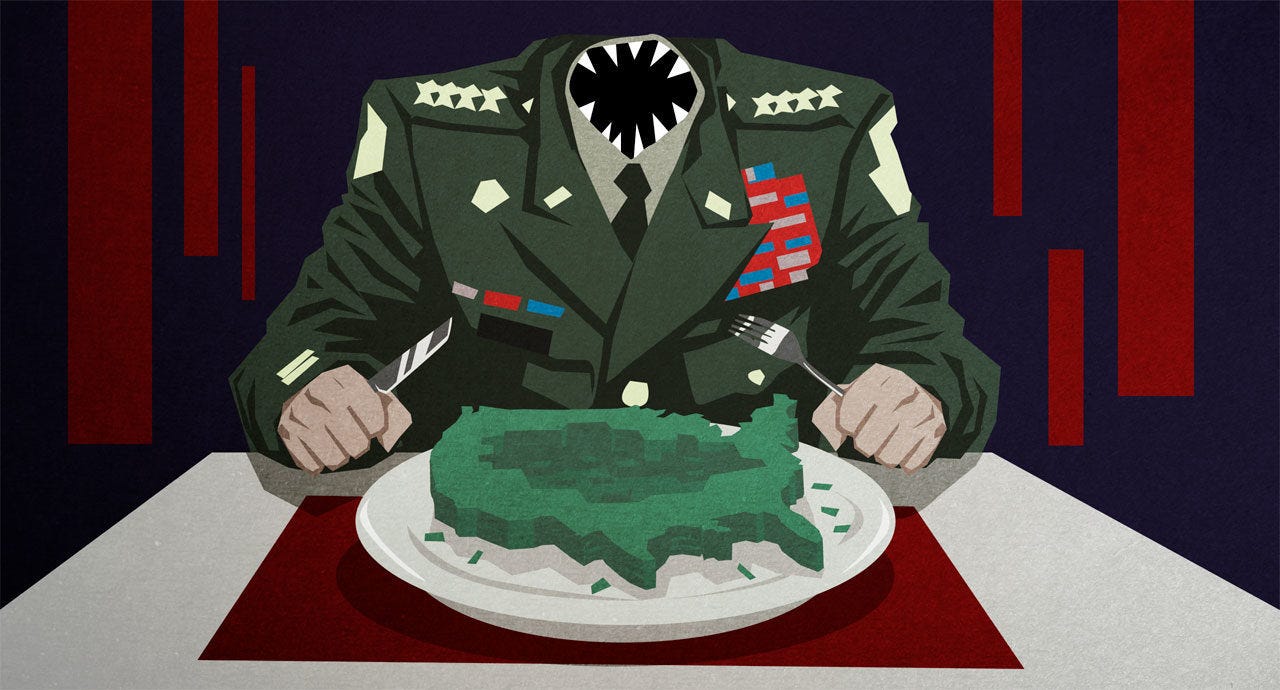
There is a fantastic, long, long overdue article in today's Sunday New York Times that says everything I and a lot of us have ever thought about present day America, our defense spending and our insane, inane perpetual, endless war.

Image result for we must stop endless war

The Only Way to End ‘Endless War’


First, America has to give up its pursuit of global dominance

Dr. Stephen Wertheim

As I said, I think all Americans should read it, all of it, absolutely but herewith, I'll post just a few of the most important quotes and clips. I'll begin with a stunner from none other than Republican Party President Donald J "the John" Trump.

“Great nations do not fight endless wars.”

“We have got to put an end to endless war,” declared Mayor Pete Buttigieg of South Bend, Ind., during the Democratic presidential primary debate on Thursday. It was a surefire applause line: Many people consider “endless war” to be the central problem for American foreign policy.

But vowing to end America’s interminable military adventures doesn’t make it so. Four years ago, President Barack Obama denounced “the idea of endless war” even as he announced that ground troops would remain in Afghanistan. In his last year in office, the United States dropped an estimated 26,172 bombs on seven countries.

President Trump, despite criticizing Middle East wars, has intensified existing interventions and threatened to start new ones. He has abetted the Saudi-led war in Yemen, in defiance of Congress. He has put America perpetually on the brink with Iran. And he has lavished billions extra on a Pentagon that already outspends the world’s seven next largest militaries combined.

Dominance, assumed to ensure peace, in fact guarantees war.


In theory, armed supremacy could foster peace. Facing overwhelming force, who would dare to defy American wishes? That was the hope of Pentagon planners in 1992; they reacted to the collapse of America’s Cold War adversary not by pulling back but by pursuing even greater military pre-eminence. But the quarter-century that followed showed the opposite to prevail in practice. Freed from one big enemy, the United States found many smaller enemies: It has launched far more military interventions since the Cold War than during the “twilight struggle” itself. Of all its interventions since 1946, roughly 80 percent have taken place after 1991.

Why have interventions proliferated as challengers have shrunk? The basic cause is America’s infatuation with military force. Its political class imagines that force will advance any aim, limiting debate to what that aim should be. Continued gains by the Taliban, 18 years after the United States initially toppled it, suggest a different principle: The profligate deployment of force creates new and unnecessary objectives more than it realizes existing and worthy ones.

In the Middle East, endless war began when the United States first stationed troops permanently in the region after winning the Persian Gulf war in 1991. A circular logic took hold. The United States created its own dependence on allies that hosted and assisted American forces. It provoked states, terrorists and militias that opposed its presence. Among the results: The United States has bombed Iraq almost every year since 1991 and spent an estimated $6 trillion on post-9/11 wars....
Armed domination has become an end in itself. Which means Americans face a choice: Either they should openly espouse endless war, or they should chart a new course.

...the United States should pursue the safety and welfare of its people while respecting the rights and dignity of all. In the 21st century, finally rid of colonial empires and Cold War antagonism, America has the opportunity to practice responsible statecraft, directed toward the promotion of peace. Responsible statecraft will oppose the war-making of others, but it will make sure, first and foremost, that America is not fueling violence.
On its own initiative, the United States can proudly bring home many of its soldiers currently serving in 800 bases ringing the globe, leaving small forces to protect commercial sea lanes. It can reorient its military, prioritizing deterrence and defense over power projection. It can stop the obscenity that America sends more weapons into the world than does any other country. It can reserve armed intervention, and warlike sanctions, for purposes that are essential, legal and rare.

Shrinking the military’s footprint will deprive presidents of the temptation to answer every problem with a violent solution. It will enable genuine engagement in the world, making diplomacy more effective, not less. As the United States stops being a party to every conflict, it can start being a party to resolving conflicts...

Today a world with less American militarism is likely to have less militarism in general.

...there’s a reason no one can connect the dots from unceasing interventions to a system of law and order. After decades of unilateral actions, crowned by the aggressive invasion of Iraq, it is U.S. military power that threatens international law and order. Rules should strengthen through cooperation, not wither through imposition.

In truth, the largest obstacle to ending endless war is self-imposed. Long told that the United States is the world’s “indispensable nation,” the American people have been denied a choice and have almost stopped demanding one. A global superpower — waging endless war — is just “who we are.”

But it is for the people to decide who we are, guided by the best of what we have been. America “goes not abroad in search of monsters to destroy,” Secretary of State John Quincy Adams said in 1821. “She might become the dictatress of the world. She would be no longer the ruler of her own spirit.”

Two centuries later, in the age of Trump, endless war has come home. Cease this folly, and America can begin to take responsibility in the world and reclaim its civic peace.


Benefits to the nation, to us all, if we were to do this?
  • First and foremost, it would save our military soldiers' lives..
  • As the article points out so clearly, it would reduce war and terror in the world.
  • Next, it would cut our spending, our obscene government spending
  • We could spend far more wisely on our infratstructure--schools, bridges, roads, HEALTHCARE. 
  • In short, we could support and invest in our people, in the nation. Imagine better roads, smarter healthcare, better schools, no poverty, fewer, in not zero Americans on the street, impoverished, sick, etc. 
  • Finally, on this short list, we could also SAVE MONEY.
Any of those, let alone all, are worthy and all are possible, honestly, if we only ended this insanity of perpetual war, the path we're on now.

We have been in Aghanistan EIGHTEEN YEARS. Does anyone really think we've improved things over there? Worse, does anyone think we will (improve things there)?

Finally, here today, for anyone who says we must keep up our "defense spending" because have a "war on terror", I quote the following:

"We will bankrupt ourselves in the vain search for absolute security."  --Dwight D. Eisenhower

"Our government has kept us in a perpetual state of fear - kept us in a continuous stampede of patriotic fervor - with the cry of grave national emergency."  --Douglas MacArthur

"We cannot simply suspend or restrict civil liberties until the War on Terror is over, because the War on Terror is unlikely ever to be truly over."  --Gerald Bard Tjoflat

"Terrorists can endanger some of us, but the war on terror endangers us all. How much more can the Constitution be diminished before it is completely replaced by arbitrary government power?"  --Paul Craig Roberts

And the best, most true quote on the "war on terrorism" nonsense comes, for me, from Gore Vidal:

“You can’t have a war on terrorism because that’s not an actual enemy, it’s an abstract. It’s like having a war on dandruff. That war will be eternal and pointless. It’s idiotic. That’s not a war, it’s a slogan. It’s a lie. It’s advertising, which is the only art form we ever invented in America. And we use it to sell soap, war and presidential candidates in the same fashion.”

Image may contain: 1 person


Saturday, September 1, 2018

What Most Americans Don't Know About Our National Defense Budget--But Should


There is an excellent, even important article out presently at Alternet I wish all adult, voting-age Americans would read. It is this.

Image result for obscene defense spending

How to Blow $700 Billion and Lose Wars

A Guide to America's Exploding Defense Budget and Military Failure
Step 1: Buy the most expensive weapons in history. Step 2: Don’t use them, since they mostly don’t work

And before any military patriots or just disbelievers dismiss the article, out of hand, before reading it, they should know it's written by a Veteran and who served in Iraq, on the ground. It's not from some "Left Wing" "librul" they can or should dismiss.

A bit from the article:

This year, President Trump signed the largest defense budget in our history: $700 billion. The budget includes $13.7 billion for 90 F-35 Joint Strike Fighters, which according to CNN are “in service and mission capable only 26 percent of the time.” Not a single F-35 jet has yet to see combat duty.

The budget will provide $4.5 billion for the construction of a new Ford class aircraft carrier, $450 million for three Littoral Combat Ships, $4 billion for two new guided missile destroyers, $5.5 billion for two new Virginia Class submarines, and tens of billions more for upgrades and repairs on various aircraft and naval vessels. Two of the guided missile destroyers already in service were involved in deadly collisions with cargo ships in the western Pacific last year. A Navy investigation revealed that for all of the hundreds of billions spent on defense, there was apparently not enough in the budget to provide for adequate training in standing watch and driving Navy combat ships...


He finishes the article perfectly, to me. It's something I've been saying for some time.

Fifteen years in Iraq. Seventeen years in Afghanistan. There is no end in sight.

From 2011 to today, 2018, we more than doubled our national defense budget from 354 billion dollars to 700 billion.

We have no new enemies. No new group has attacked us or is attacking. Or is going to.

We are weakening, actually weakening our nation with all this absurd, obscenely expensive and very wasteful spending.

Understand this:

Our defense budget is very huge, very bloated and very wasteful and is actually making the nation weaker.  Not stronger.

What are we going to do about this, America?

Links:


Note this next article is from the American Conservative magazine:


Thursday, September 21, 2017

International Day of Peace, 2017


Image result for international day of peace 2017


Each year the International Day of Peace is observed around the world on 21 September. The General Assembly has declared this as a day devoted to strengthening the ideals of peace, both within and among all nations and peoples.

The theme for 2017 is “Together for Peace: Respect, Safety and Dignity for All.”


The theme honours the spirit of TOGETHER, a global initiative that promotes respect, safety and dignity for everyone forced to flee their homes in search of a better life. TOGETHER unites the organizations of the United Nations System, the 193 Member States of the United Nations, the private sector, civil society, academic institutions and individual citizens in a global partnership in support of diversity, non-discrimination and acceptance of refugees and migrants. It was initiated during the United Nations Summit for Refugees and Migrants on 19 September 2016.

See more here:


Thursday, July 14, 2016

On Dubya' and Obama


Bill Maher, with no expletives, on Former President George W. Bush compared to President Barack Obama.  Republican war hawk vs. Democratic negotiator.


It's difficult to believe we have to talk them out of these things and people.


Thursday, February 4, 2016

We Americans Don't Seem to Learn From History


This week, I watched the first screening of PBS' Murder of a President  on American Experience, telling the story of US President James Garfield, his life, his deeply tragic assassination and death 200 days later.

James Garfield

It was fascinating to the point of riveting. Such great and deep history. Sad it isn't taught in our schools. Seems he was a brilliant man who fought for the people and even for the slaves of the nation, a very welcome rarety.

Too bad we don't still, to this day, have such Republicans.

Anyway, it pointed out to me, once more, how we Americans don't learn from history and I'll tell you why.

We all know our President Abraham Lincoln was shot and killed, also tragically and needlessly, in 1865, at the hands of a mad man.

At the time, Presidents didn't have security guards and protection. So the assassin came in, had access to the President and shot and killed him easily, if horribly enough.

You would think we would, as a nation, learn something from that, right? Like that we need to protect our presidents?

Nah.

We're Americans. Learn something?  Heck, no. Not from the past, not from recent history, nothing.

16 years later---sixteen whole, long years---then-President James Garfield, still unprotected, was headed to a train station, rather famously as it was in the newspaper, for pity's sake, so a crazy man came up and shot him, repeatedly. It didn't kill him instantly but soon enough, it was done.

No body guards. No protection. Nothing.

So a couple centuries later, do you think we'd learn anything from, say another countries military foray into another country?

Do you think we'd pay any attention to the world and international, military history of, say, France, that had attacked and fought the people of Vietnam?

Oh, hell, no.

Go ahead. Attack. Go in. Think you're going to win. Think you're going to win the people over. With bombs.

We all know how that went.

Couple decades later?

Not just one nation but two.

Iraq?  Afghanistan?

Oh, heck, yes, let's attack.

Forget that the British and Soviets both attacked and fought and were repelled and in effect beaten in these places and by these people.

Ignore it.  Go ahead and attack.

We're Americans.

We don't need to learn from history.


Monday, January 18, 2016

Whither the Price of Oil


Think oil is cheap now?

It's at $1.52 per gallon now across many parts of Northwest Missouri.


Brace yourself. Sanctions just came off Iran and heaven knows they need and want money.

I think gasoline under $1 per gallon is entirely possible.

Saturday, December 19, 2015

The United States---the Actual Big Problem in the World?


I've said it here before. I'll say it again.

The United States is the world's warmonger.

We spend more on war and what we call "defense" than any other nation in the world, far and away. Here's 2009 alone.

We're in more nations, with more bases and more weapons and more bombs and tanks and planes and ships and more of everything else's than any other nation, bar none.

2010 Defense Spending by Country

Look at the last big wars of the past 5 decades. What were they and who was in them? Vietnam and Iraq and Afghanistan is where they were and we started them. We keep saying we're saving someone from something so we go over and blow 'em up real good.

Then there's weapons manufacturers as a nation. Guess who's making more weapons, by country, than any other nation and putting those out in the world. I think you see where this is going.

(H)ere is the list of the world’s top 10 arms exporters, along with their respective shares of global exports between 2010 and 2014, from SIPRI:


  1. United States: 31%
  2. Russia: 27%
  3. China: 5%
  4. Germany: 5%
  5. France: 5%
  6. U.K.: 4%
  7. Spain: 3%
  8. Italy: 3%
  9. Ukraine: 3%
  10. Israel: 2%
See the entire study from the Stockholm International Peace Research Institute.
And those two are external. Now let's consider ourselves internally.

I think we know which nation on the planet has more weapons, for civilians, than any other, don't we? Sure we do. It's the good old, USA, once again, bar none.


We, as a nation, as a people, need to both stop thinking of ourselves as a "peace-loving people" and nation, we need to stop kidding ourselves and we need, badly, to do something about it. More people are being killed on this planet, both inside and outside the US.

We need to cut down on the weapons. There are a lot better ways to "do business" on this planet than by creating and selling and profiting from weapons.

We need to get started.

We need to give peace a chance.

The world--our own and the rest of it--will be a lot better place for our having done it.

Wednesday, November 25, 2015

Humankind's Worst "Pandora's Box"


It occurred to me today, humanity's biggest and worst "Pandora's box" must surely be gunpowder, first, so many centuries ago but explosives in general.

Peace can only come from the heart not guns and bombs

Certainly drugs are another and they destroy lives but it seems our ability to shoot and kill each other and blow each other up has become far bigger. And a far bigger problem and threat to humankind.

I look around the world today, city to city, state to state, region to region, here in America but across nations, too, and the world, and it seems clear we seem to be exploding and so, imploding.

From our neighborhoods and the streets of Kansas City, indeed, nearly every city of our own nation, we see shooting after shooting, nearly daily.

Senseless, needless, totally unnecessary shootings. And far too many killings, from all that.

Same, as I said above, in all our big cities.

It divides us, too, the rest of us who aren't shot and killed. We have our opinions but so many don't know what to do about it.

Then, all those guns and the desires and perceived needs for them and for more guns ends up creating now companies and corporations. And these corporations, by their nature, must not just exist but must grow and grow, perpetually, and thrive and grow more.

And this corporate growth and the demand for more infinite growth means all they want to do is sell more and yet more weapons, guns. So there are yet more and more and more guns---on our streets, in our homes, in our society.

And guns are no solution. Guns don't solve problems. Far from it. Quite the opposite, in fact.

So we have guns, expanding in numbers all across our own nation then they are expanding across the world.

And one of the worst places on Earth they're expanding in numbers may well be the Middle east where, along with bombs, people are shooting and killing enemies but also strapping bombs on themselves in order to blow up and kill their enemies.

The most bizarre of these situations that destroys the very societies they're in is that of Sunni Muslims killing Shi'ia Muslims.

From what I understand, to people of cold, straightforward logic, the differences between the two groups, even though they're both Muslim, is extremely small. And yet, even though small in differences, they are committed to annihilating each other and their numbers, along with anyone and everyone else they disagree with or whom they find "in their way."

Insanity.

With the world seemingly blowing up, so to speak and no pun intended, certainly, Pope Francis recently said this:

Pope claims Christmas is a 'charade' 

due to continued war


We have wars breaking out now in Europe, more in the Middle East, still in Afghanistan, Syria, so many places.

Then there are the bombs. Always the bombs.

Still the corporations build more.

We learn nothing.

Link:  Peace can only come from the heart not guns and bombs

Side note:  I'd thought about this article for a couple days, anyway and decided to write it yesterday, last evening. By sheer coincidence, after having written it, I discovered that on this day, November 25 in 1867, Alfred Nobel patented dynamite.


Tuesday, November 17, 2015

Who Created That Mess In the Middle East, Anyway?


It wouldn't be us, would it?

Rise Up For Freedom's photo.

Quote of the Day -- On Any "War On Terrorism"


What far too many don't know or realize. Or accept.

"You can't have a war on terrorism because that's not a actual enemy, it's an abstract. It's like having a war on dandruff. That war will be eternal and pointless. It's idiotic.

That's not a war, it's a slogan. it's a lie. It's advertising, which is the only art form we ever invented in America. And we use it to sell soap, wars and presidential candidates in the same fashion."


--Gore Vidal.


Tuesday, October 13, 2015

The Solution to the Middle East


I figured it out.

I figured out a way to end the violence and fighting between the Israelis and Arabs and all others in the Middle East.

We--the world community--give each side one nuclear warhead with the requirement that we--that same world community---shoot off those 2 warheads at precisely the same time, at the other side.

Problem solved.

Peace in the Middle East, at long last.


Monday, June 1, 2015

The Iraq War, By the Numbers


From the article of the same name from  the Business Insider:

BY THE NUMBERS: The Staggering Cost Of The Iraq War


The Iraq War was so messy and costly that the best attempt to assess the sheer damage is through numbers.
We drew from sources including various news reports, The Brookings Institute 's Iraq Index, and the Costs of War Project to document money and blood spent on the war. 
189,000Direct war deaths, which doesn't include the hundreds of thousands more that died due to war-related hardships.
4,488: U.S. service personnel killed directly.
32,223: Troops injured (not including PTSD).
134,000: Civilians killed directly.
655,000Persons who have died in Iraq since the invasion that would not have died if the invasion had not occurred.
150: Reporters killed.
2.8 million: Persons who remain either internally displaced or have fled the country.
$1.7 trillion: Amount in war expenses spent by the U.S. Treasury Department as through Fiscal Year 2013.
$5,000: Amount spent per second.
$350,000: Cost to deploy one American military member.
$490 billion: Amount in war benefits owed to war veterans.
$7 trillion: Projected interest payments due by 2053 (because the war was paid for with borrowed money).
$20 billion: Amount paid to KBR, contractor responsible for equipment and services.
$3 billion: Amount of KBR payments Pentagon auditors considered "questionable."
$60 billion: Amount paid for reconstruction, (which was ruled largely a waste due to corruption and shoddy work.)
$4 billion: Amount owed to the U.S. by Iraq before the invasion.
1.6 million: Gallons of oil used by U.S. forces each day in Iraq (at $127.68 a barrel).
$12 billion: Cost per month of the war by 2008.
$7 billion: Amount owed to Iraq by the U.S. after the war (mostly due to fraud).
$20 billion: Annual air conditioning cost.
Missing: $546 million in spare parts; 190,000 guns, including 110,000 AK-47s.
40 percent: Increase in Iraqi oil production.
$5 billion: Revenue from Iraqi oil in 2003.
$85 billion: Revenue from Iraqi oil in 2011.
$150 billion: Amount oil companies are expected to invest in oil development over the next decade.
$75 billion: Approximate amount expected to go to American subcontracting companies, largest of all Halliburton.
0: Nuclear Weapons of Mass Destruction found (though a bunch of chems were discovered).
Perhaps most importantly, this list doesn't account for the emotional damage caused to service members and their families as well as the destruction to the homessocial fabric, and psyche of the Iraqi people. 
For some visual accounts, check out Buzzfeed's Iraq war in front pages and Time's Iraq war in images.
Read more: http://www.businessinsider.com/iraq-war-facts-numbers-stats-total-2013-3#ixzz3bm3Zc9mJ
___________________________________________

So yes, next time someone says "You're still blaming George W. Bush", be sure to tell them they're right. We sure as hell are.


Monday, May 25, 2015

On This Memorial Day


A story with links to photos from NPR:


Army Spc. Jerral Hancock sits for a portrait with his son Julius. It is believed that Hancock was trapped under the wreckage of his Army tank in Iraq for half an hour before he was rescued.

It's as George McGovern said so rightly and well, all that long ago:

“I'm fed up to the ears with old men dreaming up wars for young men to die in.” 


Monday, April 20, 2015

America's Priorities


I saw this on Facebook yesterday and had to post.

You wouldn't think this is an actual, accurate description of the state of our spending and our priorities in America today but it is.

This is what spending more--far more--on "defense" in this nation gets you.

Forget that we Americans paid into Social Security with our own money, from our paychecks. All that was spent and is still being spent on other things, instead of back to us on Social Security, for which it was created.

Instead, we keep making and buying bombs and guns and bullets and tanks and weapons of war.

Our priorities, America's priorities, are seriously screwed up, without question.

So what are we going to do about it?

The Comical Conservative's photo.

Sunday, April 5, 2015

Congratulations, Missouri! You kill me!


Check out these statistics on "corporal punishment"--the oh-so-polite word for state-sanctioned murder, execution of the convicted:

America Ranks in the Top 5 Globally—for Putting Its Citizens to Death


That one, that statistic, by itself, is bad enough, sure.That's awful.

Look at the company we're with, for pity's sake---only China, Iran, Iraq and Saudi Arabia executed more.

This is the company we want to keep? These are the people we want to share this with? This is the kind of people we want to be? This is what we want to be known for?

I mean, I knew we incarcerated more people than any other nation in the world, sure:


And that, by itself, is horrific enough but I didn't know we were also in the top 5 for killing our own citizens. 

And I figure you know China has to be in there by sheer numbers, the size of its population but all the rest of the nations in the top 5, including and especially us? That's just wrong. 

Then, to take it one step further, check this out, Missouri and fellow Missourians, from this article--

The overwhelming majority of those executions—nearly 90 percent—took place in four states: Texas, Missouri, Florida and Oklahoma.
And not to be outdone, it seems Utah may want to get into the top 5 states that execute, with their latest move, too. Seems lethal injection just wasn't effective, dependable--or barbaric?--enough for them:

Utah Senate OKs execution by firing squads


So kudos, America and congratulations to you, Missouri. Hats off to you, state sanctioned killers that you are.

When you put all this together with the fact that we grossly outspend all other nations on the planet, in the world, in and on defense spending, it's pretty eye-opening.


It seems clear, with all this information and all these statistics, America is fully wrapped up in the death and killing business.

And here you thought we were a "peace-loving people."