Showing posts with label pesticides. Show all posts
Showing posts with label pesticides. Show all posts
Wednesday, March 12, 2014
Quote of the day -- on Monsanto and their GMOs
Lest anyone should think it's from some Left Wing, progressive, corporate-hating person with too many opinions, check out the source for the quote, too:


Thursday, August 22, 2013

Wednesday, July 10, 2013
We're going to kill ourselves
There was another great, rather important article on NPR yesterday about Monsanto, farmers in the country and insecticides:
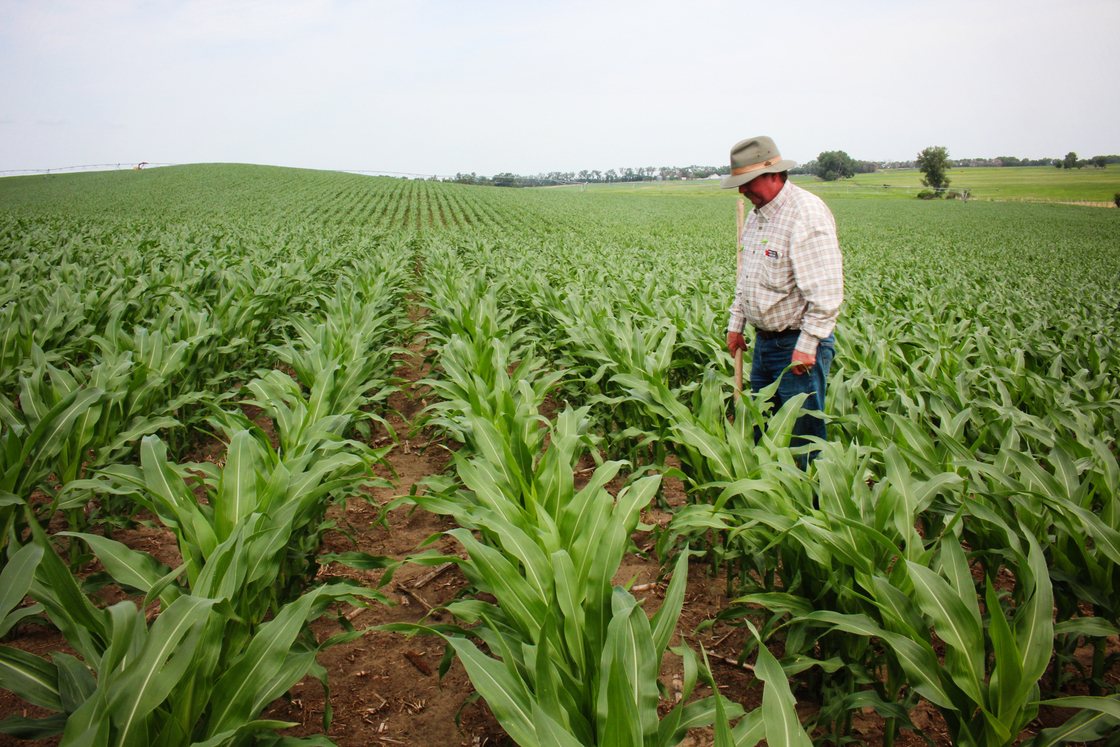
Really, fascinating.
It seems the genetically-modified seeds that Monsanto created some years ago have--SURPRISE!!--evolved (take that, Right Wing Christians!) and so now they aren't as effective keeping parasitic bugs away.
Imagine that.
Wouldn't Charles Darwin have told us this was bound to happen?
Couldn't ANY scientist have told us that is PRECISELY what would happen, given enough time?
I mean, come on. The little guys who couldn't take it died. The ones who could, lived and then their offspring lived. Sheesh. It's not that complicated.
And the thing is, now, the farmers are buying up yet more and more insecticides, for pity's sake, to spray on their crops--our food, thank you--in order TO KILL THE BUGS.
\
In the first place, that's what Monsanto said their seeds would do. That is, repel the bugs.
Second, again, Monsanto should have known this would happen. For that matter, the farmers should have known. Heck we all knew better and we aren't growing the stuff.
So now the farmers will all start getting sick again, applying the insecticide (it's in the article, straight from a farmer) and then the stuff is in our food, in our food supply.
This is no way to live, folks, no way to grow our food. It makes no sense.
The article also points out the solution, too. You likely heard it in grade school. I know I did.
All the farmers have to do is rotate their crops.
That's right, all they have to do to avoid these problems is grow a different crop, simple as that.
But then they won't be growing the big cash-cow crop that is, right now, corn.
So instead, we're going to poison ourselves.
Brilliant.
We'll be sick, at minimum, those of us who don't get cancer or other diseases but we'll have out corn.
Oh, and our money.
Yeehaw.
Friday, May 10, 2013
On the world seeming to fall apart (guest post)
(Bolding and italics added for emphasis)
Environmentalists and concerned citizens are increasingly beginning to recognize the delusion of the 'technological fix' – the use of technology to remedy problems caused by previous technology.
It is increasingly obvious that a new pesticide won't finally eliminate the superweeds that evolved to resist the previous pesticide, that new and more powerful antibiotics won't bring final victory over the superbugs that evolved to resist previous antibiotics, and that massive geoengineering projects like seeding the stratosphere with sulphuric acid or the oceans with iron (to combat climate change) will likely cause horrific unanticipated consequences.
What is less obvious is how pervasive the mentality behind the technological fix is. In the United States, we respond to the failure of metal detectors, lockdowns, and other forms of control in our schools by calling for even more control. European countries unable to pay their debts are lent even more money, with the proviso that they try even harder to pay their debts. Imperialist powers apply military violence to fight the terrorism that is a response to previous imperialism and violence. Doctors prescribe drugs to address the side-effects caused by other drugs. Urban planners address traffic congestion by building more roads (which leads to more development and more traffic). And millions of people manage the emptiness of a life of material acquisition by buying more material possessions.
Underneath the technological fix is a way of perceiving ourselves and the world. More than a mere mentality of separation and of control, it comes from a disconnected state of being that is blind to the indwelling purpose and intelligence of nature.
For example, a skilled organic farmer might see weeds or bugs not as interlopers but as a symptom of imbalance in soil ecology. To address them holistically, she must believe there even is such a thing as soil ecology. In other words, she must believe in the wholeness and interconnectedness of all beings that make up soil. She must see soil as a collective, emergent entity in its own right, and not an inert, generic substrate that plants grow in.
Conventional agriculture, on the other hand, sees weeds as kind of an outbreak of badness, similar to the way we have seen terrorism, or violence in schools, or disease. To see it otherwise, as a symptom of a deeper disharmony, presupposes that there is such a harmony, an integrity, a beingness, and not just a senseless jumble. The technological fix addresses the symptom while ignoring the illness, because it cannot see an integral entity that can become ill.
I don't want to gloss over the profundity of the paradigm shift we are accepting if we are to see nature as intelligent and purposive. To do so is to abdicate the exclusive domain to which we have appointed ourselves: the sole intelligence of the world. It is to humble ourselves to something greater, and seek our place not as Cartesian lords and possessors of nature, but as contributors to an unfolding process beyond our selves. This inescapable conclusion is, perhaps, the reason why teleology is anathema to orthodox science. Purpose was supposed to be our domain! And the king of that domain was the scientist, wielding technology to enact its dominion.
The idea of an inherently purposeful universe is far more radical than religious notions of intelligent design, which agree with mechanistic science about matter and cede intelligence to an external, supernatural being. Such a narrative offers no compunctions to limit the despoliation of nature. It asks us to humble ourselves to nothing of this world.
To be so humbled, we must see that the soul of nature – its purpose, intelligence, and beingness – comes not from without but from within. It is an emergent property borne of non-linear complexity. In non-linear systems, small actions can have enormous consequences. The technological fix is based on linear thinking. The alternative is to develop sensitivity to the emergent order and intelligence that wants to unfold, so that we might bow into its service.
What might that look like? Technology in service to Earth includes things like regenerative agriculture and permaculture to heal the soil, replenish the aquifers, and sequester carbon. It includes green energy technologies, conservation technologies, bioremediation, wetlands restoration, zero-waste manufacturing, anything that contributes to the health of the planet and its ecosystems.
Today, painfully, we are becoming aware of the folly of the delusion that we can, with clever enough technological solutions, avoid the consequences of what we do to the world. We are learning that we are not separate from nature, and that it bears a wholeness that we ignore at our peril. Our techno-utopian dreams and basic scientific paradigms are unraveling in tandem with many of our social institutions, because the underlying narrative of separation is unraveling as well.
These converging crises – social, ecological, and intellectual – are expelling us from our old story. As that happens, none of our fixes, technological or otherwise, are working anymore to control the pain: the grief, the rage, the loneliness we feel as we gaze out upon what we have wrought. Thus begins the healing journey into a new narrative of cocreative participation in the unfolding destiny of our planet.
Links: Charles Eisenstein
Charles Eisenstein's blog | Reality Sandwich
Author - Ascent of Humanity
Charles Eisenstein - Wikipedia
Sunday, March 24, 2013
Quote of the day: Whither now, humankind?
"Sadistic flicks, sea rise, assassination drones: are we up to playing God? A tectonic shift in civilization has never happened this fast before, and we’re still part-chimpanzee with double Ph.D.’s in trial and error. Invent pesticides and see what they do to our organs, sell civilians assault rifles and count the schoolhouse shootings, experiment with longevity and economics, friendship and cellphoning."
--Edward Hoagland from today's New York Times in his article Pity Earth's Creatures
It's a fantastic article with great questions for us. I highly recommend it. It's also brief.
Sunday, July 1, 2012
What the heck did we ever do to food?
I ask again, what the heck did we ever do to food?
And then, why?
First, we added pesticides and chemicals and have made it cancerous and who knows what.
Then we created "supplements." How the heck are supplements supposed to be an improvement on grown food?
For starters, they're not a meal. Some of them have flavors, like if they're in a smoothie or shake, heaven forbid. Then there are the vitamins and pills.
Instead of food?
Does this makes sense?
Is that somehow an improvement on having 3 balanced, intelligent, delicious meals a day?
Put me in the corner of saying heck no, absolutely not.
I'll stick with my broccoli and vegetables, thank you.
Wednesday, April 6, 2011
It's Spring: What you should know about strawberries
Sure, it's Spring and with it comes warm weather and fresh, new, Spring asparagus and--what else?--strawberries, of course.
But instead of just blindly running to the grocery store and buying them up, day after day and/or week after week, it seems there's plenty we need to know about corporate America's strawberries. To wit:
Strawberries may be a superfood—but they pose a potential risk unless you go organic. In addition to having up to 13 pesticides detected on the fruit, according to an Environmental Working Group (EWG) analysis, conventional "strawberries have a large surface area and all those tiny bumps, which makes the pesticides hard to wash off, so you’re ingesting more of those chemicals," explains Marion Nestle, PhD, a professor of nutrition and public health at New York University and author of What to Eat.
Not to be done there, unfortunately...
If you can, also skip conventional peaches, apples, blueberries, and cherries, which are typically treated with multiple pesticides and usually eaten skins-on.
And then there's...
Beef
You’ve probably read plenty of stories about the risks of eating chicken. But the most important protein to buy organic may well be beef. "Research suggests a strong connection between some of the hormones given to cattle and cancer in humans, particularly breast cancer," says Samuel Epstein, MD, professor emeritus of environmental and occupational medicine at the University of Illinois at Chicago School of Public Health. Specifically, the concern is that the estrogen-like agents used on cattle could increase your cancer risk, adds Ted Schettler, MD, science director at the Science and Environmental Health Network.
Though there are strong regulations about the use of hormones in cattle, "not all beef producers are following those regulations strictly, and some studies continue to find hormone residue in cattle," Dr. Schettler says. When you buy beef that’s been certified organic by the United States Department of Agriculture (USDA), you’re not only cutting out those hormones, you’re also avoiding the massive doses of antibiotics cows typically receive, which the USDA says may lead to the development of antibiotic-resistant bacteria in people
As they used to say on the old TV show "Hill Street Blues"-- "Let's be careful out there..."
You might want to read the entire article since it's about "11 things you should buy organic": http://shine.yahoo.com/event/green/11-things-you-should-buy-organic-2467411/
But instead of just blindly running to the grocery store and buying them up, day after day and/or week after week, it seems there's plenty we need to know about corporate America's strawberries. To wit:
Strawberries may be a superfood—but they pose a potential risk unless you go organic. In addition to having up to 13 pesticides detected on the fruit, according to an Environmental Working Group (EWG) analysis, conventional "strawberries have a large surface area and all those tiny bumps, which makes the pesticides hard to wash off, so you’re ingesting more of those chemicals," explains Marion Nestle, PhD, a professor of nutrition and public health at New York University and author of What to Eat.
Not to be done there, unfortunately...
If you can, also skip conventional peaches, apples, blueberries, and cherries, which are typically treated with multiple pesticides and usually eaten skins-on.
And then there's...
Beef
You’ve probably read plenty of stories about the risks of eating chicken. But the most important protein to buy organic may well be beef. "Research suggests a strong connection between some of the hormones given to cattle and cancer in humans, particularly breast cancer," says Samuel Epstein, MD, professor emeritus of environmental and occupational medicine at the University of Illinois at Chicago School of Public Health. Specifically, the concern is that the estrogen-like agents used on cattle could increase your cancer risk, adds Ted Schettler, MD, science director at the Science and Environmental Health Network.
Though there are strong regulations about the use of hormones in cattle, "not all beef producers are following those regulations strictly, and some studies continue to find hormone residue in cattle," Dr. Schettler says. When you buy beef that’s been certified organic by the United States Department of Agriculture (USDA), you’re not only cutting out those hormones, you’re also avoiding the massive doses of antibiotics cows typically receive, which the USDA says may lead to the development of antibiotic-resistant bacteria in people
As they used to say on the old TV show "Hill Street Blues"-- "Let's be careful out there..."
You might want to read the entire article since it's about "11 things you should buy organic": http://shine.yahoo.com/event/green/11-things-you-should-buy-organic-2467411/
Friday, December 17, 2010
Alice Waters: A magnificent impact on the world
Can you imagine how magnificent it would be to have the kind of impact on even just your own neighborhood, let alone your city--and then your state--and then your region--and then the nation you live in and finally, out to the world as Alice Waters, founder of the Chez Panisse restaurant in San Francisco had?
Here is a woman who recognized that our food was too processed and pumped full of chemicals and cancer-causing agents that she began doing purely natural food, straight from the earth to the meal table and in it, made a food revolution.
From Wikipedia:
Alice Louise Waters (born April 28, 1944) is an American chef, restaurateur, activist, and humanitarian. She is the owner of Chez Panisse, the world-renowned restaurant in Berkeley, California famous for its organic, locally-grown ingredients and for pioneering California cuisine.[1]
Waters opened the restaurant in 1971 at age 27. Since then, it has become one of the most awarded and renowned restaurants in the world, and has consistently ranked among the World’s 50 Best Restaurants. Waters has been cited as the most influential person in food in the past 50 years, and has been called the mother of American food.[2] She is currently one of the most visible supporters of the organic food movement, and has been a proponent of organics for over 40 years.[3] She believes that eating organic foods, free from herbicides and pesticides, is essential for both taste and the health of the environment and local communities.
In addition to her restaurant, Waters is involved in a variety of other projects. She has authored several books on food and cooking, including Chez Panisse Cooking (with Paul Bertolli) and The Art of Simple Food, and is one of the most well-known food activists in the United States and around the world. Waters’ work and philosophy is based on the principle that access to sustainable, fresh, and seasonal food is a right, not a privilege,[4] and believes that the food system needs to be “good, clean, and fair” [5]
With this vision, she founded the Chez Panisse Foundation in 1996, and created the Edible Schoolyard program at the Martin Luther King Middle School (Berkeley) in Berkeley, CA. Waters also serves as a public policy advocate on the national level for school lunch reform and universal access to healthy, organic foods, and the impact of her organic and healthy food revolution is typified by Michelle Obama’s White House organic vegetable garden.[6]
To do well is one thing. To be successful, sure, that's terrific. But to realize something so fundamental but important that it not only gives you a success but also helps start a revolution of sorts, and then to go on from that success and successful idea and create other avenues to get the word out and help others do more with the ideas and enjoy those avenues and benefits, it's pretty incredible.
It's a terrific example of what only one person can do.
It's enough to give a person terrific hope.
Thursday, March 25, 2010
Note to Missouri chemical companies Bayer and Monsanto
To the chemical companies--and even the farmers--around the world:
You're killing us:
"The mysterious 4-year-old crisis of disappearing honeybees is deepening. A quick federal survey indicates a heavy bee die-off this winter, while a new study shows honeybees' pollen and hives laden with pesticides."
Do you know how central, how pivotal, the common honey bee is to our existence, folks?
Extremely.
Pollinization is key to a great deal of plant's lives around the world and if we don't have bees, it can't happen.
What else, other than the common honey bee, is going to go from plant to plant, pollinizing?
You? Me?
Nope. And we know it.
Check it out: "About one-third of the human diet is from plants that require pollination from honeybees, which means everything from apples to zucchini."
Note that it's from A to Z.
One third of the human diet potentially not available because we use--overuse, really--chemicals and pesticides.
"This year bees seem to be in bigger trouble than normal after a bad winter, according to an informal survey of commercial bee brokers cited in an internal USDA document. One-third of those surveyed had trouble finding enough hives to pollinate California's blossoming nut trees, which grow the bulk of the world's almonds."
As Bob Dylan wrote and sang "A change is gonna' come" and it better be sooner than later, folks.
We'd better start paying attention to what we're doing to our world.
You're killing us:
"The mysterious 4-year-old crisis of disappearing honeybees is deepening. A quick federal survey indicates a heavy bee die-off this winter, while a new study shows honeybees' pollen and hives laden with pesticides."
Do you know how central, how pivotal, the common honey bee is to our existence, folks?
Extremely.
Pollinization is key to a great deal of plant's lives around the world and if we don't have bees, it can't happen.
What else, other than the common honey bee, is going to go from plant to plant, pollinizing?
You? Me?
Nope. And we know it.
Check it out: "About one-third of the human diet is from plants that require pollination from honeybees, which means everything from apples to zucchini."
Note that it's from A to Z.
One third of the human diet potentially not available because we use--overuse, really--chemicals and pesticides.
"This year bees seem to be in bigger trouble than normal after a bad winter, according to an informal survey of commercial bee brokers cited in an internal USDA document. One-third of those surveyed had trouble finding enough hives to pollinate California's blossoming nut trees, which grow the bulk of the world's almonds."
As Bob Dylan wrote and sang "A change is gonna' come" and it better be sooner than later, folks.
We'd better start paying attention to what we're doing to our world.
Subscribe to:
Comments (Atom)

 Posts
Posts




