
Showing posts with label segregation. Show all posts
Showing posts with label segregation. Show all posts
Thursday, May 6, 2021
No More Racist City in the US Than Kansas City, Missouri
Lonnie McFadden asks an excellent very legitimate question on the PBS program, "Bird: Not Out of Nowhere."
 Who had more to do with Kansas City-- Bird, Charlie Parker or Winston Churchill?
But who has a statue on the Plaza? A city divided. Literally divided. Badly, badly divided. We need to fix that.
Who had more to do with Kansas City-- Bird, Charlie Parker or Winston Churchill?
But who has a statue on the Plaza? A city divided. Literally divided. Badly, badly divided. We need to fix that.


Monday, March 15, 2021
Further Proof Why the US Owes Reparations
Anyone who knows American history--REALLY knows American history--knows we owe African-Americans reparations. This is just one more example and reason.
Segregation, legalized segregation, is why our cities all across our nation, including, of course, our own Kansas City, are split by race to this day. Then we had them go to inferior schools, have fewer jobs, if any job at all because they were further away from those jobs and certainly farther away from the better jobs, farther away from transportation and so, finally, they got and would get less money. It's all outrageous. And blatant.
Monday, March 1, 2021
A Reality Game Show Host and White America's Identity Crisis
Follow and listen to Matthew Cooke, y'all. You'll learn a great deal.
Have a great day and week, y'all.
Wednesday, February 3, 2021
So Very Few Americans Know Our Own National History

I've said time and again, so very few Americans know our full, true national history and what that has meant for----and done to--- African-Americans and Blacks in our nation, even right up to today.
We have to learn.
And then we have to react. We have to correct.
Fortunately, some, a few, are now seeing the insurrection and attack on our nation's Capitol last month for the treason it was.
McConnell: Trump Tricked Me Into Backing His Coup
They're also seeing Ms. Greene for what and who she is.
No situation any better proves the old adage that if you don't know your own history, you are bound to repeat it any better than now, especially with that insurrection and treason of the traitors last month with the attack on our nation's Capitol.
Friday, August 28, 2020
We Have a Dream, America
Martin Luther King, Jr's full "I Have a Dream" Speech, given this day, August 28, 1963.
Still unfulfilled today, America.
In fact, far, far from realized.
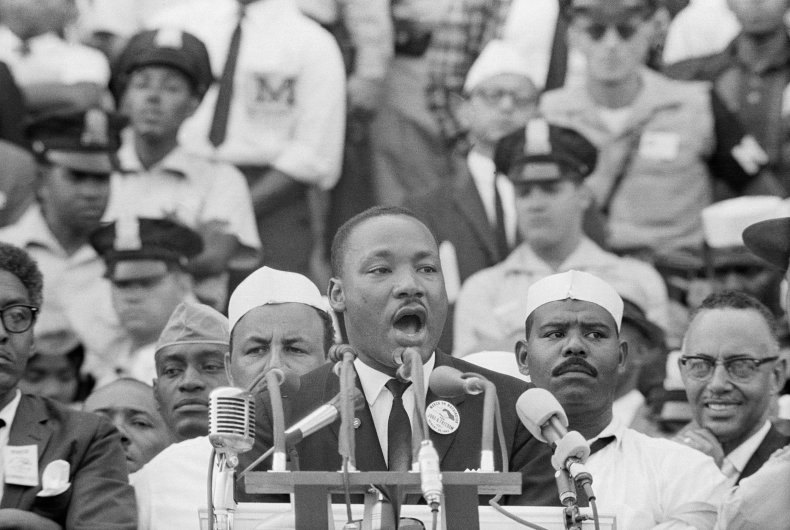
Five score years ago, a great American, in whose symbolic shadow we stand today, signed the Emancipation Proclamation. This momentous decree came as a great beacon light of hope to millions of Negro slaves who had been seared in the flames of withering injustice. It came as a joyous daybreak to end the long night of their captivity.
But one hundred years later, the Negro still is not free. One hundred years later, the life of the Negro is still sadly crippled by the manacles of segregation and the chains of discrimination. One hundred years later, the Negro lives on a lonely island of poverty in the midst of a vast ocean of material prosperity. One hundred years later, the Negro is still languished in the corners of American society and finds himself in exile in his own land. And so we've come here today to dramatize a shameful condition.
In a sense we've come to our nation's capital to cash a check. When the architects of our republic wrote the magnificent words of the Constitution and the Declaration of Independence, they were signing a promissory note to which every American was to fall heir. This note was a promise that all men, yes, black men as well as white men, would be guaranteed the unalienable rights of life, liberty, and the pursuit of happiness. It is obvious today that America has defaulted on this promissory note insofar as her citizens of color are concerned. Instead of honoring this sacred obligation, America has given the Negro people a bad check, a check which has come back marked insufficient funds.
But we refuse to believe that the bank of justice is bankrupt. We refuse to believe that there are insufficient funds in the great vaults of opportunity of this nation. And so we've come to cash this check, a check that will give us upon demand the riches of freedom and the security of justice.
We have also come to this hallowed spot to remind America of the fierce urgency of now. This is no time to engage in the luxury of cooling off or to take the tranquilizing drug of gradualism. Now is the time to make real the promises of democracy. Now is the time to rise from the dark and desolate valley of segregation to the sunlit path of racial justice. Now is the time to lift our nation from the quicksands of racial injustice to the solid rock of brotherhood. Now is the time to make justice a reality for all of God's children.
It would be fatal for the nation to overlook the urgency of the moment. This sweltering summer of the Negro's legitimate discontent will not pass until there is an invigorating autumn of freedom and equality. 1963 is not an end, but a beginning. And those who hope that the Negro needed to blow off steam and will now be content will have a rude awakening if the nation returns to business as usual. There will be neither rest nor tranquility in America until the Negro is granted his citizenship rights. The whirlwinds of revolt will continue to shake the foundations of our nation until the bright day of justice emerges.
But there is something that I must say to my people, who stand on the warm threshold which leads into the palace of justice: in the process of gaining our rightful place, we must not be guilty of wrongful deeds. Let us not seek to satisfy our thirst for freedom by drinking from the cup of bitterness and hatred. We must forever conduct our struggle on the high plane of dignity and discipline. We must not allow our creative protest to degenerate into physical violence. Again and again, we must rise to the majestic heights of meeting physical force with soul force. The marvelous new militancy which has engulfed the Negro community must not lead us to a distrust of all white people, for many of our white brothers, as evidenced by their presence here today, have come to realize that their destiny is tied up with our destiny, and they have come to realize that their freedom is inextricably bound to our freedom. We cannot walk alone.
And as we walk, we must make the pledge that we shall always march ahead. We cannot turn back. There are those who are asking the devotees of civil rights, "When will you be satisfied?" We can never be satisfied as long as the Negro is the victim of the unspeakable horrors of police brutality. We can never be satisfied as long as our bodies, heavy with the fatigue of travel, cannot gain lodging in the motels of the highways and the hotels of the cities. We cannot be satisfied as long as the Negro's basic mobility is from a smaller ghetto to a larger one. We can never be satisfied as long as our children are stripped of their selfhood and robbed of their dignity by signs stating for whites only. We cannot be satisfied as long as a Negro in Mississippi cannot vote and a Negro in New York believes he has nothing for which to vote. No, no, we are not satisfied and we will not be satisfied until justice rolls down like waters and righteousness like a mighty stream.
I am not unmindful that some of you have come here out of great trials and tribulations. Some of you have come fresh from narrow jail cells. Some of you have come from areas where your quest for freedom left you battered by the storms of persecution and staggered by the winds of police brutality. You have been the veterans of creative suffering. Continue to work with the faith that unearned suffering is redemptive. Go back to Mississippi, go back to Alabama, go back to South Carolina, go back to Georgia, go back to Louisiana, go back to the slums and ghettos of our northern cities, knowing that somehow this situation can and will be changed. Let us not wallow in the valley of despair.
I say to you today, my friends, so even though we face the difficulties of today and tomorrow, I still have a dream. It is a dream deeply rooted in the American dream.
I have a dream that one day this nation will rise up and live out the true meaning of its creed: "We hold these truths to be self-evident, that all men are created equal."
I have a dream that one day on the red hills of Georgia, the sons of former slaves and the sons of former slave owners will be able to sit down together at the table of brotherhood.
I have a dream that one day even the state of Mississippi, a state sweltering with the heat of injustice, sweltering with the heat of oppression, will be transformed into an oasis of freedom and justice.
I have a dream that my four little children will one day live in a nation where they will not be judged by the color of their skin but by the content of their character. I have a dream today.
I have a dream that one day down in Alabama, with its vicious racists, with its governor having his lips dripping with the words of "interposition" and "nullification," one day right there in Alabama little black boys and black girls will be able to join hands with little white boys and white girls as sisters and brothers. I have a dream today.
I have a dream that one day every valley shall be exalted, every hill and mountain shall be made low, the rough places will be made plain, and the crooked places will be made straight, and the glory of the Lord shall be revealed, and all flesh shall see it together.
This is our hope. This is the faith that I go back to the South with this faith we will be able to hew out of the mountain of despair a stone of hope. With this faith we will be able to transform the jangling discords of our nation into a beautiful symphony of brotherhood. With this faith we will be able to work together, to pray together, to struggle together, to go to jail together, to stand up for freedom together, knowing that we will be free one day.
This will be the day, this will be the day when all of God's children will be able to sing with new meaning: "My country, 'tis of thee, sweet land of liberty, of thee I sing. Land where my fathers died, land of the pilgrim's pride, from every mountainside, let freedom ring!"
And if America is to be a great nation, this must become true. So let freedom ring from the prodigious hilltops of New Hampshire. Let freedom ring from the mighty mountains of New York. Let freedom ring from the heightening Alleghenies of Pennsylvania. Let freedom ring from the snow-capped Rockies of Colorado. Let freedom ring from the curvaceous slopes of California. But not only that: Let freedom ring from Stone Mountain of Georgia. Let freedom ring from Lookout Mountain of Tennessee. Let freedom ring from every hill and molehill of Mississippi. From every mountainside, let freedom ring.
And when this happens, and when we allow freedom ring, when we let it ring from every village and every hamlet, from every state and every city, we will be able to speed up that day when all of God's children, black men and white men, Jews and Gentiles, Protestants and Catholics, will be able to join hands and sing in the words of the old Negro spiritual: "Free at last! Free at last! Thank God Almighty, we are free at last!"
Thursday, June 4, 2020
On Institutionalized Racism: Now, Two Things Kansas City Can and Should Do
Given the killing of George Floyd and the consequent race protests across the nation and world, now would be an excellent time for Kansas City to make a couple more changes. Sure, it's been announced the local police are finally going to have and wear cameras on them all the time and that's a great change but here are two more we should make.
First, as Steve Kraske so well and rightly said some time ago, we need to rename the JC Nichols Fountain.
JC Nichols was a publicly known racist. He's one of the biggest reasons the city was and still is, to this day, so racially segregated and separated. Mr. Kraske did a great job of calling it out at the time, thankfully. Unfortunately, that was 3 years ago and nothing has yet been done. It's incredibly ironic that these racial protests are taking place around the fountain named after him and at the shopping center he created.
Then, next, the second thing we should do, as a city, is to finally, at long last, take down the Andrew Jackson statue downtown. There is no bigger or worst, known racist than Andrew Jackson, former President or no.

Andrew Jackson, President, Patriot, War Hero, Racist
The state and Governor of Virginia are doing it, so should we.
Philadelphia, too, removed a statue of racist former Mayor Frank Rizzo.
Philadelphia removes statue
of controversial former mayor
Birmingham, too, did the right thing and removed a statue. This was 2 days ago.
Birmingham Mayor Orders Removal
of Confederate Monument
This was announced late today.
To be clear and complete, too, we should take down this Andrew Jackson statue downtown and melt it down, not put it anywhere else.
It's time, Kansas City. It's time. In fact, it's long, long past time.
Let's do this.
Let's change both.
Additinal links:
Steve Kraske: I’m still talking about J.C. Nichols, racism and renaming the fountain
Kraske: Rename Plaza Fountain Because Racism
Sunday, May 24, 2020
The NYT Asks a Great Question Today -- Then Also Gives Great American History Lessons
Today's Sunday New York Times does just that today. That is, they ask an excellent question and then give what I hope is lots of Americans not just a great American history lesson, but in this one column, LOTS of excellent history lessons.
Why Does the U.S. Military Celebrate White Supremacy?
The information they give on Confederate General George Pickett alone is eye-opening and important, let alone all the rest they give in this one column. Here is just a snippet of what is an extremely full and very informative article:
Black recruits (in WWII) who volunteered to die for their country were mainly shut out of combat units, commanded by white Southerners who often resented being assigned to colored units. In some contexts, black servicemen were treated worse than prisoners of war. The actress and singer Lena Horne, for example, flew into a rage during World War II when she arrived at a military camp to entertain only to find that the best seats — in the “white” section of the audience — had been reserved for German P.O.W.s.
Far too many of us, far too many Americans, don't know our national history--our true, complete national history.
Please. If you can. If you will. Do yourself, and the nation, really, a favor and read it. No exaggeration.
Black recruits (in WWII) who volunteered to die for their country were mainly shut out of combat units, commanded by white Southerners who often resented being assigned to colored units. In some contexts, black servicemen were treated worse than prisoners of war. The actress and singer Lena Horne, for example, flew into a rage during World War II when she arrived at a military camp to entertain only to find that the best seats — in the “white” section of the audience — had been reserved for German P.O.W.s.
Far too many of us, far too many Americans, don't know our national history--our true, complete national history.
Please. If you can. If you will. Do yourself, and the nation, really, a favor and read it. No exaggeration.
Please.
Sunday, March 1, 2020
A Continuation, Perpetuation of Racism on Kansas City's East Side?
An article in The Pitch today really caught my eye.

A detention center.
For immigrants.
Minorities.
In a part of town segregated, by law, by laws, decades ago, for minorities, for African-Americans.
Could they be more time deaf or blind?
And I assume this developer wants to put it there because--hello?--land and property and buildings over on that side of town are less expensive??
Because of that same racism and legalized segregation all those years ago?
Could you be more cruel? Or exploitative?
This very much reminds me of the prisons that were opened and created in the Southern United States that were put on former plantations. Own them first the, when you don't own them any more, trump up charges and throw them in jails and prisons.
And then, if you read the article, which I personally highly recommend, for what it's worth, you'll see how the company that runs these ICE shelters for the government, has been abusive and racist, to say the least and repeatedly, over time.
America, we're supposed to be better than this.
Could they be more time deaf or blind?
And I assume this developer wants to put it there because--hello?--land and property and buildings over on that side of town are less expensive??
Because of that same racism and legalized segregation all those years ago?
Could you be more cruel? Or exploitative?
This very much reminds me of the prisons that were opened and created in the Southern United States that were put on former plantations. Own them first the, when you don't own them any more, trump up charges and throw them in jails and prisons.
And then, if you read the article, which I personally highly recommend, for what it's worth, you'll see how the company that runs these ICE shelters for the government, has been abusive and racist, to say the least and repeatedly, over time.
America, we're supposed to be better than this.
One thing seems sure and true.
Old J.C. Nichols would probably have approved.
Saturday, January 26, 2019
Suddenly, People Caring About the East Side
We all know now what happened on the City Council this week.

Kansas City Council votes to rename The Paseo
Stunningly, all of a sudden, people, lots of white people, who are never over there, are suddenly lamenting the name and name change.
We segregate an entire race on the East side of the city and for decades, at least, and by very discriminatory laws, make sure they go to crappy schools, are paid less and don't have good access to better-paying jobs or transportation but by God, suddenly name a street over there something else and people start getting bent out of shape about something not in their own area.
Those people over there.
How dare they?
Friday, July 13, 2018
The--Very--Racist History of Banking In Our United States
What so, so many Americans don't know. Or ignore. And/or disavow.
Also ignoring the segregation that got us here and the poorer schools and far less opportunities for jobs and so, better pay.
Sure.
Let's ignore or deny all that.
Tuesday, May 29, 2018
Kansas City's (Very Racist) History
I just ran across this video over the weekend. If you'll get past the start of it, with the filmmaker proving himself a hillbilly, I guess, because that Country Club restaurant is just way too fancy for him, it's got good and fair and true information in it.
Not sure it's true?
Worse, you don't agree?
Read on:
Kansas City is among the most
economically segregated cities in the US
Then, too, there's this from none other than our own University of Missouri-Kansas City.
We need to be better than this, Kansas City.
We need to be better than this, America.
Monday, May 28, 2018
On Memorial Day -- You Want Patriotism?

So it's Memorial Day.
So yes, honor the soldiers. Honor their sacrifice. Honor their sacrifices.
But let's go a step or more further.
To all the government representatives out there, you want patriotism? Do you expect it?
Fine, you want patriotism, then give us the following, do the following--
- Stop creating wars for the soldiers to fight and die in.
- In fact, see to it we bring home thousands of our military, scattered all over the planet.
- Shrink the Defense budget. That's right, shrink it. It's bloated, it's wasteful and it weakens us, weakens the nation.
- Then, internally, give us a country that's more just.
- Give us a country with at least less wealth inequality. Fight wealth inequality, large and small.
- Give us a nation that works, even fights for those with less.
- Work for, fight for a nation that's not segregated.
- Write bills to fight racism and yes, racists.
- Write bills to fight segregation, racial segregation.
- Work to make our schools better. All our schools, for all of us, not just for those who can afford Charter and private schools.
- Fight for the common man and woman, the working man and woman of America.
- Work for the middle class.
- Heck, work for the lower classes. So many of you call and consider yourself Christian and Christians.
- Fight to overturn Citizens United.
- Work to end "dark money" in our government and politics. We deserve to know where campaign contributions come from.
- Better yet, fight to end campaign contributions entirely. Let's do away with the problems of campaign contributions.
- Fight to bring back the Fairness Doctrine so people give two sides, minimum, to each news story in our media. They're our airwaves, after all.
- Work to ensure clean air, water and soil and for all.
- Stop working and fighting for only or mostly the already-wealthy and corporations.
- Stop working more or only for your political party and work for the nation. Be statesmen and women in your governmental work
In short, give us back our nation. All of us. Work for all of us.
When you do this, you make us all better and you make the nation stronger. In doing these things, you would truly "make America great again."
Then we'll talk patriotism.
Saturday, September 16, 2017
Divided St. Louis, Divided Kansas City, Divided America
This New Yorker Magazine cover ran in December, 2014.
It's still so tragically true, of course, and so very still true of our own city and of too much of America.

We tell ourselves we are.
Sunday, June 18, 2017
Steve Kraske and the Really Excellent Proposal
They printed it yesterday.

He was about something else, too. Like others of his time, he was a racist who went to great lengths to ensure that racial and religious minorities could not live in his neighborhoods. Nichols championed restrictive deeds that dictated the types of people who could move in.
Our own UMKC points this out very well---and we all know it.
And sure, the Federal Government had their hand in it, as we also know, but that doesn't make it right, either. Here's a great bit of local background from way over in the UK with their BBC.
The US government had a hand in creating this segregation due to practices it instituted back in the 1930s, which prevented many blacks from getting on the property ladder in certain areas.
When the federal government began underwriting home loans for Americans to help boost the economy as part of the New Deal, strict guidelines were drawn up regarding where mortgages could be issued.
Areas where minorities lived were seen as risky investments and black families were routinely denied mortgages, locking them out of the housing market.
The practice was known as redlining because red ink marked out the minority areas. As Kansas City-based historian Bill Worley explained to me, these policies continued right into the 1960s, and excluded African Americans from one of the greatest motors of wealth in the 20th Century - home ownership.
And here's why all this history, from "way back when" is still pertinent and important today. In the first place, it's not that long ago and second, its effects still permeate the city, to this day:
Another factor which made access to housing prohibitive were the restrictive racial covenants written into housing contracts.
Until 1948, it was perfectly legal for a black person to be prevented from buying or living in a house.
"None of the said lots shall be conveyed to, used, owned nor occupied by Negroes as owner or tenants," it read. Other groups, including Jews, were also written into these kind of contracts.
So not only was JC Nichols racist, provenly, but he was racist against not just Blacks, not just one race, but two.
It can't be emphasized enough why this is still resonant today.
White people don't want to recognize this, first, let alone accept it and then, what few do think it only has to do with where one lives. That's not it at all. This, then, where you live effects where you work, how much your paid, what schools your children go to, everything. It very directly effects what your family will earn, in wages, where, again, you work, what and how you learn at school, who you socialize with, everything. It's not just housing, no way, though that's bad enough.
Check out these statistics on Kansas City.
> Black poverty rate: 26.4%
> White poverty rate: 8.3%
> Black unemployment rate: 13.4%
> White unemployment rate: 5.6%
Roughly 765,000 Kansas City residents — or 37.8% of the city’s population — live in a homogeneous zip code, or where at least 80% of residents share the same skin color or ethnicity, the ninth highest proportion in the country. Out of the 166 zip codes that make up the Kansas City metro area, 123 are home to predominantly white residents. White city residents have very little interaction with the city’s black residents. Of all the people a white person comes into contact with in the area, only 5.5% are black, significantly less frequent than the similar figure of 12.8% of contacts across the 50 largest metro areas. Segregation like this can have very discernible consequences. White households earn nearly twice the median income of black households. Three of the area’s zip codes are home to 15.9% of the metro’s black population, and the median household income in each is less than $30,000 annually. More than 26% of the metro area’s black population lives in poverty, slightly less than the national poverty rate among black Americans but more than three times as high as the poverty rate among the city’s white residents of 8.3%. School systems are also affected by segregation. While one-third of all metro area residents have at least a bachelor’s degree, in zip codes that are home to predominantly black residents, less than 12% of adults have a college degree. Read more at 24/7 Wall St.
So kudos, Mr. Kraske and the Star. Now, let the conversations commence.
Here, briefly, why segregation is so very, deeply wrong and why we still, to this day, need to recognize and
I have to say, I salute, again, Steve Kraske for writing and our own Kansas City Star for putting out such an article. In the first place, it surprised me. Usually the media and people in it like and want to go the safe, quiet route.
This is not doing that at all.
Instead of just asking the question of if we should do this, too, Mr. Kraske puts it right out there, that we should definitely, unequivocally rename our revered fountain.
Please check your racism at the door. (Along with your ignorance of the city's history. And any and all ugliness and hate).
Link:
Friday, September 9, 2016
You Didn't Make the List, Kansas City!
Congratulations, Kansas City! You didn't make the list!
I thought sure we'd be on here but we're not, thank goodness. Segregated and separated as we are, and by law, at the time, we aren't one of the worst.
As it turns out, however, St. Louis is, so Missouri didn't get left out. And the statistics are pretty brutal.
6. St. Louis, MO-IL
> Black ppl. in black neighborhoods: 42.2%
> Black population: 18.2%
> Black poverty rate: 29.7%
> White poverty rate: 9.0%
The St. Louis region earned a national spotlight in the summer of 2015 when Michael Brown, a black teenager, was shot and killed by police in Ferguson, sparking protests across the nation. Ferguson is a predominantly black neighborhood — and Brown’s death is inseparable from racial segregation in the area. One of the most damaging effects of residential segregation is funding disparities between neighboring school districts. Because property taxes play such a large role in school funding, well-off communities often
have an interest in keeping poor areas separate.
Instead of one, St. Louis has 24, quite disparate school districts. This August, water fountains in 30 predominantly black St. Louis public schools were shut down due to lead contamination. Some of the area’s wealthiest communities with some of the best-funded schools are less than 20 miles away, and with state-of-art facilities, have reliable clean water.
As is common in large metro areas — not just the most segregated — the poverty rate among black St. Louis residents, at nearly 30%, is approximately three times the poverty rate among the area’s white residents.
The St. Louis region earned a national spotlight in the summer of 2015 when Michael Brown, a black teenager, was shot and killed by police in Ferguson, sparking protests across the nation. Ferguson is a predominantly black neighborhood — and Brown’s death is inseparable from racial segregation in the area. One of the most damaging effects of residential segregation is funding disparities between neighboring school districts. Because property taxes play such a large role in school funding, well-off communities often have an interest in keeping poor areas separate.
> Black ppl. in black neighborhoods: 42.2%
> Black population: 18.2%
> Black poverty rate: 29.7%
> White poverty rate: 9.0%
The St. Louis region earned a national spotlight in the summer of 2015 when Michael Brown, a black teenager, was shot and killed by police in Ferguson, sparking protests across the nation. Ferguson is a predominantly black neighborhood — and Brown’s death is inseparable from racial segregation in the area. One of the most damaging effects of residential segregation is funding disparities between neighboring school districts. Because property taxes play such a large role in school funding, well-off communities often
have an interest in keeping poor areas separate.
Instead of one, St. Louis has 24, quite disparate school districts. This August, water fountains in 30 predominantly black St. Louis public schools were shut down due to lead contamination. Some of the area’s wealthiest communities with some of the best-funded schools are less than 20 miles away, and with state-of-art facilities, have reliable clean water.
As is common in large metro areas — not just the most segregated — the poverty rate among black St. Louis residents, at nearly 30%, is approximately three times the poverty rate among the area’s white residents.
The St. Louis region earned a national spotlight in the summer of 2015 when Michael Brown, a black teenager, was shot and killed by police in Ferguson, sparking protests across the nation. Ferguson is a predominantly black neighborhood — and Brown’s death is inseparable from racial segregation in the area. One of the most damaging effects of residential segregation is funding disparities between neighboring school districts. Because property taxes play such a large role in school funding, well-off communities often have an interest in keeping poor areas separate.
Instead of one, St. Louis has 24, quite disparate school districts. This August, water fountains in 30 predominantly black St. Louis public schools were shut down due to lead contamination. Some of the area’s wealthiest communities with some of the best funded schools are less than 20 miles away, and with state-of-art facilities, have reliable clean water.
As is common in large metro areas — not just the most segregated — the poverty rate among black St. Louis residents, at nearly 30%, is approximately three times the poverty rate among the area’s white residents.
So you see, it's not just about people of different colors being separated. It's about opportunities and jobs and education, right on down to wealth, certainly. Segregation becomes about perpetuating both wealth and poverty.
And that's just wrong.
Links:
Friday, July 8, 2016
Should Be Required Reading
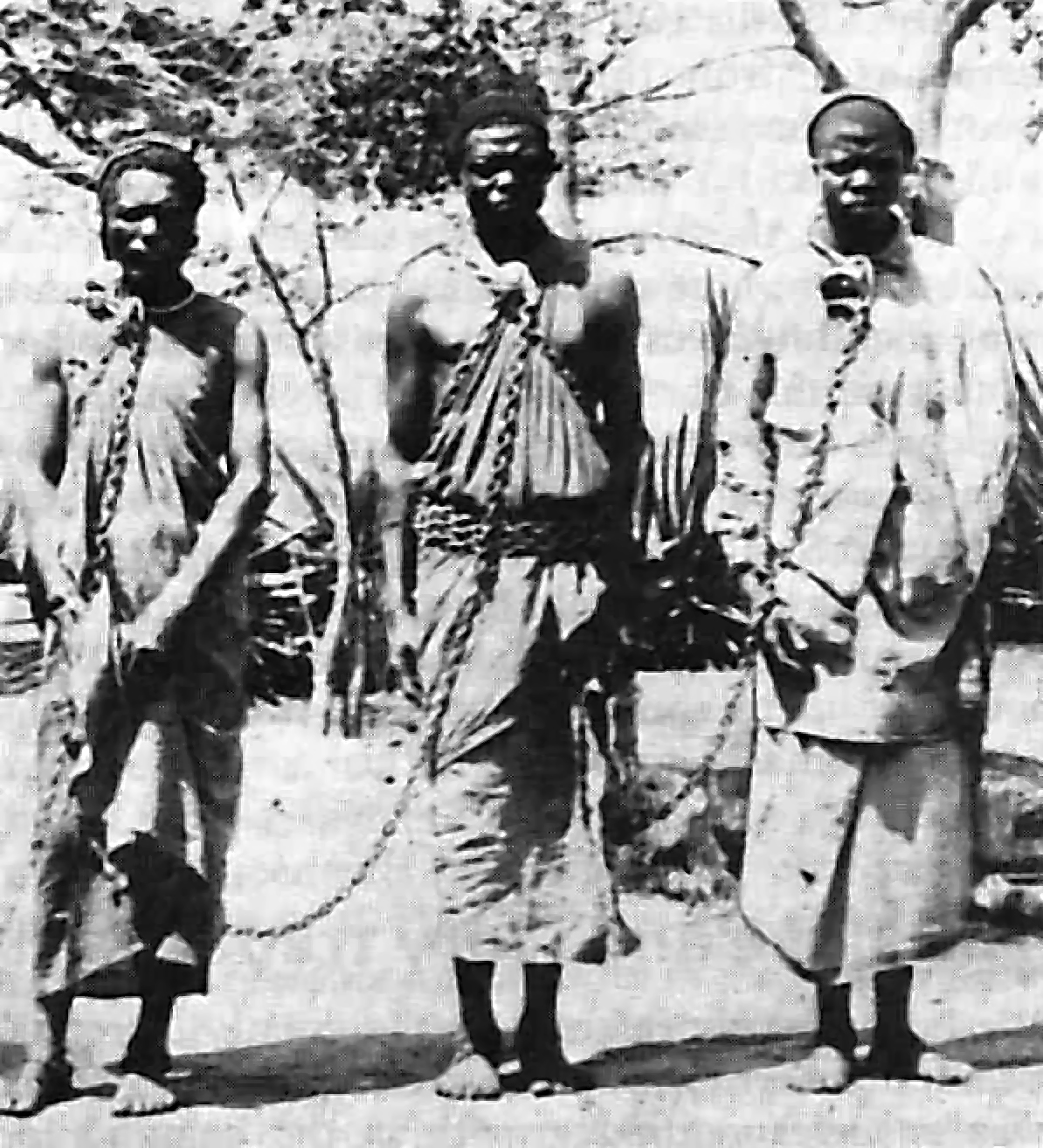
A friend on Facebook (yes, Facebook), posted the following article yesterday. I found it more than a bit incredible and a surprising good, even important read.
Will Racism Ever End, Will I Ever
Stop Being a Nigger?
For me, it was incredibly quotable. I'll just stick with this one, however:
"...the greatest trick of a racist is getting folks to believe that racism doesn’t exist in the first place or that the people with no power and no privilege are the real racists, the real oppressors."
It reminded me how little, how precious little we Americans know of our own history, our own national history. It also reminded me how we need much more of it in our schools. Besides the above, I think people should have to read the following.
This book:
And if not reading that last book, then at least seeing the PBS special on it:
It's fairly outrageous what we don't know or, worse, deny.
Saturday, February 6, 2016
Quote of the Day -- Albert Einstein

'''There is separation of colored people from white people in the United States. It is not a disease of colored people, but a disease of white people.
I do not intend to be quiet about it.'"
Albert Einstein, Lincoln University, 3 May 1946, as quoted by J. W. Woods, in "Lincoln U. confers degree on Einstein," Baltimore Afro American, May 11, 1946, p. 2, col. 5 (continued from p. 1, col. 5). No version of this statement appears in the "On race and prejudice" section (pp. 309 ff.) of Alice Calaprice's The ultimate quotable Einstein (Princeton University Press, 2010). Other versions:
"'There is separation of colored people from white people in the United States. That separation is not a disease of colored people. It is a disease of white people. I do not intend to be quiet about it.'"
As quoted by Fred Jerome and Rodney Taylor, in Einstein on race and racism (Piscataway, NJ: Rutgers University Press, 2005), 142, citing the Baltimore Afro American (above).
Source: Liber locorum communium
Friday, February 5, 2016
The Kansas City History Too Few Know
The Kansas City, Missouri Public Library group does some wonderful things with presentations that need to be more well-known and probably, possibly, hopefully attended. There's one coming up that I believe more Kansas Citians should know about, attend and learn from. It's this one.
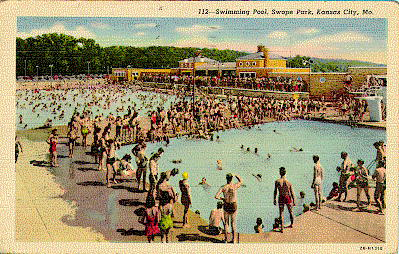
Desegregating the Swope Park
Swimming Pool
Perfectly timed for Black History Month, of course, this gives us insight into the not-that-long-ago past of the city when more of the us were centered around Swope Park and that the main, biggest swimming pool was segregated.
That's whites only. White people only. No blacks. Something unthinkable today, still unconscionable then but the law and practice of the land.
Not only is it terrific, even important history we all should know and never forget but none other than Thurgood Marshall, Jr. is going to be on the panel, discussing the topic.
Some information on the event.
Nearly three years before the Supreme Court’s ruling against school segregation in Brown v. Board of Education of Topeka – the commonly acknowledged start of America’s civil rights movement – the burgeoning struggle for equality was stirred by a 1951 case in Kansas City. The local branch of the NAACP filed suit, successfully, to force the city to end racial segregation at the Swope Park swimming pool.
The plaintiffs’ lead attorney was a future Supreme Court justice, Thurgood Marshall. His son, Thurgood Marshall Jr., joins longtime Kansas City activist and former mayor pro tem Alvin Brooks
in a discussion of the case, examining the arguments on both sides, the social context of the times, and the elder Marshall’s role in the outcome. KCUR-FM’s Steve Kraske moderates the conversation.
Co-presented by KCUR and the Federal Court Historical Society of Western Missouri.
Here's a little history on the pool, too, prior to the event.
The WPA gave $400,000 to build the Swope Park swimming pool, a state-of-the-art facility with a refreshment stand, dressing rooms, and space for 3,000 people. The pool opened to white Kansas Citians in 1941, and after a heated court battle it opened to the black community in 1954.
That WPA is, of course, for those too young to know, the Works Progress Administration. You know, our own Federal government, of all of us, supposedly.
It was right around this time, in 1954, when the Swope Park pool opened for blacks AND whites of the city--heaven forbid!--that the "white flight" began in earnest, sending all the honkies and crackers out to the hinterlands of Southern Kansas City and over the state line to Johnson County. God forbid we live together.
So once again, NPR, National Public Radio is also stepping up, with the Library, to bring and present this material to and for us all.
Kudos and many thanks to KCUR, the Kansas City Public Library and all for bringing this to us.
Here's hoping for a great turnout.
Subscribe to:
Posts (Atom)

 Posts
Posts




