Blog Catalog

Showing posts with label 24/7 Wall St. Show all posts

Monday, June 3, 2019

Real Fear for the Future


Sorry to start the day on a negative note (negative notes?), but I'm not thinking the future is that cozy a place for us Americans from this vantage point. Besides the idiot, Republican Party dotard in the White House and his emotional, irrational outbursts and actions, there are facts and statistics stacking up that don't bode well for us all.

Image result for dystopian future

First, let's take our information we're getting. Newspapers are famously or infamously dying.


New York Daily News Fires Half Of Its Staff


A Major Newspaper Fires Its Entire Staff


It's predicted this is the shape of things to come, too.

NY Times Editor Predicts Most Local US Papers Will Fold

Understand, too, this is not merely longing for a bygone day. This is no way nostalgia for the past and for "the way things were", no, not at all. 

This is about most or all of us having a basis of information. This is about all of us being engaged in the social fabric, as it were. This is about all of us have a similar basis of information from which we address our communities, our metropolitan areas, our cities, counties, states, regions and even the nation at large but the world, too. We will no longer have that basis from which to start, a more common background of knowledge.

So instead of reading the daily newspaper we would all or mostly all share, now we get things off the internet, if we read at all. This is where I say we also only read things that back up what we already "know", think we know and/or believe. It pits us more and more against one another because we so sincerely believe only that which we already want to believe.

It does not bode well for us.

And then there's the fact that no one will be down there at that newspaper to keep the local City Hall, Mayor, Council and city and state government accountable. With them not there to research, write and publish what's going on, who's going to? The local blogger on the internet?  Highly unlikely. God help us.

Then there's the issue of our news media has become far too "us vs them." We have Right Wing TV like Fox, publicly declaring itself entertainment but masquerading as news and skewing things heavily for one political party and for the already-wealthy and corporations.

Why is Fox News so biased toward the Republicans


This splits and splinters us all further, all the more. It's downright frightening.

Next up is the fact that, along with all this splintering, we're all joining fewer and fewer organizations.

Americans Are Becoming Less Social


We're becoming islands, unto ourselves. We belong to fewer churches (which actually I view as an improvement but that's another issue), we join less sports teams, bowling leagues and all kinds of social groups.

 After all this, now we also have whole countries, whole nations and other groups of people, going online to splinter us further. They whip people up with all kinds of false information and/or emotionalism in order to tear us apart from within. It certainly worked in the last national election for the presidency.

Add to all this that we're spending our way into obscene, huge, unnecessary defense spending that actually weakens the nation.


With that spending and our giveaways to the already-wealthy and corporations, we're also spending ourselves into crazy debt and deficit spending.


With that, I'll stop. God knows that's enough. And that's just what's going on in our nation. I could go on with the UK's Brexit and China's response to our, again, dotard President and a lot more.

I just don't see much good out there. We have to put our faith in the American people waking up. Waking up and voting the wrong people, in office now, out of those offices.

I hope it doesn't require reading a newspaper to get us there.

Thursday, July 27, 2017

Horrible List Kansas City Makes


I saw this new list yesterday and yes, unfortunately, Kansas City is on it.

50 Worst American Cities to Live In 
- 24/7 Wall St.

We're 49 out of 50, sure, but still, we're on it.

Dangit.


49. Kansas City

Population: 151,261
Median home value: $87,600
Poverty rate: 22.2%
Pct. with at least a bachelor’s degree: 16.3%

While low property values can help make homeownership a reality for financially insecure individuals, cheap housing is more often indicative of a weak economy and poor living conditions -- and this appears to be the case in Kansas City. The typical home in the city is worth just $87,600, far less than the $194,500 national median home value.

Relative to the size of its population, Kansas City has very few amenities and attractions that might enrich the lives of residents. There are fewer bars, libraries, recreational centers, museums, and hotels per capita in Kansas City than there are in the U.S. as a whole. There are just 120 restaurants per 100,000 Kansas City residents, among the fewest food establishments per capita of any U.S. city.

Ow. Really. That hurts, just being on the list.

But it could be worse. 

We could be Little Rock Arkansas at number 26 or Fort Smith, also Arkansas, at 24.

Missouri wasn’t done there, either, unfortunately. Springfield hit a very high number 12, nearly making the top 10 worst cities to live in.  Wow.

Image result for springfield missouri

12. Springfield, Missouri

Population: 166,798
Median home value: $113,500
Poverty rate: 24.1%
Pct. with at least a bachelor’s degree: 28.0%

Few cities have a greater crime problem than Springfield, Missouri. The city’s annual violent crime rate of 1,356 incidents per 100,000 residents is more than three times the national violent crime rate of 373 per 100,000. Springfield’s property crime rate, at 7,795 incidents per 100,000 people, is also over three times the national property crime rate and the third highest of the 551 cities reviewed.

High crime in a city often coincides with high poverty in a somewhat circular cause and effect. Springfield’s poverty rate of 24.1% is nearly 10 percentage points greater than the national poverty rate.


Not done there, St. Louis does, in fact, break that top ten, even making the top 5 worst cities.

Image result for st. louis arch

4. St. Louis

Population: 315,685
Median home value: $130,800
Poverty rate: 24.9%
Pct. with at least a bachelor’s degree: 34.7%

St. Louis is representative of the economic decline that afflicted many large industrial cities over the latter part of the 20th century. Decades of manufacturing decline, white flight, and exclusionary zoning in St. Louis have led to some of the worst urban decay, racial segregation, and income inequality of any major city today. Some 24.9% of St. Louis residents live in poverty, far more than the 14.7% national figure. St. Louis has struggled with a high crime rate since the 1960s and today has the highest violent crime rate of any U.S. city. There were 1,817 violent crimes reported per 100,000 St. Louis residents in 2015, nearly five times the national rate.

Many of the economic problems in St. Louis are tied to the city’s rapid population decline. The city’s population is less than half of what it was during its 1950 peak of 860,000 people, and it continues to decline today. While the U.S. population grew 11.5% over the last 10 years, the number of residents in St. Louis fell 5.4%.


We have to do better, folks.


Sunday, June 18, 2017

Steve Kraske and the Really Excellent Proposal


They printed it yesterday.

Image result for kc photog blog jc nichols fountain


Nichols was all about enduring legacies.

He was about something else, too. Like others of his time, he was a racist who went to great lengths to ensure that racial and religious minorities could not live in his neighborhoods. Nichols championed restrictive deeds that dictated the types of people who could move in.


Our own UMKC points this out very well---and we all know it.


And sure, the Federal Government had their hand in it, as we also know, but that doesn't make it right, either. Here's a great bit of local background from way over in the UK with their BBC.


The US government had a hand in creating this segregation due to practices it instituted back in the 1930s, which prevented many blacks from getting on the property ladder in certain areas.

When the federal government began underwriting home loans for Americans to help boost the economy as part of the New Deal, strict guidelines were drawn up regarding where mortgages could be issued.

Areas where minorities lived were seen as risky investments and black families were routinely denied mortgages, locking them out of the housing market.

The practice was known as redlining because red ink marked out the minority areas. As Kansas City-based historian Bill Worley explained to me, these policies continued right into the 1960s, and excluded African Americans from one of the greatest motors of wealth in the 20th Century - home ownership.


And here's why all this history, from "way back when" is still pertinent and important today. In the first place, it's not that long ago and second, its effects still permeate the city, to this day:

Redlining is now theoretically outlawed in the United States, and has been since the 1970s, but it's still happening to this day.

"Banks continue to build and structure their lending operations in a way that avoids or fails to meaningfully serve communities of colour, based on assumptions about the financial risk," Vanita Gupta, the justice department's top civil rights lawyer, said last September, as she pledged more action to stop discriminatory lending.

Another factor which made access to housing prohibitive were the restrictive racial covenants written into housing contracts.

Until 1948, it was perfectly legal for a black person to be prevented from buying or living in a house.


Here's where the JC Nichols part comes in.

Bill Worley showed me an example of a restrictive racial covenant drawn up in Kansas City by the city's best known property developer during that time, JC Nichols.

"None of the said lots shall be conveyed to, used, owned nor occupied by Negroes as owner or tenants," it read. Other groups, including Jews, were also written into these kind of contracts.


So not only was JC Nichols racist, provenly, but he was racist against not just Blacks, not just one race, but two.

It can't be emphasized enough why this is still resonant today.


White people don't want to recognize this, first, let alone accept it and then, what few do think it only has to do with where one lives. That's not it at all. This, then, where you live effects where you work, how much your paid, what schools your children go to, everything. It very directly effects what your family will earn, in wages, where, again, you work, what and how you learn at school, who you socialize with, everything. It's not just housing, no way, though that's bad enough.

Check out these statistics on Kansas City.


>Pct. of population living in segregated areas: 37.8%
> Black poverty rate: 26.4%
> White poverty rate: 8.3%
> Black unemployment rate: 13.4%

> White unemployment rate: 5.6% 

Roughly 765,000 Kansas City residents — or 37.8% of the city’s population — live in a homogeneous zip code, or where at least 80% of residents share the same skin color or ethnicity, the ninth highest proportion in the country. Out of the 166 zip codes that make up the Kansas City metro area, 123 are home to predominantly white residents. White city residents have very little interaction with the city’s black residents. Of all the people a white person comes into contact with in the area, only 5.5% are black, significantly less frequent than the similar figure of 12.8% of contacts across the 50 largest metro areas. Segregation like this can have very discernible consequences. White households earn nearly twice the median income of black households. Three of the area’s zip codes are home to 15.9% of the metro’s black population, and the median household income in each is less than $30,000 annually. More than 26% of the metro area’s black population lives in poverty, slightly less than the national poverty rate among black Americans but more than three times as high as the poverty rate among the city’s white residents of 8.3%. School systems are also affected by segregation. While one-third of all metro area residents have at least a bachelor’s degree, in zip codes that are home to predominantly black residents, less than 12% of adults have a college degree. Read more at 24/7 Wall St.

Here, briefly, why segregation is so very, deeply wrong and why we still, to this day, need to recognize and


I have to say, I salute, again, Steve Kraske for writing and our own Kansas City Star for putting out such an article. In the first place, it surprised me. Usually the media and people in it like and want to go the safe, quiet route. 

This is not doing that at all. 

Instead of just asking the question of if we should do this, too, Mr. Kraske puts it right out there, that we should definitely, unequivocally rename our revered fountain.

So kudos, Mr. Kraske and the Star. Now, let the conversations commence.

Please check your racism at the door. (Along with your ignorance of the city's history. And any and all ugliness and hate).

Link:


Sunday, October 16, 2016

Notes on "America's Most Dangerous Cities"


The online blog site, 24/7 came out with their annual list of "America's Most Dangerous Cities" at the end of last month, and it's pretty interesting. Their data is compiled from the FBIs own list. There some interesting points in and on it, worth noting.

Let's start with a bit of their overall data:

24/7 Wall St. reviewed violent crime rates in major U.S. cities from the FBI’s 2015 Uniform Crime Report. Violent crime includes all offenses involving force or threat of force and are broken into four categories: murder and non-negligent manslaughter, rape, robbery, and aggravated assault. For every 100,000 U.S. residents, 372 of these crimes were committed in 2015.
Then, some notes.

First, unfortunately---and no surprise, really---Kansas City is on it. Second thing to note about it, we were in the top ten, too.
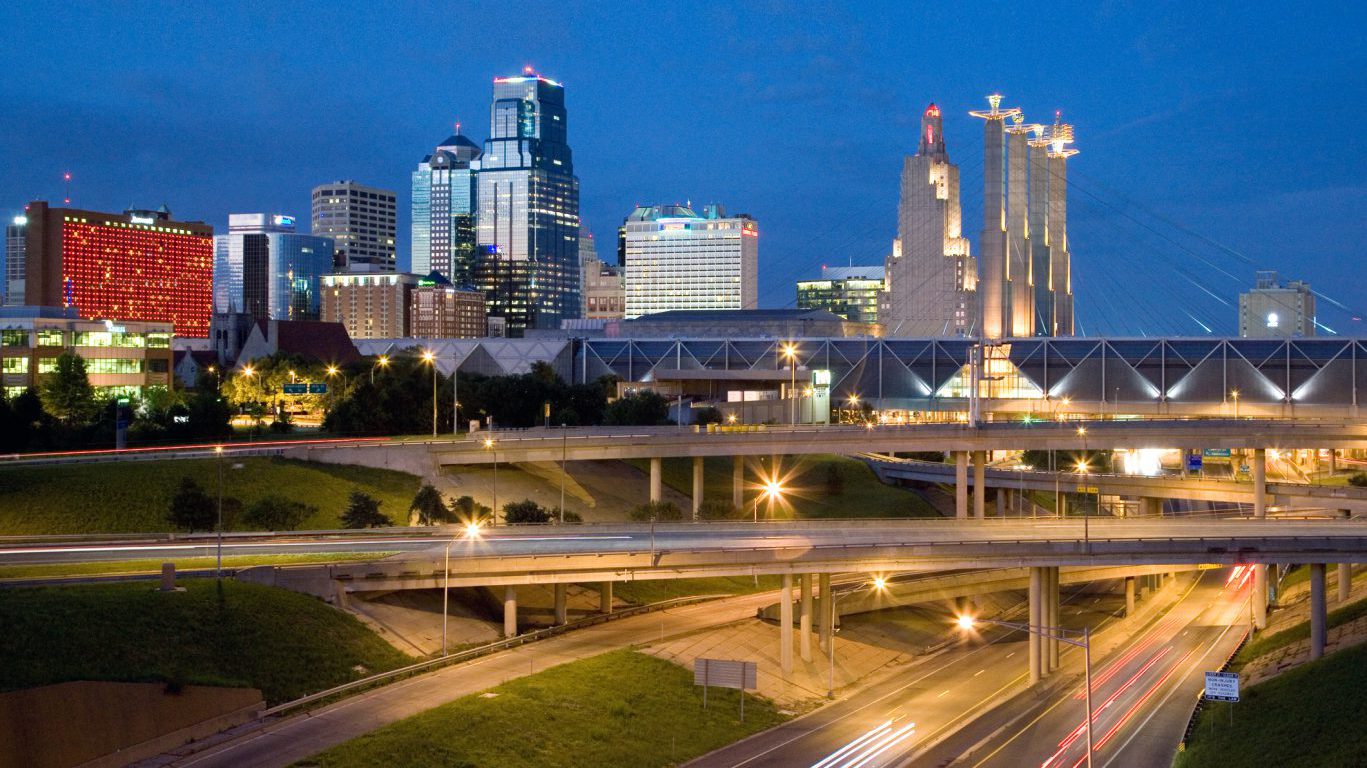
Kansas City Skyline


10. Kansas City, Missouri
> Violent crimes per 100,000: 1,417.3
> 2015 murders: 109
> Poverty rate: 19.4%
> Unemployment rate: 5.5%

While the nationwide violent crime rate rose by 3.9% in 2015, the increase in Kansas City was far more dramatic. With homicide and aggravated assault rates surging, the city reported a 14.4% spike in violent crime last year. Crime in the city is up even more from five years ago. The city’s violent crime rate increased by 21.2% from 2011 through 2015, even as the nationwide rate declined by 0.7% over that period.

Not good.

In fact, we, Kansas City, were worse on this list than Washington, DC (15), Indianapolis, Indiana (13) and Stockton, California (12).  That hurts.

Next thing to note about the list is that Missouri gets hit pretty hard. We are on the list three different times.

Then on to this note from the list, our own Springfield, Missouri, "Queen City of the Ozarks", followed as close as could be at number 11 on the list.


11. Springfield, Missouri
> Violent crimes per 100,000: 1,355.6
> 2015 murders: 10
> Poverty rate: 26.4%
> Unemployment rate: 4.3%

Crime rates tend to be higher in economically depressed areas where opportunities are scarce. In Springfield, Missouri, more than one-quarter of area residents live in poverty, one of the highest poverty rates in the country. After spiking by 73.2% over the five years through 2015 — the second highest increase of any major U.S. city — Springfield’s violent crime rate is the 11th highest in the country. In 2015, there were 179 rapes for every 100,000 residents, the highest incidence of rape in the country.

In fact, along with Missouri's Springfield, there were two more on the list. Springfields Illinois, at number 23 and Massachussetts at 21. I guess that all comes from it being such a common name in this country, maybe.

Next note, right next door in Arkansas, little old Little Rock comes in at number 9, higher and so, worse than Kansas City. Who'd have guessed?

Which brings us to our last point (points?) and the highest, worst ranking of all the most dangerous cities in America this year, at this time.  It ain't good, Missouri.
Image result for mo rage blog st. louis


1. St. Louis, Missouri
> Violent crimes per 100,000: 1,817.1
> 2015 murders: 188
> Poverty rate: 27.8%
> Unemployment rate: 6.1%

Including 188 homicides, there were 5,762 violent crimes in St. Louis in 2015. Adjusting for population, the city’s murder and violent crime rates, at 59 murders and 1,817 per 100,000 city residents, are each the highest in the country. The number of violent crimes reported in St. Louis increased by 7.7% last year, faster than the national uptick of 3.9%. Over the last five years, however, the incidence of violent crime is down by 3.2%.

Yes sir, good ol' St. Lou.  

Not Detroit. Heck, not even Chicago.  In fact, check out the list, folks. Chicago isn't even on the list (it's too large a city for this study).

It's not looking good for us, danger-wise, Missourians. Heck, remember this study, that came out in 2012?


We have to work on our safety and image, folks. These are some pretty awful lists.