Blog Catalog

Showing posts with label computer sabotage. Show all posts

Saturday, October 15, 2016

On This Election, Donald Trump and Russian Intervention


A Facebook friend of mine and area resident, one Kent Hartland wrote and posted the following on Facebook today. I thought it worth the time and thought.
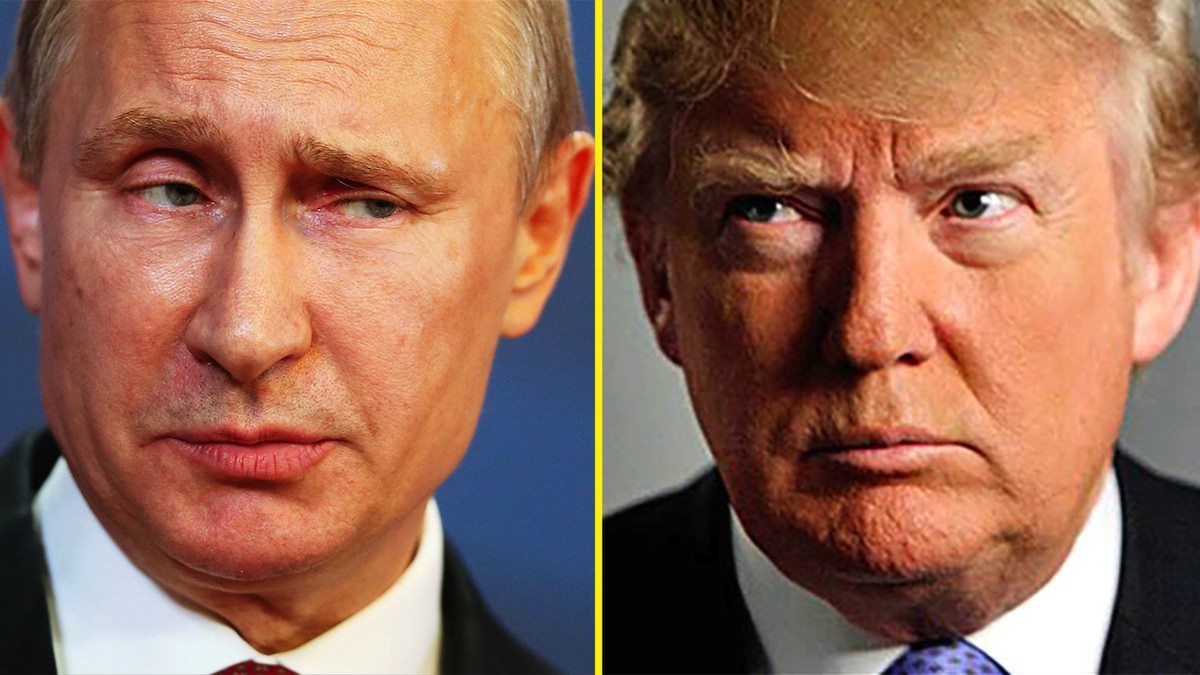
Image result for trump putin

The CIA says they have clear evidence Russia is hacking into American servers in an attempt to alter the apparent outcome of a presidential election. Twenty states have also reported evidence of Russia attacking servers in an attempt to overthrow state-wide elections for congress. Yet most folks here seem oblivious or complacent.

If Russia assassinated one of our candidates or launched a strike against us to eliminate the person we chose as our leader, we would all be down at the recruiting station to enlist. But that is what they are doing. The 21st century equivalent of a Regime Change. A political assassination.

No matter what your politics, if you claim to be an American, a patriot, then this should be your line in the sand. Do not facilitate, accept, brush aside or look away from what is currently happening.

Russia has launched a cyber attack on America. Our president has promised a proportional response. Russia is warning it's citizens and America of the growing risk of nuclear war.

Nuclear war.

This from CNN:

"It is now clear that the illegal hack of my personal email account was -- just like the other recent, election-related hacks -- the work of the Russian government," John Podesta said in a statement. "This level of meddling by a foreign power can only be aimed at boosting Donald Trump and should send chills down the spine of all Americans, regardless of political party."

Trump has called on Moscow to hack into Clinton's computers, downplayed criticism of Putin's authoritarian tendencies, tried to suggest that Russia hasn't hacked US systems and promoted foreign policy positions that jibe more closely with Moscow's than Washington's. He's relied on aides with ties to Russia and most recently, quoted an incorrect Russian news report to raise questions about Clinton.

"Russia, are you listening?" Trump said from the stage of a rally, calling for a foreign country to interfere in an election, an unprecedented moment in presidential politics.

Trump has taken foreign policy positions that analysts say would please Russia, declaring in March that he would consider pulling the US out of NATO because it's "obsolete." The 28-member organization, founded in 1949 to defend against the Soviet Union, is the core US-Atlantic security mechanism.

Trump campaign advisers have had ties to Russia. Former campaign chairman Paul Manafort lobbied on behalf of Russian-backed Ukrainian president Viktor Yanukovich. Carter Page, described at one point by the campaign as an informal policy advisor, reportedly had investments in Russian gas company Gazprom and has publicly criticized the US in a speech in Moscow.

A Trump security adviser, Lt. General Mike Flynn, the retired head of the Defense Intelligence Agency, attended a December gala for the the state-backed Russia Today television network, placed two seats away from Putin, according to Politico.

Trump's refusal to release his tax returns makes it impossible to get a full sense of his investments and whether he has any in Russia, but he does have business ties to Russians.

Trump has also written about trying to build a Trump property in Moscow since 1987 in his book "The Art of the Deal," signing his most recent deal to build in Moscow in 2013, according to the Washington Post.

The Republican candidate worked with Russian oligarchs to stage the Miss Universe pageant to Moscow in 2013. And his son Trump Jr told a real estate investment conference in 2008 that "Russians make up a pretty disproportionate cross-section of a lot of our assets," adding that they "see a lot of money pouring in from Russia."

"I've been there many times, I've spent quite a bit of time in Moscow looking at deals," Trump Jr. said.

---

If Russia doesn't want Clinton or the Democrats in power and DOES want Trump and the GOP in, that should tell you who to vote for.

Stand. Take a strong and immediate stand against these attacks. Russia cannot see a divided America, where some of the citizens are cool with Russia literally trying to overrule our choices for elected officials.


Back to me:

I don't think this, he, is overstating the situations. Seems like good to great food for thought.

Additionally, this story broke yesterday.


I hope this is all only fascinating.


Friday, June 10, 2011

Two very common computer things that shouldn't exist

The first is spam.

I mean, really.  People are sitting around, running machines so they can send out this crap and somehow, remarkably, they make money doing it.

Who responds to this nonsense anyway?

Yet somehow, somewhere, someone does.  And again, someone else then makes money.  Further proof, yet again, as if we needed it, that "There's a sucker born every minute."

The other thing that shouldn't exist is hacking and hackers.

At lest, the hackers that just do it for hacking sake.

I'm not talking about the international espionage hacking of one country vs. another or the hacking into a bank, for example, in an effort to steal millions--or billions of dollars.  At least you can say they've got a goal and a reason and purpose, albeit wildly illegal.

I'm talking about the computer hacking that is just so the hacker can see if they can do it.  Apparently these guys have nothing better to do than just hack for hacking's sake.

Now, if those same hackers could use their time, instead, to create some beautiful, elegant, simple, truly effective security program that would work on even just Microslop, I mean Microsoft computers, they'd be trillionaires.

Saturday, January 22, 2011

The biggest--and most overlooked--event of the last year, bar none

Submittal:  The Stuxnet virus was the single-biggest event of the last year, barring anything even worse that wasn't actually released to the public's attention.


First, what Stuxnet is, from Wikipedia:  Stuxnet is a computer worm targeted at industrial equipment[1] that was first discovered in July 2010 by VirusBlokAda, a security firm based in Belarus. While it is not the first time that hackers have targeted industrial systems,[2] it is the first discovered worm that spies on and reprograms industrial systems,[3] and the first to include a programmable logic controller (PLC) rootkit.[4][5] It was specifically written to attack Supervisory Control And Data Acquisition (SCADA) systems used to control and monitor industrial processes.[6] Stuxnet includes the capability to reprogram the PLCs and hide its changes.[7]


Next, then, on the ramifications of this new "computer worm":


Russian digital security company Kaspersky Labs released a statement that described Stuxnet as "a working and fearsome prototype of a cyber-weapon that will lead to the creation of a new arms race in the world."


Perhaps the ultimate tribute to it was by a computer security expert who called its advent—and the swath of destruction it cut through Iran's nuclear program—"an Oppenheimer moment" in the history of hacking. A moment in which malware viruses had made the leap from troublemaking but controllable depredations to potentially unstoppable, history-changing weapons, their capabilities miles ahead of their predecessors', the way the first nuclear weapon Oppenheimer built at Los Alamos left mere TNT in its wake and shadowed the world we live in with the threat of cataclysmic extinction.


Computer-security experts who have handled the most complex "malware" virus infections are agog.


More:


But an Oppenheimer moment means more than a quantum leap in the power and deceptiveness of the virus. It means dramatic geopolitical ramifications. If the original Oppenheimer moment may have guaranteed that WWII would end with the horrific Hiroshima and Nagasaki nuclear bombings, the Stuxnet Oppenheimer moment may have bequeathed us an unexpected last-minute reprieve from what seemed like a potential outbreak of nuclear warfare. Consider the fact that Stuxnet disabled Iran's key nuclear facilities (and infected an estimated 60,000 of its computers) just at the moment whenthe Israelis were giving out signals that they were prepared to use air strikes on Iranian facilities, using whatever weapons it took (and, of course, they have an undeclared nuclear arsenal), to prevent Iran from getting the bomb. Whatever you think of the Israeli position, there was little doubt they'd do it if there were no other options, and in doing so risk not only Iranian retaliation but nuclear retaliation from Iranian sympathizers in Pakistan's military, which all-too-loosely controls Pakistan's "Islamic bomb," the generic term for the 60 to 100 nuclear warheads the Pakistanis possess.


Finally, on what nearly happened last year, it is thought:


"The world was on the verge of a regional nuclear war with unknowable further consequences. 


Until Stuxnet did its work."  --Ron Rosenbaum, from his article "Stuxnet and the triumph of hacker culture", Slate Magazine


This last quote, above,  is, by itself, pretty remarkable, I think, for what it suggests we came perilously close to--I wonder how many other such events we've almost had--but what's also remarkable is the term "regional nuclear war".  Yeah, right.  As if.  There would--will?--be nothing "regional" about a nuclear war, anywhere in the world, but particularly if it begins in the Middle East, let there be no doubt.


Apparently the Middle East, at least, nearly literally blew up in nuclear war last year, folks.  


The good news is that nuclear war was averted.


The bad news is that now a "pandora's box" of computer virus "missiles" and all that entails are now released on the world.


Let's hope it's all in humankind's favor... forever and ever, amen.


Have a good weekend, y'all.


Try to think happy thoughts.


Link to original article:  http://www.slate.com/id/2281938/?from=rss
Link to definition of Stuxnet:  http://en.wikipedia.org/wiki/Stuxnet

Sunday, January 16, 2011

The Stuxnet computer worm source?

It's beginning to look as though the Americans and Israelis may be responsible for it after all, as suspected:


Israeli Test on Worm Called Crucial in Iran Nuclear Delay


The Dimona complex in the Negev desert is famous as the heavily guarded heart of Israel’s never-acknowledged nuclear arms program, where neat rows of factories make atomic fuel for the arsenal.
Over the past two years, according to intelligence and military experts familiar with its operations, Dimona has taken on a new, equally secret role — as a critical testing ground in a joint American and Israeli effort to undermine Iran’s efforts to make a bomb of its own,
I think the question may be whether we opened yet another "pandora's box" on humanity and, too, whether it was an inevitability.  It seems as though it likely was (inevitable).


Link:  http://www.nytimes.com/2011/01/16/world/middleeast/16stuxnet.html?_r=1&pagewanted=print

Monday, September 27, 2010

Important article on "Stuxnet and the Year of the Geek"

--“I think Stuxnet the prime example of the modern, targeted cybermunition,” says (Rodney) Joffe. “It’s capable of being unleashed anonymously somewhere in the world, finding its way to a highly specific set of targets and then destroying them without risk to the attacker. In this case, if generating systems were to explode, people could easily be hurt in the process. It's a very short step for there to be loss of life in the future.” --Rodney Joffe, computer security specialist --“There's a blurring of the lines between criminals and nation states. It’s no longer easy or even important to differentiate between a criminal attack and a politically motivated attack, because more and more they're going to blur. The political attacks will employ criminals to develop and generate them.” --Rodney Joffe; --Last week, the cascade of cyberthreats led Gen. Keith B. Alexander, the military’s new commander of cyberwarfare operations, to call for a secure computer network to protect critical civilian and government infrastructure from attack. Back to me: Notice how this has gone over from private, commercial security issues, problems and people to a military general? Also, I should think this may well mean the end of Microsoft's ubiquity. --“I don't consider myself to be an evil person at all—but I will tell you that if it was me and I was evil, I absolutely know how I could kill hundreds of thousands of people, and cause damage to millions; and if I could do that, why would I possibly think that a world that could give us Hitler couldn’t give us someone else who would make that same decision?” --Rodney Joffe. Herein lies your Sci-fi movie---if we last that long as functioning nation-states. The entire article is here: http://www.thedailybeast.com/blogs-and-stories/2010-09-27/stuxnet-and-the-year-of-geek-terror/

The latest, best "educated guess" on the Stuxnet malware

As I said, the latest, best "educated guess" is out this morning on the Stuxnet malware program that seems to have been created to attack Iran's nuclear infrastructure: Computer attacks linked to wealthy group or nation WASHINGTON – A powerful computer code attacking industrial facilities around the world, but mainly in Iran, probably was created by experts working for a country or a well-funded private group, according to an analysis by a leading computer security company. The malicious code, called Stuxnet, was designed to go after several "high-value targets," said Liam O Murchu, manager of security response operations at Symantec Corp. But both O Murchu and U.S. government experts say there's no proof it was developed to target nuclear plants in Iran, despite recent speculation from some researchers. Creating the malicious code required a team of as many as five to 10 highly educated and well-funded hackers. Government experts and outside analysts say they haven't been able to determine who developed it or why. More: U.S. officials said last month that the Stuxnet was the first malicious computer code specifically created to take over systems that control the inner workings of industrial plants. The Energy Department has warned that a successful attack against critical control systems "may result in catastrophic physical or property damage and loss." Symantec's analysis of the code, O Murchu said, shows that nearly 60 percent of the computers infected with Stuxnet are in Iran. An additional 18 percent are in Indonesia. Less than 2 percent are in the U.S. "This would not be easy for a normal group to put together," said O Murchu. He said "it was either a well-funded private entity" or it "was a government agency or state sponsored project" created by people familiar with industrial control systems. A number of governments with sophisticated computer skills would have the ability to create such a code. They include China, Russia, Israel, Britain, Germany and the United States. But O Murchu said no clues have been found within the code to point to a country of origin. What would be fascinating to know throughout all this is what's going on behind the scenes, in the intelligence agencies of countries around the world--here in the US, in Europe, in Russia, China, everywhere. Additionally, it would be fascinating to know if all the "Western" or "free" countries are cooperating on this or if each is attacking the situation for knowledge about Stuxnet purely individually and secretly, away from the other countries. Naturally, they would, possibly, be able to learn more, quicker if cooperating but since this has so much to do with both internal national security for each country and because this Stuxnet problem has been described as a "missile" fired into the networks of computers worldwide, as it turns out. Finally, it will also be fascinating to find out, one day soon, hopefully, just what this malware has done, if anything, to computers and programs in Iran, specifically as it relates to their new nuclear reactor and/or other infrastructure. It would be great to know if it's done it's job already or not and, if it has, how effective and maybe devastating the program has been on the reactor. And for the Siemens company, it raises the question of if you get off Microsoft's software, I should think, if it's an option, since that lead to the weakness that could be exploited. I guarantee you, a whole lot of people worldwide have been spending a great deal of hours, around the clock, working on this and paying attention to what happened or what possibly happened. It will be a great story to keep an eye out for more details--real international computer espionage. Maybe the next movie out of Hollywood, if they can keep up with the story. Link to original post: http://news.yahoo.com/s/ap/20100927/ap_on_hi_te/us_computer_attacks;_ylt=AoEm_H4JUDDdS24Iv5GEm58k5I94;_ylu=X3oDMTNvaGMwbnA2BGFzc2V0Ay9zL2FwLzIwMTAwOTI3L2FwX29uX2hpX3RlL3VzX2NvbXB1dGVyX2F0dGFja3MEY2NvZGUDbXBfZWNfOF8xMARjcG9zAzEwBHBvcwMxMARzZWMDeW5fdG9wX3N0b3JpZXMEc2xrA2NvbXB1dGVyYXR0YQ--

Saturday, September 25, 2010

Update on Stuxnet malware

From The New York Times today: The malware, known as Stuxnet, was discovered in mid July, at least several months after its creation, by VirusBlokAda, a Belarussian computer security company that was alerted by a customer. I thought that interesting--that a Belarussion computer security company was first alerted to it. Then there's a little more educated guess than what I wrote earlier, of just what Stuxnet is designed to do: Exactly what Stuxnet might command industrial equipment to do still isn’t known. But malware experts say it could have been designed to trigger such Hollywood-style bedlam as overloaded turbines, exploding pipelines and nuclear centrifuges spinning so fast that they break. Stuxnet’s remarkable sophistication has surprised many security professionals. Its authors had detailed knowledge of Siemens’ software and where its security weaknesses are. They discovered and used four unknown security flaws in Microsoft’s Windows operating system. And they masked their attack with the aid of sensitive intellectual property stolen from two hardware companies, Realtek and JMicron, which are located in the same office park in Taiwan. “It’s impossible this was created by some teenager in his basement,” Mr. Chien said. “The amount of resources and man hours to put this together,” he said, show “it has to be something that was state originated.” Once again, the ubiquity of Microsoft proves itself a great disadvantage and makes it far more likely one's computer would be attacked. It seems clear more computers will have to get off Microsoft, I should think, with this kind of ultra-sophisticated attack developing. Also, that this malware seems likely to have been created by a government is a fascinating, complicated and rather diabolical detail, too. It will be more fascinating to see how this develops. Link to original post: http://bits.blogs.nytimes.com/2010/09/24/malware-hits-computerized-industrial-equipment/?th&emc=th
