

TOKYO – The government set its first radiation safety standards for fish Tuesday after Japan's tsunami-ravaged nuclear plant reported radioactive contamination in nearby seawater measuring at several million times the legal limit.
Showing posts with label radiation fears. Show all posts
Showing posts with label radiation fears. Show all posts
Thursday, November 13, 2014
Fukushima Radiation Nears California Coast
Yes, I saw this two days ago:
It immediately reminded me of this:
Have a nice day, y'all. Keep warm.
Tuesday, April 3, 2012
Dr. Helen Caldicott on Fukushima and you, Part 4
More on Dr. Caldicott here: http://en.wikipedia.org/wiki/Dr._Helen_Caldicott
Monday, April 11, 2011
Japan: Good news/bad news
The good news from Japan right now is that their government is being honest with them, the populace, and protecting them (probably, mostly) and telling them what's going on.
The bad news is that, as we suspected, it's not good:
By Yuri Kageyama And Ryan Nakashima, Associated Press
TOKYO – Japan's nuclear regulators raised the severity level of the crisis at a stricken nuclear plant Tuesday to rank it on par with the 1986 Chernobyl disaster, citing the amount of radiation released in the accident.
The regulators said the rating was being raised from 5 to 7 — the highest level on an international scale overseen by the International Atomic Energy Agency. However, there was no sign of any significant change at the tsunami-stricken Fukushima Dai-ichi nuclear plant.
The new ranking signifies a "major accident" with "wider consequences" than the previous level, according to the Vienna-based IAEA.
"We have upgraded the severity level to 7 as the impact of radiation leaks has been widespread from the air, vegetables, tap water and the ocean," said Minoru Oogoda of Japan's Nuclear and Industrial Safety Agency.
NISA officials said one of the factors behind the decision was that the cumulative amount of radioactive particles released into the atmosphere since the incident had reached levels that apply to a Level 7 incident.
The revision was based on cross-checking and assessments of data on leaks of radioactive iodine-131 and cesium-137, said NISA spokesman Hidehiko Nishiyama.
Meantime, over here in the States, our government is telling us precious little. The French, for pity's sake, reported better data on what came over California than ours did. (See yesterday's post).
Link: http://news.yahoo.com/s/ap/as_japan_earthquake
The bad news is that, as we suspected, it's not good:
Japan ups nuke crisis severity to match Chernobyl
By Yuri Kageyama And Ryan Nakashima, Associated Press
TOKYO – Japan's nuclear regulators raised the severity level of the crisis at a stricken nuclear plant Tuesday to rank it on par with the 1986 Chernobyl disaster, citing the amount of radiation released in the accident.
The regulators said the rating was being raised from 5 to 7 — the highest level on an international scale overseen by the International Atomic Energy Agency. However, there was no sign of any significant change at the tsunami-stricken Fukushima Dai-ichi nuclear plant.
The new ranking signifies a "major accident" with "wider consequences" than the previous level, according to the Vienna-based IAEA.
"We have upgraded the severity level to 7 as the impact of radiation leaks has been widespread from the air, vegetables, tap water and the ocean," said Minoru Oogoda of Japan's Nuclear and Industrial Safety Agency.
NISA officials said one of the factors behind the decision was that the cumulative amount of radioactive particles released into the atmosphere since the incident had reached levels that apply to a Level 7 incident.
The revision was based on cross-checking and assessments of data on leaks of radioactive iodine-131 and cesium-137, said NISA spokesman Hidehiko Nishiyama.
Meantime, over here in the States, our government is telling us precious little. The French, for pity's sake, reported better data on what came over California than ours did. (See yesterday's post).
Link: http://news.yahoo.com/s/ap/as_japan_earthquake
Thursday, April 7, 2011
Those poor Japanese
Here they go again. Yet more trouble for them, as though they haven't got enough problems:
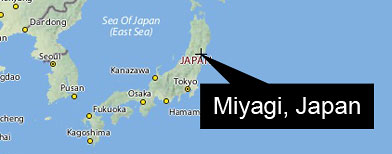
Magnitude 7.4 earthquake hits off Japan coast
TOKYO – Japan was rattled by a strong aftershock and tsunami warning Thursday night nearly a month after a devastating earthquake and tsunami flattened the northeastern coast.
The Japan meteorological agency issued a tsunami warning for a wave of up to one meter. The warning was issued for a coastal area already torn apart by last month's tsunami.
Officials say Thursday's quake was a 7.4-magnitude and hit 25 miles (40 kilometers) under the water and off the coast of Miyagi prefecture. The quake that preceded last month's tsunami was a 9.0-magnitude.
Buildings as far away as Tokyo shook for about a minute.
I hope some crazy, fundamentalist lunatics don't start spouting off about how the Japanese are "sinners", bringing this upon themselves.
And now for the aftershocks.
Tuesday, April 5, 2011
The latest from Japan's reactor
Out today:
Japan sets new radiation safety level for seafood
And I would hope they would, yes, but it wasn't necessary until now, when water from the Fukushima nuclear reactor started pouring out.
Details:
The plant operator insisted that the radiation will rapidly disperse and that it poses no immediate danger...
Naturally.
...but an expert said exposure to the highly concentrated levels near the Fukushima Dai-ichi plant could cause immediate injury and that the leaks could result in residual contamination of the sea in the area.
But here's the real catch, here's what we need to know and watch:
Experts agree that radiation dissipates quickly in the vast Pacific, but direct exposure to the most contaminated water measured would lead to "immediate injury," said Yoichi Enokida, a professor of materials science at Nagoya University's graduate school of engineering.
He added that seawater may be diluting the iodine, which decays quickly, but the leak also contains long-lasting cesium-137, which can build up in fish over time. Both can build up in fish, though iodine's short half-life means it does not stay there for very long. The long-term effects of cesium, however, will need to be studied, he said.
I think what needs to happen now, and I hope it happens both for scientists learning and education and our own safety, I would hope this radioactive water will be followed somehow, if it's possible, off the coast of Japan, to see if the radioactivity stays there or just how far it does, in fact, travel.
Unfortunate but fascinating stuff.
Monday, April 4, 2011
The latest from Japan: radioactive desperation
News from Japan today:
Search for radiation leak turns desperate in Japan
By MARI YAMAGUCHI and YURI KAGEYAMA, Associated Press
The plant operators......deliberately dumped 10,000 tons of tainted water — measuring about 500 times above the legal limit for radiactivity — into the ocean Monday to make space at a storage site for water that is even more highly radiactive.
That's the bad news.
The REALLY bad news is that the other water, they're more concerned about and want to keep out of the ocean "contains radioactive iodine at rates 10,000 times the legal limit."
So, as usual, following the same pattern I've pointed out here a few times, first the declaration of bad news, above, followed shortly by the "all is well" call from officials. From later in the article.
Radioactivity is quickly diluted in the ocean, and Edano said the dump should not affect the safety of seafood in the area.
I ask you, if you were in or visiting Japan soon, would YOU order sushi?
At the bottom of the article (see link below), was this in tiny print: Radiation 1,600 times higher than normal levels was detected about 12 miles from the plant, the limit of the evacuation area. Radiation at that level, while not high for a single burst, could harm health if sustained.
Makes me feel better already.
Link: http://news.yahoo.com/s/ap/as_japan_earthquake
At the bottom of the article (see link below), was this in tiny print: Radiation 1,600 times higher than normal levels was detected about 12 miles from the plant, the limit of the evacuation area. Radiation at that level, while not high for a single burst, could harm health if sustained.
Makes me feel better already.
Link: http://news.yahoo.com/s/ap/as_japan_earthquake
Nuclear meltdown: "It can't happen here"
With Japan's many troubles with first the earthquake, then the tsunami and now the many, many problems with the Fukushima nuclear power plant, we keep hearing from the nuclear and government officials over there that "everything's still safe" and "everything's still within acceptable exposure levels", etc., as I've written earlier.
Same in the US--we just keep hearing how we're fine and yes, they've detected nuclear radiation from Japan but that it's all at acceptable levels.
The third wave of this, in the bigger picture, is that all the officials--again, government and nuclear industry, both, worldwide--keep telling us that nuclear power is safe and it makes sense and it's okay, blah, blah, blah.
Oh, yeah? It's really that "okay"?
A report out yesterday finds possibly otherwise, at least in a significant number of these plants worldwide:
Many stations are in countries that would be less able than Japan to cope with disasters
By Jonathan Owen, The Independent, UK
Scores of nuclear power plants worldwide are at risk from tsunamis or earthquakes similar to the natural disasters that crippled Japan's Fukushima reactors, according to new research. Many at-risk plants are in countries less able to cope with a disaster than Japan, experts have warned.
Seventy-six operating power stations in Japan, Taiwan, China, South Korea, India, Pakistan and the US are located in areas close to coastlines deemed vulnerable to tsunamis.
Of 442 nuclear power stations globally, more than one in 10 are situated in places deemed to be at high or extreme risk of earthquakes – in Japan, the US, Taiwan, Armenia and Slovenia – according to a new study by the analysts Maplecroft.
Helen Hodge, Maplecroft's natural hazards analyst, said: "Although Japanese nuclear facilities are particularly exposed, other countries could also face similar risks. South Korea, Taiwan, southern China, India, Pakistan and the west coast of the US have operating or planned nuclear facilities on tsunami-exposed coastlines, while nuclear sites in areas of high or extreme risk of earthquakes can be found in western US, Taiwan, Armenia, Iran and Slovenia."
See? Nothing to worry about at all.
Link: http://www.independent.co.uk/news/science/more-than-one-in-10-nuclear-power-plants-at-risk-from-earthquakes-2260817.html
Same in the US--we just keep hearing how we're fine and yes, they've detected nuclear radiation from Japan but that it's all at acceptable levels.
The third wave of this, in the bigger picture, is that all the officials--again, government and nuclear industry, both, worldwide--keep telling us that nuclear power is safe and it makes sense and it's okay, blah, blah, blah.
Oh, yeah? It's really that "okay"?
A report out yesterday finds possibly otherwise, at least in a significant number of these plants worldwide:
More than one in 10 nuclear power plants at risk from earthquakes
Many stations are in countries that would be less able than Japan to cope with disasters
By Jonathan Owen, The Independent, UK
Scores of nuclear power plants worldwide are at risk from tsunamis or earthquakes similar to the natural disasters that crippled Japan's Fukushima reactors, according to new research. Many at-risk plants are in countries less able to cope with a disaster than Japan, experts have warned.
Seventy-six operating power stations in Japan, Taiwan, China, South Korea, India, Pakistan and the US are located in areas close to coastlines deemed vulnerable to tsunamis.
Of 442 nuclear power stations globally, more than one in 10 are situated in places deemed to be at high or extreme risk of earthquakes – in Japan, the US, Taiwan, Armenia and Slovenia – according to a new study by the analysts Maplecroft.
Helen Hodge, Maplecroft's natural hazards analyst, said: "Although Japanese nuclear facilities are particularly exposed, other countries could also face similar risks. South Korea, Taiwan, southern China, India, Pakistan and the west coast of the US have operating or planned nuclear facilities on tsunami-exposed coastlines, while nuclear sites in areas of high or extreme risk of earthquakes can be found in western US, Taiwan, Armenia, Iran and Slovenia."
See? Nothing to worry about at all.
Link: http://www.independent.co.uk/news/science/more-than-one-in-10-nuclear-power-plants-at-risk-from-earthquakes-2260817.html
Friday, April 1, 2011
Will the US cooperate with France's desire for "global nuclear reform"?
First, what seems to be great news for the Japanese--this is the first day I can remember that there isn't some new, huge revelation concerning their nuclear power plants and radiation additionally going who-knows-where.
Let's hope it holds, for their and everyone's sake.
So here's the subject for today: France has proposed
Let's hope it holds, for their and everyone's sake.
So here's the subject for today: France has proposed
France -- the most nuclear-dependent country in the world -- called for new global nuclear rules and proposed a global conference in France for May as President Nicolas Sarkozy made a quick visit to Tokyo Thursday to show support.
France is a global leader in the nuclear industry, and Paris has flown in experts from state-owned nuclear reactor maker Areva to work with Japanese engineers.
As stubborn as we Americans are and have increasingly become, it seems, especially since our cowboy Texas president, George W. Bush, and since the Libertarians and Tea Party have formed and increased in number, do you think there will be any American will to go along with the rest of the world and both set and follow nuclear rules and standards for safety?
We did not/would not go along with the rest of the world's Kyoto Protocol on climate change. Remember that?
Have we become so entrenched with the thought and assumption that we have to prevail over all that we're no longer capable of "cooperating with others"?
It will be interesting to see.
Thursday, March 31, 2011
It's gotten worse: here's Japan's SECOND shocker for the same day
Dang it.
Japan has not one new shocking revelation for today but now two:
Japan has not one new shocking revelation for today but now two:
Japan orders more beef testing
TOKYO – Japan's health ministry says it has ordered more tests after a cow slaughtered for beef near the tsunami-stricken nuclear plant was found to have radioactive contamination slightly higher than the legal limit.
These people just can't get a break.
And as I said earlier, the "shocking revelation" and development for the day is followed closely by "reassurance" from government and nuclear officials:
Officials stressed that the meat was not ever put on the market. Contamination has already been found in vegetables and raw milk near the plant, which has been leaking radiation since the March 11 earthquake and tsunami.
The cow had a total cesium level of 510 becquerels per kilogram. The limit is 500. A person could eat beef with that level of contamination for decades without getting sick.
Right.
If I'm Japanese right now, I wouldn't be feeling any better about it.
Tucked in between these last two quotes, above, was this:
Ministry spokesman Taku Ohara says the cesium was found in a cow slaughtered March 15 more than 40 miles (70 kilometers) from the plant. People within a 12-mile (20-kilometer) radius have been evacuated.
People have been evacuated from the area where the cattle have to be left, the cattle have radioactive contamination higher than the allowed limit but I'm--what?--still supposed to eat local meats?
I don't think so.
Japan's latest daily shocker
It's Thursday so it must be yet another overnight revelation from Japan:
Radioactivity 10,000 times standard at Japan plant
Okay, so, get ready. First there's the shocking revelation of the day:
TOKYO – Officials with the company that operates Japan's tsunami-stricken nuclear plant say radioactive contamination in groundwater underneath a reactor has been measured at 10,000 times the government health standard.
Then there's the sure-to-be-given reassurance from the government and nuclear officials:
A spokesman for plant operator Tokyo Electric Power Co. says the company doesn't believe any drinking water supply is affected
If you go to this article (link below), you'll see the updated article seems to have quite additional alarm, too. It seems the Japanese have now put out a plea to the world nations, asking for all the help they can get.
Yikes.
Anyway, check out this quote from a Japanese official:
"U.S. nuclear plants aren't by the ocean, unlike Japanese ones, so we think the French may be able to help us more than the Americans," said TEPCO Manager Teruaki Kobayashi.
Excuse me? Ever heard of San Onofre? As in California? On the Pacific Ocean?
And Diablo Canyon? Also in California? Ever heard of those?
And then there's the Salem reactor in Salem, Delaware incidentally right next to the Hope Creek Nuclear Generating Station (link below) but,yeah, other than those...
And then there's the Salem reactor in Salem, Delaware incidentally right next to the Hope Creek Nuclear Generating Station (link below) but,yeah, other than those...
Anyway, for the poor Japanese people it seems things are quite desperate and getting worse. Hopefully the bad news and additional revelations end soon--as soon as possible and as positively as possible, given all they've been through and what they're still going through.
Links: http://news.yahoo.com/s/ap/as_japan_earthquake; http://www.exeloncorp.com/powerplants/oystercreek/Pages/profile.aspx; http://www.sfgate.com/cgi-bin/article.cgi?f=/c/a/2011/03/31/MNT31IMGTS.DTL; http://en.wikipedia.org/wiki/Diablo_Canyon_Power_Plant; http://www.sfgate.com/cgi-bin/article.cgi?f=/c/a/2011/03/31/MNT31IMGTS.DTL; http://www.silive.com/news/index.ssf/2011/03/nj_nuclear_power_plant_less_th.html; http://en.wikipedia.org/wiki/Salem_Nuclear_Power_Plant
Wednesday, March 30, 2011
Radiation from Japan: that's how brief a time it took
How long did you think it would take before we'd start detecting at least some radiation in our--the US'--food chain? Longer than this?
Right. That's how all the "officials" in Japan and here, both, end all the statements--"don't worry" and "we've got it under control" and "the levels detected are safe."
So reassuring.
Link to original story: http://news.yahoo.com/s/ap/20110330/ap_on_re_us/us_japan_earthquake_us_milk
Low levels of radiation found in US milk
WASHINGTON – Very low levels of radiation turned up in a sample of milk from Washington state, the Environmental Protection Agency and the Food and Drug Administration said Wednesday, but federal officials assured consumers not to worry.
So reassuring.
Link to original story: http://news.yahoo.com/s/ap/20110330/ap_on_re_us/us_japan_earthquake_us_milk
On Japan's nuclear meltdown: Here we go again
Indeed, here we go again.
First there's this:
First there's this:
On Wednesday, nuclear safety officials said seawater 300 yards (meters) outside the plant contained 3,355 times the legal limit for the amount of radioactive iodine — the highest rate yet and a sign that more contaminated water was making its way into the ocean.
Then, predictably, there's this:
The amount of iodine-131 found south of the plant does not pose an immediate threat to human health but was a "concern," said Hidehiko Nishiyama, a Nuclear and Industrial Safety Agency official. He said there was no fishing in the area.
These reports seem to follow this pattern virtually daily and the pattern is this: first there's news of some new, significant report, telling of surprising radioactive exposure somewhere in or around the area and then, not surprisingly, there's some nuclear or government "official" there to say, just as quickly, that everything is a-okay and, like here, that it "does not pose and immediate threat to human health...", trailing off.
Right.
Now, about that ocean front property I'd like to show you in Nevada.
Tuesday, March 29, 2011
Japan: Too little, tragically late
From the "far too late" file:
Japan vows to review nuclear safety standards
TOKYO – Japan's government vowed Tuesday to overhaul nuclear safety standards once its radiation-leaking reactor complex is under control, admitting that its safeguards were insufficient to protect the plant against the March 11 tsunami.
Okay, they didn't do this--they didn't have stringent enough "nuclear safety standards" in place and in effect.
Could we take this, as a country--heck, as a world?--and learn from this, now, ahead of time, far before anything remotely close to this ever happens again?
We need to learn these lessons and we need to learn them now.
Surprise! Yet more bad news from Japan
Or rather, no surprise, sadly:
Japan Finds More Foods Tainted By Radioactive Material
As more radioactive material from the Fukushima Dai-ichi nuclear power plant finds its way into the environment, Japan's health ministry is compiling a growing list of foods that have been contaminated.
First came reports of tainted milk, spinach and other leafy greens. Then on Sunday, the health ministry released a new list with a total of 99 different products that had tested positive for radioactive iodine-131 and cesium-137 in Tokyo and five other prefectures. Some of those foods might surprise you.
--Wasabi (Japanese horseradish)
--Cucumbers
--Chrysanthemum (Shungiku)
--Mustard greens (Mizuna)
--Green onions
Unfortunately, that's not the only bad news for and from Japan today, either:
Japan in 'Maximum Alert' as It Struggles to Contain Nuclear Crisis
Japanese Prime Minister Naoto Kan said his government was "in a state of maximum alert" as the crisis at the Fukushima Dai-ichi nuclear plant continues to spread, with radioactive contamination in the air, soil and water near the plant. Crews used sandbags to prevent radioactive water from the plant from leaking into the Pacific Ocean, and plutonium found in some soil indicates a possible melting of one of the plant's reactors. If a reactor were to completely melt down, massive amounts of radioactive material would be released.
The "ultimate takeaway", for me, from this Japan Fukushima reactor meltdown, due to the earthquake and tsunami?
I bet we learn very little from this multi-level tragedy but end up pressing on, blindly, with nuclear energy. (With the exception of Germany, who already said they were wisely, singularly, apparently going to bail on the technology).
Wanna' bet?
Link: http://www.npr.org/blogs/health/2011/03/29/134930199/japan-finds-more-foods-tainted-by-radioactive-material?ps=sh_sthdl
http://www.pbs.org/newshour/rundown/2011/03/japan-in-maximum-alert-as-it-struggles-to-contain-nuclear-crisis.html
http://www.pbs.org/newshour/rundown/2011/03/japan-in-maximum-alert-as-it-struggles-to-contain-nuclear-crisis.html
Monday, March 28, 2011
More (radioactive) nonsense from Japan
How many times are we going to hear from "Japanese officials" that "everything's fine" over there and that the radioactivity "while high, is still within safe and acceptable limits for exposure to radioactivity"? I don't know if we'll be able to count that far.
The latest this morning:
The latest this morning:
Radiation in Japan seawater, soil may be spreading
Terrific, eh? Into the ocean. Yay. It just keeps getting better and better.
At the same time all the "authorities" are saying everything's still okay, there was this, from this same article:
At the same time all the "authorities" are saying everything's still okay, there was this, from this same article:
Contaminated water inside Unit 2 has tested at radiation levels some 100,000 times normal amounts, plant operator Tokyo Electric Power Co. said.
Workers also discovered radioactive water in the deep trenches outside three units, with the airborne radiation levels outside Unit 2 exceeding 1,000 millisieverts per hour — more than four times the amount that the government considers safe for workers, TEPCO said Monday.
But wait! There's more!:
New readings show contamination in the ocean has spread about a mile (1.6 kilometers) farther north of the nuclear site than before. Radioactive iodine-131 was discovered just offshore from Unit 5 and Unit 6 at a level 1,150 times higher than normal, Hidehiko Nishiyama, a spokesman for the Nuclear and Industrial Safety Agency, told reporters.
Not finished there, there's also this: "TEPCO officials said Sunday that radiation in leaking water in Unit 2 was 10 million times above normal..."
Nice, huh?
Adding to the Japanese troubles was another 6.5 earthquake
off the battered coast of Miyagi prefecture in the northeast.
Those poor people.
Meanwhile, from the "authorities" here in the States who have said we "have nothing to be concerned about regarding radiation coming over here, there's this from the Boston Globe (the one in MASSACHUSETTS. yeah, THAT one, on the EAST COAST of the US):
Elevated radiation found in rainwater
Low levels of radioactive iodine linked to the nuclear disaster in Japan were detected in a sample of rainwater in Massachusetts, state health officials announced yesterday.
I'm not suggesting we--any of us--freak out about this or that anyone panic or over-react and I understand they need to keep the populations calm but I'm just saying this whole mess isn't done and it's bigger than anyone seems to be have reported or is reporting.
Nuclear power, for the long range, especially compared to clean, renewable energy sources, has far too many additional costs, like these, above, for us to pursue it any further.
Nuclear power should now be considered--officially--"old technology" that didn't pan out.
Try to have a great week, y'all.
Saturday, March 26, 2011
3 nuclear power plants just blew in Japan--Quick! go turn off the radiation monitors!
Wanna' hear a hoot? Check this out:
Gaps in US radiation monitoring system revealed
SAN FRANCISCO – Parts of America's radiation alert network have been out of order during Japan's nuclear crisis, raising concerns among some lawmakers about whether the system could safeguard the country in a future disaster.
Federal officials say the system of sensors has helped them to validate the impact of nuclear fallout from the overheated Fukushima reactor, and in turn alert local governments and the public. They say no dangerous levels of radiation have reached U.S. shores.
In California, home to two seaside nuclear plants located close to earthquake fault lines, federal authorities said four of the 11 stationary monitors were offline for repairs or maintenance last week. The Environmental Protection Agency said the machines operate outdoors year-round and periodically need maintenance, but did not fix them until a few days after low levels of radiation began drifting toward the mainland U.S.
Right.
Read that again.
The biggest nuclear event in the last, what? three decades? takes place in Japan, nuclear fallout MAY be headed your way and you decide RIGHT THEN that maybe it's a good idea to TURN OFF THE NUCLEAR RADIATION MONITORS FOR MAINTENANCE?
Does that not sound a bit peculiar to anyone else besides me?
"But wait!" as Dan Akroyd would say---"THERE'S MORE!"
About 20 monitors out of 124 nationwide were out of service earlier this week, including units in Harlingen, Tex. and Buffalo, N.Y. on Friday, according to the EPA.
Isn't that a beauty?
I repeat the question: The biggest nuclear event in the last three decades takes place in Japan, nuclear fallout MAY be headed your way and you decide RIGHT THEN that maybe it's a good idea to TURN OFF THE NUCLEAR MONITORS FOR MAINTENANCE?
Does this make any sense?
Here's an example of one of the situations, too:
One RadNet monitor in Fontana, Calif. stopped transmitting data in November, and regional air quality officials alerted EPA, said Philip Fine, an atmospheric measurements manager with Southern California Air Quality Management District. The repairs happened last weekend, when EPA made fixing California monitors a priority, he said.
That's a beauty, isn't it? It breaks in November but you wait until the end of March, the following year, to fix it.
I can hear it now: "Fred, the nuclear radiation monitor broke today."
Fred: "Oh, what the hell. Let's wait until a nuclear reactor blows, somewhere in the world, before we fix it. It's not like it's important or anything."
Here's yet another example:
In San Diego, an air district official who oversees one RadNet monitor, said they "babysit" the machine for the EPA and were unaware it had problems until agency officials showed up to fix it last weekend.
"We thought it was running," said Bob Kard, the air pollution control officer for the San Diego Air Pollution Control District.
Well isn't that comforting? They thought it was running.
Who's running our nuclear radiation detection system? The Keystone Cops?
Does this maybe look like the EPA is either in collusion with the nuclear industry it's supposed to be monitoring and so, shut off these monitors OR that they figured the radiation might, in fact, be headed that way and they decided that no information was better than having information so the American people don't panic so LET'S SHUT THOSE SUCKERS OFF?
Or is it just total irresponsibility and ineptitude?
I'm thinking it has to be one of those 3 options.
And none of them are good.
Link to original post: http://news.yahoo.com/s/ap/20110326/ap_on_re_us/us_west_coast_radiation_monitors
Thursday, March 24, 2011
On nuclear energy, safety and careless inaction
From The Washington Post today:
In 2006, a National Academy of Sciences committee recommended two simple steps to prevent spent nuclear fuel from catching fire: putting old, cool fuel next to the new, hot fuel discharged from a reactor, and adding sprayers that could dispense water if the cooling water in the pool was lost. But no such action has been taken, either in the United States or in Japan — where the most deadly danger at Fukushima nuclear plant since the recent earthquake and subsequent tsunami has been the risk that uncovered spent fuel in the storage pools would catch fire, spreading radioactive material miles downwind. Nor has much of the older spent fuel been moved out of pools into safer dry casks made of steel and concrete — another possibility to reduce the risk.
Two recommended steps--just two--and we, the US and Japan, at minimum, have done neither.
Doesn't seem very wise, does it?
Link to original post: http://www.washingtonpost.com/opinions/how-we-can-reduce-the-risk-of-another-fukushima/2011/03/23/ABpyI3KB_story.html
In 2006, a National Academy of Sciences committee recommended two simple steps to prevent spent nuclear fuel from catching fire: putting old, cool fuel next to the new, hot fuel discharged from a reactor, and adding sprayers that could dispense water if the cooling water in the pool was lost. But no such action has been taken, either in the United States or in Japan — where the most deadly danger at Fukushima nuclear plant since the recent earthquake and subsequent tsunami has been the risk that uncovered spent fuel in the storage pools would catch fire, spreading radioactive material miles downwind. Nor has much of the older spent fuel been moved out of pools into safer dry casks made of steel and concrete — another possibility to reduce the risk.
Two recommended steps--just two--and we, the US and Japan, at minimum, have done neither.
Doesn't seem very wise, does it?
Link to original post: http://www.washingtonpost.com/opinions/how-we-can-reduce-the-risk-of-another-fukushima/2011/03/23/ABpyI3KB_story.html
Wednesday, March 23, 2011
Next up from Japan
Radiation leaked into sea from damaged nuclear plant

We were warned, long ago, way back in the 50's this would happen but would we listen?
Noooooo.
Link to original post: http://www.americablog.com/2011/03/radiation-leaked-into-sea-from-damaged.html
Tuesday, March 22, 2011
Slate magazine is asking the right questions
From Slate today:
Nuclear's Age
How do inspectors ensure the safety of older nuclear reactors?
Good idea.
I think now is a great time to ask, personally.
Link to original story: http://www.slate.com/id/2289016/?from=rss
As Gomer Pyle used to say: "Surprise, surprise, surprise!"
From the news yesterday:
Special Report: Fuel storage, safety issues vexed Japan plant
TOKYO (Reuters)- When the massive tsunami smacked into Fukushima Daiichi, the nuclear power plant was stacked high with more uranium than it was originally designed to hold and had repeatedly missed mandatory safety checks over the past decade.
The Fukushima plant that has spun into partial meltdown and spewed out plumes of radiation had become a growing depot for spent fuel in a way the American engineers who designed the reactors 50 years earlier had never envisioned, according to company documents and outside experts.
At the time of the March 11 earthquake, the reactor buildings at Fukushima held the equivalent of almost six years of the highly radioactive uranium fuel rods produced by the plant, according to a presentation by Tokyo Electric Power Co to a conference organized by the International Atomic Energy Agency.
Okay, my thought and hope now is that I'm hoping some enterprising newspaper staff--or maybe a bunch of them--starts going around to their own local nuclear power plant and doing some hard research on how that plant is doing at what they do. I'd like to think they'll go start asking questions.
Do they store their nuclear materials properly?
Do they do their safety checks?
Are their backup power generators in great working order?
Have they had any radioactive releases lately?
Are all their checks done, regularly and on time?
Is everything in order?
Are all their i's dotted and t's crossed?
I don't think it will happen but I hope it does. I hope some newspaper staffs out there in this country are, right now, prepping their reporters to go do a check on their local nuclear reactor(s), its staff and their operations.
A challenge to newspapers, all across the country.
How about you, Kansas City Star?
Subscribe to:
Posts (Atom)

 Posts
Posts




