Blog Catalog

Showing posts with label Arkansas. Show all posts

Wednesday, July 29, 2020

Tom Cotton is Arkansas' Gift to Missourians


I can hardly believe what I see, so frequently.  Here's another.

Senate Lawmakers Hold Weekly Policy Luncheons

WASHINGTON, DC - JUNE 25: Senator Tom Cotton (R-AR) enters a Senators Only elevator before attending the Weekly Senate Policy Luncheon on June 25, 2019 on Capitol Hill in Washington, DC. (Photo by Tom Brenner/Getty Images)

Sen. Tom Cotton Calls Slavery Nation's 

'Necessary Evil'


Yes, Missourians, I think Arkansas' Senator Tom Cotton is their gift to us to appreciate more our own Senator Josh Hawley. This way, we don't feel so bad.

Thanks, Republicans.


Saturday, June 1, 2019

What's It Going to Take to Get Us to Recognize Manmade Climate Change?


I wonder if very many of us in the nation and world are paying attention to all the weather-related events, disasters and catastrophes included, that have been taking place this year. Herewith are just a few of the latest.

This took place the week before the Memorial Day weekend.

Multiple highways across Missouri shut down due to flooding


Check out how many roads were closed across the entire state of Missouri.


This was just last weekend:

Memorial Day weather: Heat wave scorches southern US


Then this happened.

Vehicles stuck in foot-deep hail in Omaha, Council Bluffs area


This one was four days ago.


Then we all know this took place this last week locally.


This is going on now, to the South of us, of course, and is still going on.

These next two are current also.


This is the past month.


This is just how large an issue this is.


You can go here and see just some of the damage.


As if all that isn't enough, this story broke two days ago.


"Abnormally high temperatures have led to unsafe travel conditions, uncertain ecological futures and even multiple deaths"

So how long, America? How long until we first accept global warming is happening and it's taking place because we humans are pumping so much CO2, carbon dioxide, into the atmosphere? And then, second, how long until we do something about it?


Thursday, December 13, 2018

Interesting Data On How States Are For and To Women


There's an article out this week that ranks the best and worst states for women.

Image result for best and worst states for women


Let's take a look at the highs and lows.

First up is neighboring Arkansas, next to worst at 50.

Also neighboring Oklahoma down there, too, at 48.

Here's where it gets more local and interesting yet.

Missouri?

37     The bottom, worst half

37. Missouri

Total score: 50.85th
Ranking for women’s economic and social well-being: 36
Ranking for women’s health and safety: 38th

Missouri landed in the mid-30s in other Wallet Hub rankings as well, coming in at 38 out of 51 on the list of best states for working moms and 37 out of 51 for best states to have a baby.

Then there's Kansas.

Still in the bottom, bad half, at 28 but at least they’re more in the middle, than the low, low worst ¼
.
28. Kansas

Total score: 56.21
Ranking for women’s economic and social well-being: 33rd
Ranking for women’s health and safety: 25th

Kansas performs better in the category of women’s health and safety than it does when it comes to women’s economic and social well-being.

Texas, still in the bottom, worst half at 42. Shame on you, Texas.

Neighboring Nebraska, in the far more respectable top half

17. Nebraska

Total score: 64.82
Ranking for women’s economic and social well-being: 19th
Ranking for women’s health and safety: 14th

Nebraska shares the distinction of having the lowest unemployment rate for women with four other states.
Going the other way, next door Illinois ranks far higher and better.

11. Illinois

Total score: 69.07
Ranking for women’s economic and social well-being: 7th
Ranking for women’s health and safety: 20th

Only two states have a lower homicide rate for women than Illinois, which also boasts the fourth-highest median earnings for female workers.

Now, to the North? Iowa In the top 10.

9. Iowa

Total score: 69.11
Ranking for women’s economic and social well-being: 10th
Ranking for women’s health and safety: 9th

Iowa boasts the fifth-highest high-school graduation rate for young women.

No. 1 position??

I’m very proud and happy to say my daughter’s adopted state of Minnesota is number 1! Fantastic!

1. Minnesota

Total score: 78.22
Ranking for women’s economic and social well-being: 1st
Ranking for women’s health and safety: 3rd

Minnesota, hats off to you! The Land of 10,000 Lakes topped the list of best states for women by three points. It’s easy to see why — and tough to find a positive economic marker this state doesn’t possess. Minnesota has the third-highest life expectancy rate for women, the fifth-lowest rate of women without insurance, the fourth-highest women’s high-school graduation rate, the fifth-lowest percentage of women in poverty and the second-highest median earnings for working women. Go, Gophers!

One interesting side note, North Dakota came down at an extremely respectable 4 on the list while neighboring South Dakota was far tougher on women at 24.

The conclusion?

Missouri and these other low-ranking states would do well to look around and see just what, precisely these other, higher-ranking states are doing to get these results. Not only is this for 1/2 of our population but it's for our mothers, daughters, sisters, cousins, all. 

It's not like we have to go far for the answers, after all.


Wednesday, December 5, 2018

Worst State Tax Rates for Retirees?


There is an analysis out today on GoBankingRates.com that evaluates the tax rates of all 50 states, showing best and worst for retirees.


What it shows:

Nebraska, worst, worst, last place, of the 50 states followed far too closely by Kansas at 47th place and Missouri, next, at 46. Neighboring Iowa at 38. Arkansas, too, in the bottom, worse half, at 32. Oklahoma, 29.

Way to go, Midwestern states.

You don’t have mountains, you don’t have an ocean and you also don’t have good tax policies for retirees.

Besides less traffic and hopefully cleaner skies, what do you have?

Note to retirees: Check out the states that have both no income tax and no tax on Social Security.

In the #1 best spot on the list for most friendly to retirees?

Alaska.

Check out that map.

Slide 52 of 52: Retirees need to consider the impact taxes will have on their income. But that’s not the only thing they should think about when deciding where to retire. There are several factors to consider when looking for a place to retire — including the cost of living and access to healthcare. A state that isn’t the most tax-friendly might actually be a good fit for your retirement needs. Click through to learn about the best and worst things to do when looking for a place to retire. More on Retirement Planning  50 Cheapest Places to Retire Survey Finds 42% of Americans Will Retire Broke — Here’s Why Best Cities for Retirement in These Income Tax-Free States Watch: Will Your Kids’ Cap and Gown Kill Your Retirement Plans?  We make money easy. Get weekly email updates, including expert advice to help you Live Richer™.  Methodology: GOBankingRates examined four tax rates: 1) average state and local sales tax, sourced from the Tax Foundation; 2) state tax on Social Security benefits, sourced from Kiplinger; 3) effective state property tax, sourced from the National Association of Home Builders; and 4) state income tax rate based on the median income of adults ages 65 to 74, sourced from the Bureau of Labor Statistics. State tax on Social Security benefits was weighted twice as much as other taxes.

Worst tax rates for retirees, right in the center of the nation.

Kudos, Missouri, kudos, Kansas and Nebraska.

Way to chase people away.


Sunday, November 4, 2018

Science in Our Upcoming Elections, State by State


Another fascinating article out this week, this one on the national elections, state by state.

Slide 6 of 53: To some degree, California and its nearly 40 million residents face almost every issue in the country. Where the Golden State sets itself apart, though, is in how its solutions to those issues can often set a national standard. Climate change is at the root of its most pressing issues—a five-year drought, more-frequent wildfires, and water scarcity—but the state’s long-running push to expand renewable energy is facing challenges. Gov. Jerry Brown and some state lawmakers worry that President Trump’s embrace of fossil fuels will interfere with state’s 12-year-old effort to cut greenhouse-gas emissions and its new plan to go carbon-free by 2045. Thanks to a range of measures—capping industrial emissions, setting high vehicle fuel-efficiency standards, and providing incentives to switch to solar—the initial plan has met its goal of slashing greenhouse gases to 1990 levels four years ahead of schedule. (That’s more ambitious than targets in other states, which aim to cut emissions to higher 2000 levels.) In August, however, the Trump administration proposed revoking California’s authority to impose its own automotive standards. These and other federal climate-change rollbacks might be enough to sway voters, according to some analysts. The state is also a bellwether in the national debate about internet freedom. Home to the nation’s leading tech companies, California is working to fill the regulatory vacuum left by the June federal repeal of Federal Communications Commission net neutrality regulations. This past August, state lawmakers passed a bill that will bar internet-service providers from slowing or blocking websites, and restrict “zero-metering,” the practice of not counting preferred services and apps against a customer’s monthly data limits. But days after Gov. Brown signed the bill into law in September, the Justice Department filed a legal challenge against it, arguing that internet runs between states, and is therefore subject to federal oversight.


Lots of these issues have to do with flooding, wildfires, chemical runoff and corporate farming.

Missouri’s contribution to this is fascinating and at the forefront of an issue and change.

Image result for beyond meat
Missouri: The fake-meat debate

Missouri has become the epicenter of a fracas between meat producers and the burgeoning “fake meat” industry, a market that has jumped 24 percent since 2015. This past May, the legislature passed a bill that bars makers of flesh substitutes from using the word “meat” on their labels. Backed by the Missouri Cattlemen’s Association and pork producers, the bill could stifle growth of a new industry, according to meat substitute producers. Columbia-based Beyond Meat, for instance, could likely have to change its name, and warns that the measure could result in job loss. The company, together with University of Missouri researchers, has developed plant-based burgers, chicken strips, and sausages that closely resemble real meat. Beyond Meat CEO Ethan Brown says the bill would do little to convince consumers to opt for the real thing.

This part is especially interesting.

In late August, vegan food maker Tofurky, along with the Animal Legal Defense Fund and the American Civil Liberties Union of Missouri, filed suit against the state, arguing that the new law stifles free speech and hampers competition.

From Kansas, it’s one more example, and a great one, of why we need newspapers and their reporters. In this, the Wichita Eagle-Beacon came to the rescue.

Slide 17 of 53: This past summer, an investigation in the Wichita Eagle newspaper found that hundreds of residents drank and bathed in water fouled with the dry-cleaning chemical perchloroethylene (PCE) for more than six years—and that state officials failed to inform the communities. At one site, PCE levels in the groundwater were 8.1 parts per billion; EPA limit is 5 ppb. As many as 22 other contaminated sites may have gone unaddressed, according to the investigation. A 1995 state law lobbied for by the dry-cleaning industry appears to be largely to blame. The Kansas Drycleaner Environmental Response Act included a provision that directed state regulators to refrain from looking for contamination from dry cleaners and “make every reasonable effort” to keep sites off the EPA’s Superfund list. Residents are calling for the state to scrub up the areas and for lawmakers to strike the part of the legislation that bars checking for PCE leaks in groundwater.

Kansas: Dry-cleaning chemicals in residents’ water

This past summer, an investigation in the Wichita Eagle newspaper found that hundreds of residents drank and bathed in water fouled with the dry-cleaning chemical perchloroethylene (PCE) for more than six years—and that state officials failed to inform the communities. At one site, PCE levels in the groundwater were 8.1 parts per billion; EPA limit is 5 ppb. As many as 22 other contaminated sites may have gone unaddressed, according to the investigation. A 1995 state law lobbied for by the dry-cleaning industry appears to be largely to blame. The Kansas Drycleaner Environmental Response Act included a provision that directed state regulators to refrain from looking for contamination from dry cleaners and “make every reasonable effort” to keep sites off the EPA’s Superfund list. Residents are calling for the state to scrub up the areas and for lawmakers to strike the part of the legislation that bars checking for PCE leaks in groundwater.

All these, from state to state, point out why we so desperately and completely need government—state and federal both. If we don’t have these governments, there are no ways to keep our air, water and soil clean and clear. Corporations would be able to do whatever they wish, people and animal life be damned.

You might also check out Arkansas, New Mexico, Oklahoma and Virginia and their issues, especially.


Friday, July 27, 2018

Look What Missouri City is 2nd Worst in the Nation for Property Crime


There's an article out today on MSN ranking the cities with the highest and lowest rates of property crime.

20 Cities With the Highest and Lowest Rates 

of Property Crime


And a Missouri city is in the 2nd to worst spot on it.

And it's not St. Louis.

And it's not Kansas City.


It is, however the "Queen City of the Ozarks."

2. Springfield, Mo.

Population: 168,307
Property crimes per 1,000 people: 74.88

So much for the stereotype of Midwest towns as safe, sleepy places. In Springfield, the property crime rate is more than eight times higher than of the city with the lowest property crime rate.

Springfield, unfortunately, isn’t alone in the neighborhood, if it can make them feel any better. Not that far away Little Rock, Arkansas is 4th worst in the nation.

4. Little Rock, Ark.

Population: 198,800
Property crimes per 1,000 people: 63.23

Most of the cities with high property crime rates aren’t necessarily prone to violent crime. However, Little Rock is the exception. Reviews.org says its analysis found the Arkansas capital would be a contender for a spot on a top-10 list of violent crime as well.

What’s truly odd is the city is in the number one slot.

1. Salt Lake City, Utah

Population: 193,918
Property crimes per 1,000 people: 75.4

Can you believe it? Salt Lake City, capital of Utah and home of The Church of Jesus Christ of Latter-Day Saints (aka the Mormon Church), has the highest property crime rate in the country according to Reviews.org. There were 75.4 property crimes per 1,000 residents in 2016.

I thought those Mormons were law-abiding and had everything under control out West. Clearly wrong here.

The great news?

Kansas City is nowhere on the list.

Have a great weekend, y'all.


Wednesday, May 2, 2018

Fascinating, Even Surprising, Fantastic Information From “Most Violent Cities” List


There is an article just out today with fascinating statistics from the FBI on crime in the US, in our cities and which of them have the most violent crime per 100,000 residents.

Image result for most violent cities


There are some surprises on it, at least to me.

Little old Topeka, Kansas is on the list at number 32 with 29.2 violent crimes per 10,000 residents

Omaha, too, is at number 30 on the list with 31.4 violent crimes per 10,000 residents

Minneapolis is on the list at number 12 w/ 23.7 violent crimes per 10,000 people.

Tulsa at number 14 with 50.9 violent crimes per 10,000 residents.

Little Rock, Arkansas on the list at a scary, depressing #4 w/ 87.4 violent crimes per 10,000.

Our own St. Louis, however, is on the list and at a depressing #3 w/ 91.5 violent crimes per 10,000.

Memphis hit #2 and poor Baltimore, Maryland is at number 1 with 98.6 violent crimes per 10,000.

But here’s the kicker, Kansas City.


We aren’t on the list.


We aren’t even on the list.


Not Kansas City, Missouri.

Not Kansas City, Kansas.

Neither one.

It gets better, too.

We're not in the top 20 worst.

Not in the top 10.

Not the top 5.

Nothing.

So kudos to you, Kansas City. Great on you, great on us.

Don’t let some blogger in his mother’s basement scare you, folks, with ALL CAPITOL LETTERS and yellow journalism tactics.

We’re not going to Hell in any handbasket.


Friday, September 29, 2017

Missouri's Ozarks Are Getting Embarrassing

Image result for hillbilly ozarks

Two headlines yesterday from the Star: 

Gruesome details of transgender teen’s Ozarks slaying emerge as four are charged


A lot of us thought we were better than this. All of us.

A lot better than this.


Thursday, July 27, 2017

Horrible List Kansas City Makes


I saw this new list yesterday and yes, unfortunately, Kansas City is on it.

50 Worst American Cities to Live In 
- 24/7 Wall St.

We're 49 out of 50, sure, but still, we're on it.

Dangit.


49. Kansas City

Population: 151,261
Median home value: $87,600
Poverty rate: 22.2%
Pct. with at least a bachelor’s degree: 16.3%

While low property values can help make homeownership a reality for financially insecure individuals, cheap housing is more often indicative of a weak economy and poor living conditions -- and this appears to be the case in Kansas City. The typical home in the city is worth just $87,600, far less than the $194,500 national median home value.

Relative to the size of its population, Kansas City has very few amenities and attractions that might enrich the lives of residents. There are fewer bars, libraries, recreational centers, museums, and hotels per capita in Kansas City than there are in the U.S. as a whole. There are just 120 restaurants per 100,000 Kansas City residents, among the fewest food establishments per capita of any U.S. city.

Ow. Really. That hurts, just being on the list.

But it could be worse. 

We could be Little Rock Arkansas at number 26 or Fort Smith, also Arkansas, at 24.

Missouri wasn’t done there, either, unfortunately. Springfield hit a very high number 12, nearly making the top 10 worst cities to live in.  Wow.

Image result for springfield missouri

12. Springfield, Missouri

Population: 166,798
Median home value: $113,500
Poverty rate: 24.1%
Pct. with at least a bachelor’s degree: 28.0%

Few cities have a greater crime problem than Springfield, Missouri. The city’s annual violent crime rate of 1,356 incidents per 100,000 residents is more than three times the national violent crime rate of 373 per 100,000. Springfield’s property crime rate, at 7,795 incidents per 100,000 people, is also over three times the national property crime rate and the third highest of the 551 cities reviewed.

High crime in a city often coincides with high poverty in a somewhat circular cause and effect. Springfield’s poverty rate of 24.1% is nearly 10 percentage points greater than the national poverty rate.


Not done there, St. Louis does, in fact, break that top ten, even making the top 5 worst cities.

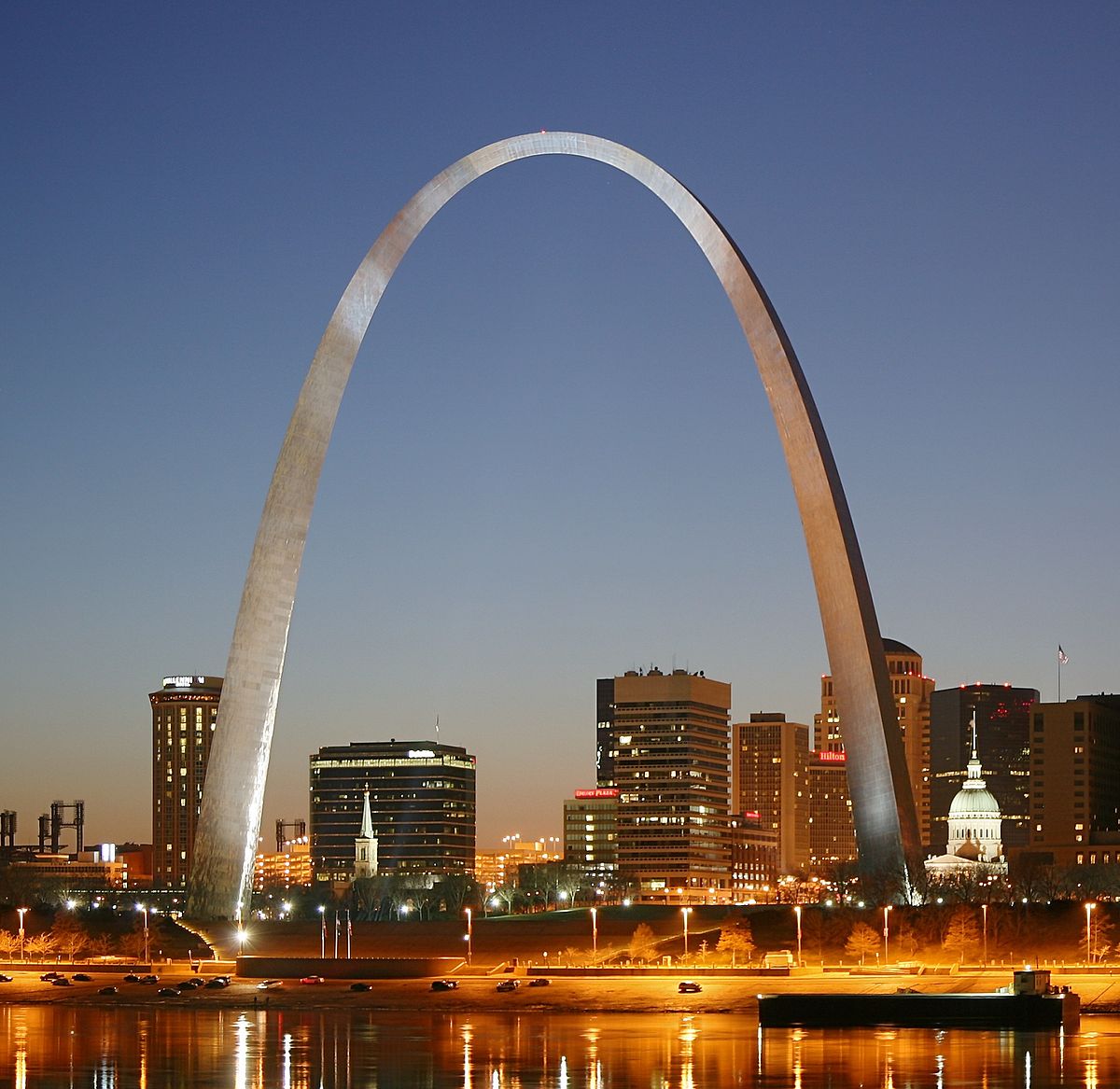
Image result for st. louis arch

4. St. Louis

Population: 315,685
Median home value: $130,800
Poverty rate: 24.9%
Pct. with at least a bachelor’s degree: 34.7%

St. Louis is representative of the economic decline that afflicted many large industrial cities over the latter part of the 20th century. Decades of manufacturing decline, white flight, and exclusionary zoning in St. Louis have led to some of the worst urban decay, racial segregation, and income inequality of any major city today. Some 24.9% of St. Louis residents live in poverty, far more than the 14.7% national figure. St. Louis has struggled with a high crime rate since the 1960s and today has the highest violent crime rate of any U.S. city. There were 1,817 violent crimes reported per 100,000 St. Louis residents in 2015, nearly five times the national rate.

Many of the economic problems in St. Louis are tied to the city’s rapid population decline. The city’s population is less than half of what it was during its 1950 peak of 860,000 people, and it continues to decline today. While the U.S. population grew 11.5% over the last 10 years, the number of residents in St. Louis fell 5.4%.


We have to do better, folks.


Wednesday, July 19, 2017

Missouri Makes a Very Dark List


Wow.

Missouri not only made the top, worst 10 on a new survey of the 50 states in America, it actually made the top, worst 5.

America's 10 worst states to live in 2017 

- CNBC.com


"These are the 10 worst states in the US for quality of life, including crime, health, social tolerance and the environment."

So check out what they say about our own Show Me state:

Related image

5. MISSOURI

Show Me how to stay safe in Missouri, where violent crime in all categories has been rising, in some cases by double digits. Missouri also lacks statewide protections against discrimination based on sexual orientation, marital status, and gender identity. And the state is near the bottom for public health funding.

2017 Quality of Life score: 99 out of 300 points
Weaknesses: Crime rate, health, inclusiveness
Strength: Attractions
2016 Quality of Life rank: No. 49

Note that last statistic, too.  2016 Quality of Life rank:  49.  Out of 50, of course. Only one state worse than us, whoever that is. 

Even on this list, we're worse than Mississippi, for God's sake. 

WORSE THAN MISSISSIPPI.

Let that sink in.

I know I personally take no comfort whatever in learning that neighbor state to the South, Arkansas, is ranked 4th worst or that, again, neighbor state Oklahoma is ranked number 3.

We should no way be on this list. This is horrible.

We must do better. We have to.

And we start by getting Republicans out of public office.

Let's get started.

Thursday, November 17, 2016

Walmart, Stiffing Chinese Workers, Too


From today's New York Times.


It seems Walmart's penchant for paying people low wages while demanding long hours is international.

Walmart employees in China, furious over low pay and exhausting schedules, have organized nationwide strikes and boycotts at some of the retail giant’s 400 stores.

Much of the discontent stems from a new scheduling system that Walmart put in place this summer as a way, the company said, of giving workers more flexibility. Workers have argued that it has resulted in cuts to overtime pay and excessively long shifts, and some say they were coerced into signing new contracts agreeing to the system....

When Walmart opened its first store in China in 1996, workers rushed to snap up jobs that paid more than those at Chinese competitors.

Now, some employees say, a Walmart job does not pay enough to comfortably support a family, with wages hovering around minimum wage, or about $300 a month. While Walmart has led a high-profile campaign in the United States to raise pay, salaries in China have remained largely stagnant, workers said, barely keeping pace with inflation.

These folks down in Bentonville must love being able to pay employees $300 per month rather than, say, that amount per week as they would in the states, huh?

It seems union organizing is on the rise in China.

Fantastic.

They are getting what they deserve, Walmart. Just not quickly enough.


Sunday, October 16, 2016

Notes on "America's Most Dangerous Cities"


The online blog site, 24/7 came out with their annual list of "America's Most Dangerous Cities" at the end of last month, and it's pretty interesting. Their data is compiled from the FBIs own list. There some interesting points in and on it, worth noting.

Let's start with a bit of their overall data:

24/7 Wall St. reviewed violent crime rates in major U.S. cities from the FBI’s 2015 Uniform Crime Report. Violent crime includes all offenses involving force or threat of force and are broken into four categories: murder and non-negligent manslaughter, rape, robbery, and aggravated assault. For every 100,000 U.S. residents, 372 of these crimes were committed in 2015.
Then, some notes.

First, unfortunately---and no surprise, really---Kansas City is on it. Second thing to note about it, we were in the top ten, too.
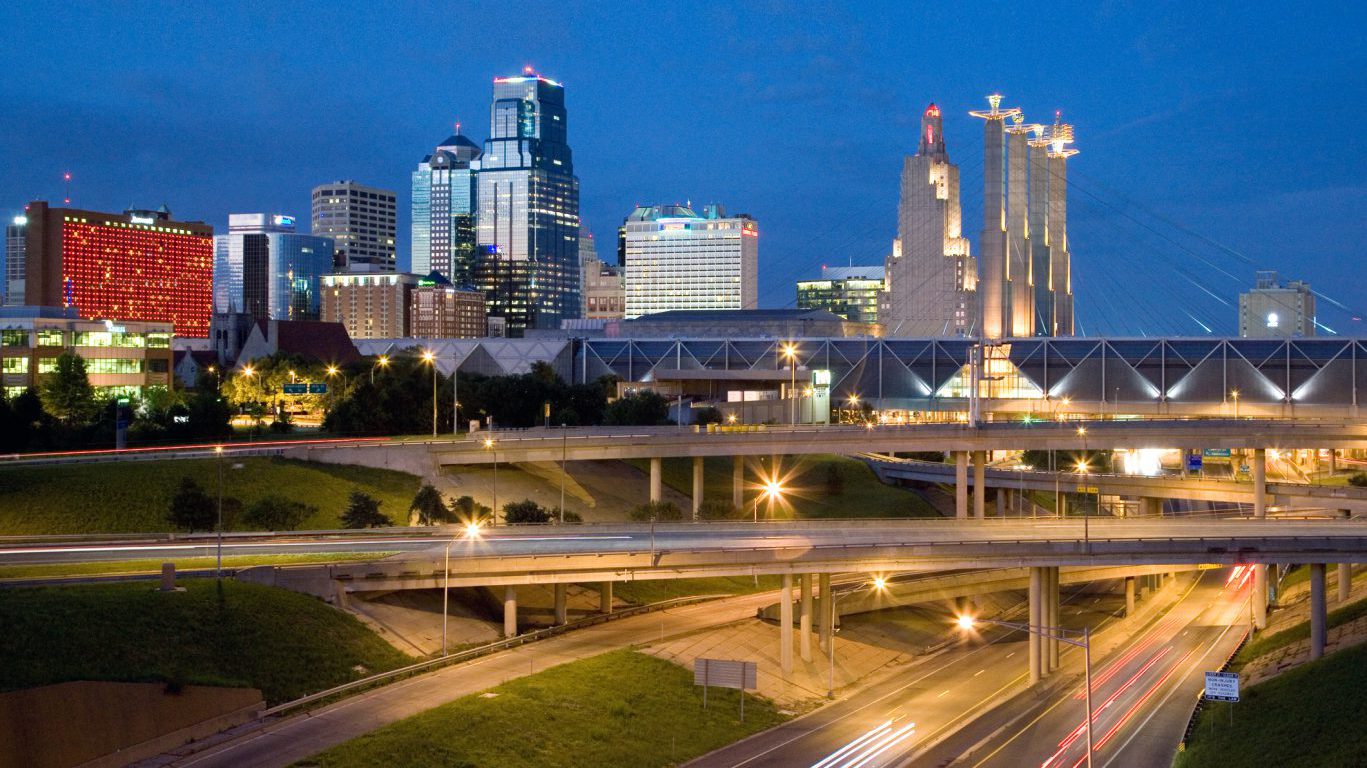
Kansas City Skyline


10. Kansas City, Missouri
> Violent crimes per 100,000: 1,417.3
> 2015 murders: 109
> Poverty rate: 19.4%
> Unemployment rate: 5.5%

While the nationwide violent crime rate rose by 3.9% in 2015, the increase in Kansas City was far more dramatic. With homicide and aggravated assault rates surging, the city reported a 14.4% spike in violent crime last year. Crime in the city is up even more from five years ago. The city’s violent crime rate increased by 21.2% from 2011 through 2015, even as the nationwide rate declined by 0.7% over that period.

Not good.

In fact, we, Kansas City, were worse on this list than Washington, DC (15), Indianapolis, Indiana (13) and Stockton, California (12).  That hurts.

Next thing to note about the list is that Missouri gets hit pretty hard. We are on the list three different times.

Then on to this note from the list, our own Springfield, Missouri, "Queen City of the Ozarks", followed as close as could be at number 11 on the list.


11. Springfield, Missouri
> Violent crimes per 100,000: 1,355.6
> 2015 murders: 10
> Poverty rate: 26.4%
> Unemployment rate: 4.3%

Crime rates tend to be higher in economically depressed areas where opportunities are scarce. In Springfield, Missouri, more than one-quarter of area residents live in poverty, one of the highest poverty rates in the country. After spiking by 73.2% over the five years through 2015 — the second highest increase of any major U.S. city — Springfield’s violent crime rate is the 11th highest in the country. In 2015, there were 179 rapes for every 100,000 residents, the highest incidence of rape in the country.

In fact, along with Missouri's Springfield, there were two more on the list. Springfields Illinois, at number 23 and Massachussetts at 21. I guess that all comes from it being such a common name in this country, maybe.

Next note, right next door in Arkansas, little old Little Rock comes in at number 9, higher and so, worse than Kansas City. Who'd have guessed?

Which brings us to our last point (points?) and the highest, worst ranking of all the most dangerous cities in America this year, at this time.  It ain't good, Missouri.
Image result for mo rage blog st. louis


1. St. Louis, Missouri
> Violent crimes per 100,000: 1,817.1
> 2015 murders: 188
> Poverty rate: 27.8%
> Unemployment rate: 6.1%

Including 188 homicides, there were 5,762 violent crimes in St. Louis in 2015. Adjusting for population, the city’s murder and violent crime rates, at 59 murders and 1,817 per 100,000 city residents, are each the highest in the country. The number of violent crimes reported in St. Louis increased by 7.7% last year, faster than the national uptick of 3.9%. Over the last five years, however, the incidence of violent crime is down by 3.2%.

Yes sir, good ol' St. Lou.  

Not Detroit. Heck, not even Chicago.  In fact, check out the list, folks. Chicago isn't even on the list (it's too large a city for this study).

It's not looking good for us, danger-wise, Missourians. Heck, remember this study, that came out in 2012?


We have to work on our safety and image, folks. These are some pretty awful lists.


Friday, September 9, 2016

Largest Employer in Missouri?


I saw this column last evening on Facebook, calling out the largest employer in each state.

The Largest Employer in Each State 

- 24/7 Wall St.


I'll get to Missouri but first, I was struck by what organization it is in Kansas. Perhaps you'll be surprised, too.

16. Kansas
> Largest employer: University of Kansas
> Employee headcount: 13,862

The University of Kansas spans five campuses and 13 schools, including the state’s only pharmacy and medicine schools. The university system employs 13,862 people. Excluding student workers, however, the headcount falls to 10,089, in line with the workforce of another major employer in the state, aviation manufacturer Spirit Aerosystems.

Now, here's the sad part.  

Missouri.

25. Missouri
> Largest employer: Walmart
> Employee headcount: 42,312

Walmart is the largest employer in Missouri by a considerable margin. As of March 4, 42,312 state residents worked in the retailer’s 157 locations throughout the state. The company’s presence in the state may be dwindling, however, as it closed four locations in early 2016 as part of a broader effort to focus on Supercenters and e-commerce.

Low wage paying, tax money absorbing Walmart.

walmart


How disgusting. That's an eye-opener.

But wait. There's more. It gets sadder. And more desperate and pathetic and pitiful.

As the world’s largest retailer, Walmart has an outsized impact on state labor markets. Walmart is the only company to claim the top employer spot in more than one state. In fact, the nation’s largest retailer employs the most people in 19 states.


Remember when the best middle-class jobs in America were for the auto companies and they paid a decent, living wage?

Good luck, fellow Missourians.


Tuesday, January 19, 2016

How Those Guns Are Working For Missouri


CBS News put out the latest ranking by the National Center for Health Statisitcs showing the top 20 states with the heaviest, worst numbers of gun deaths.

Missouri came in at number 12 out of the 50 states.

From across a river, a large arch is to the left of a group of tall buildings.

12. Missouri

Death by firearm per 100,000 population: 14.4
No permit required for a purchase of a firearm.

Yay, us.

Bad, yes, but at least we're not in the "bottom ten."

Neighboring Oklahoma, no. 8, Arkansas 5.

The top/worst 5 states are all Right Wing, Republican states, largely, no shock and poor--literally, poor--Mississippi and Louisiana are numbers 3 and 2, respectively.  Sarah Palin's Alaska comes in at the top/worst spot, number 1.

Yeehaw.  Giddyup.


Tuesday, May 5, 2015

People Who Should Just Go Away


I don't mean anything bad or awful should happen to them but honestly, they should just go away.

Mitt Romney

George W. Bush

Dick Cheney (should have happened years ago)

Both Koch brothers

Donald Trump

All the Walton siblings

Chris Christie

Carly Fiorina

Rand Paul.

Rick Perry

Ted Cruz (see a trend here?)

Mike Huckabee (from Arkansas)

Senator Tom Cotton (also from Arkansas)

Bill O'Reilly.

Rush Limbaugh.

Sean Hannity.

Steve Doofus. Doocy. Whatever.

Ray Romano (just because he's so incredibly dull)

I'd say Jay Leno but thankfully, he did go away

Climate change deniers

Obama haters

Haters, period

NRA President Wayne LaPierre

Racists (but that's an easy one)

People who scream, fixatedly, about the nation's deficit

Single-issue people (again, this could be people fixated on the national deficit or abortion or whatever)

The overly emotional

The icy cold, eartless bastards of the world

All the Kardashians (there's more than one, right?)

Kanye West

Anne Coulter (absolutlely)

Rudy Giuliani

Sheriff Joe Arapaio

Megyn Kelly

Rupert Murdoch

Pat Robertson (the crazy, greedy, rich old bastard)

Anyone who doesn't bring intelligence or laughter or kindness--at least one--to the world


Sunday, March 29, 2015

More "Big Government" from the "Small Government" Republicans


Republicans and so many in the Right Wing swear they're for "small government", almost at any cost yet here is an example from only this week from a declared and very "Red state", full of Republicans, right next door:

boss


Law Proposed To Force Employees To Friend Their Boss On Facebook

You'd think it was coming from some satirical website online like "The Onion" or something but no, it's real:

An Arkansas Senate committee met this week to consider a bill that said employees should be essentially forced to “friend” their bosses on Facebook or other social media websites.
The bill targeted online privacy protections for workers that passed as part of a social media rights law two years ago.
The bill passed in a 91-1 Arkansas House vote in February. It holds that employers could require workers to “friend” them on social media, and that firing for a refusal to add them would be seen as just grounds for termination.
Some employers could be granted even more access to their employees’ accounts, by requiring them to turn over their passwords so that employers could read their private emails.
What's amazing about this is that it's being considered formally and that it's, again, coming from the political party that insists it's all about "small", unobtrusive government.

Keep in mind, however, that it was these same "small government" Republicans who brought us the huge cash boondoggle that is the Homeland Security Department and the Patriot Acts, I and II.

They are also the people that say it's the other political party that is the "big government" group.


Friday, December 12, 2014

Congratulations, Missouri!


You're not on the list!

You're not in the top (bottom) 10:


Neighbor Tennessee?  Yep.

Oklahoma?  Yes.

Kentucky? Check.

Arkansas?  Oh, yeah.

But Missouri? In the 10 most unhealthy states?

Gateway Arch, St. Louis, Missouri

No!

Not this year, anyway.

So, enjoy, Missourians! Celebrate!

Just don't overdo it.


Thursday, July 31, 2014

Interesting graphic


Made me Google Jack Taylor:

Here Is The Richest Person In Each State


Note Texas, Wyoming and Arkansas and what they have in common.

Apparently, with a few exceptions, all the Waltons have to do is show up and they trump all others.